Fireworks light up over Victoria Harbour to celebrate the 75th anniversary of China's National Day, in Hong Kong, China on October 1, 2024. (Photo by Lam Yik/Reuters)
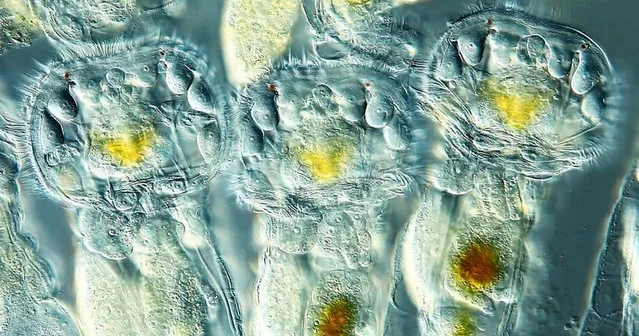
Microscope images forge an extraordinary bond between science and art, said Hidenao Tsuchiya, Olympus America's Vice President and General Manager for the Scientific Equipment Group. We founded this competition to focus on the fascinating stories coming out of today's life science research laboratories. The thousands of images that people have shared with the competition over the years reflect some of the most exciting work going on in research today – work that can help shed light on the living universe and ultimately save lives. We look at BioScapes and these beautiful images as sources of education and inspiration to us and the world
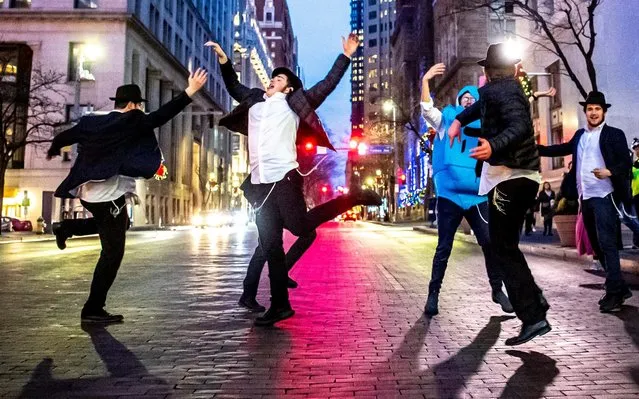
Yeshiva School students briefly dance on Grant Street after the menorah lighting outside of the City-County Building for the fifth night of Hanukkah, Thursday, December 26, 2019, in downtown Pittsburgh. (Photo by Alexandra Wimley/Pittsburgh Post-Gazette via AP Photo)
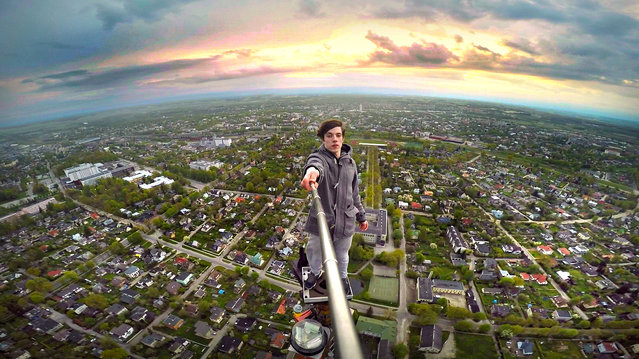
The adventurous explorers have snapped themselves in shark-infested waters, at the side of an active volcano, atop a Hong Kong skyscraper surrounded by toxic smog, and even perched on the top of iconic Rio statue of Christ the Redeemer. Here: Ervin Punkar using a selfie stick to take a photo from the very top of the 600ft TV tower in Tartu, Estonia. (Photo by Ervin Punkar/Caters News Agency)
On August 31, 2012, a long filament of solar material that had been hovering in the sun's atmosphere, the corona, erupted out into space at 4:36 p.m. EDT. The coronal mass ejection, or CME, traveled at over 900 miles per second. The CME did not travel directly toward Earth, but did connect with Earth's magnetic environment, or magnetosphere, causing aurora to appear on the night of Monday, September 3. (Photo by NASA/GSFC/SDO via The Atlantic)
Cropped shot of a woman flirtatiously touching leg of man in a suit with her foot under the table. (Photo by LightField Studios/Skyfish Digital Media/Getty Images)
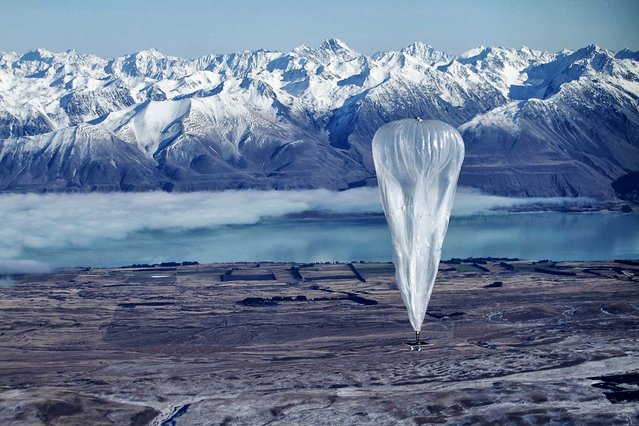
“Google is launching balloons into near space to provide internet access to buildings below on the ground. About 30 of the superpressure balloons are being launched from New Zealand from where they will drift around the world on a controlled path. Attached equipment will offer 3G-like speeds to 50 testers in the country”. – BBC News. Photo: A Google balloon sails through the air with the Southern Alps mountains in the background, in Tekapo, New Zealand. (Photo by Jon Shenk/Associated Press)