Two keepers at the Australian Reptile Park in New South Wales struggle with Leonardo, an alligator snapping turtle weighing 45 kilos at the park in Gosford, NSW 2 July 2015. The 50cm long Leonardo – who was smuggled illegally into Australia and found in a Sydney sewer in November 2000 – was removed from his tank for an annual health check. And as a gesture to onlooking press photographers demonstrated his strength by snapping a piece of bamboo in half. (Photo by EPA/HO)
American rapper and songwriter Megan Jovon Ruth Pete, known professionally as Megan Thee Stallion performs at Hakkasan Nightclub on July 11, 2021 in Las Vegas, Nevada. (Photo by Denise Truscello/WireImage)
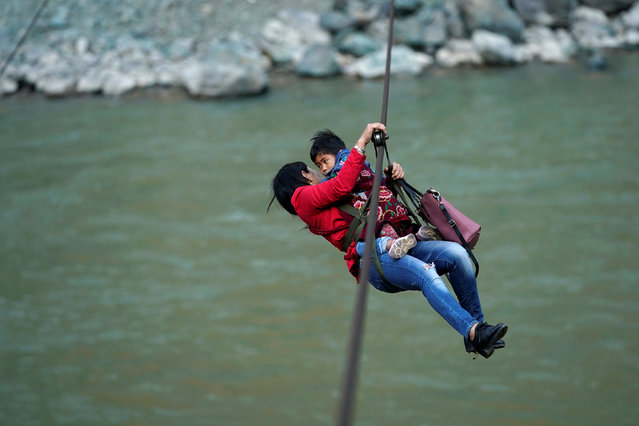
Cha Huilan, a 40-year old Lisu woman, and her daughter leave Lazimi village with a zipline across the Nu River in Nujiang Lisu Autonomous Prefecture in Yunnan province, China, March 24, 2018. Chinese mountain villagers, cut off from shops and churches by a raging river, use a zipline to cross its violent rapids and jagged rocks. (Photo by Aly Song/Reuters)
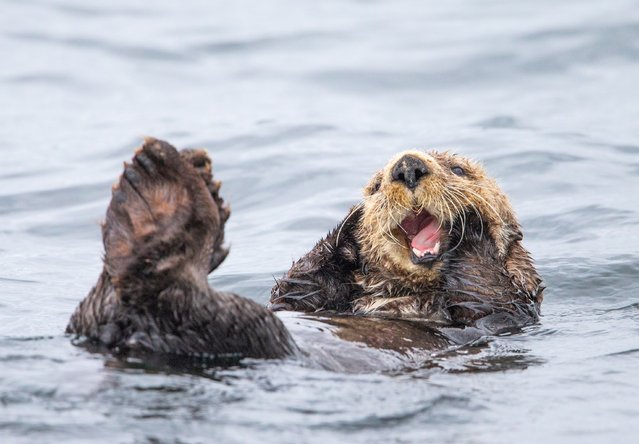
A sea otter in the Great Bear Rainforest, off the Pacific coast of British Columbia, Canada in the second decade of December 2024, appeared to be enjoying a relaxing swim as it preened its fur, the densest of any mammal. (Photo by Max Waugh/Solent News & Photo Agency)
A Sadhu or a Hindu holy man sits on the banks before taking a holy dip at Sangam, the confluence of the Ganges and Yamuna rivers with the mythical, invisible Saraswati river, during the “Maha Kumbh Mela”, or the Great Pitcher Festival, in Prayagraj, India, on January 13, 2025. (Photo by Adnan Abidi/Reuters)
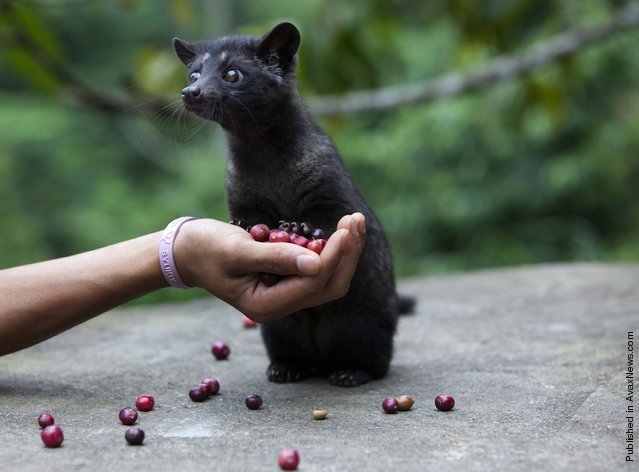
“Kopi luwak (Malay pronunciation), or civet coffee, is one of the world's most expensive and low-production coffee. It is made from the beans of coffee berries which have been eaten by the Asian Palm Civet (Paradoxurus hermaphroditus) and other related civets, then passed through its digestive tract. ...
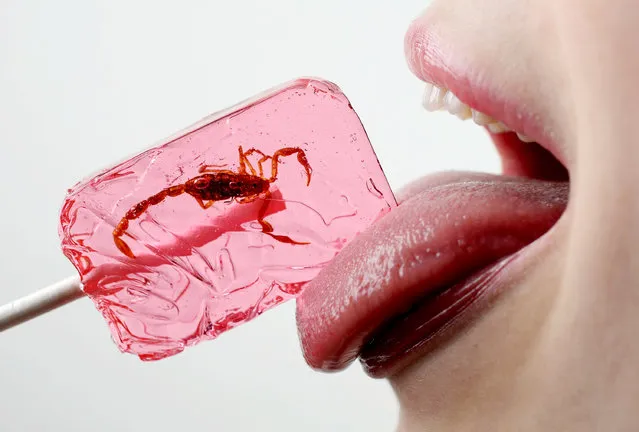
In this photo illustration a young girl licks a lollipop in which a scorpion is suspended on May 7, 2014 in Berlin, Germany. An increasing numbers of advocates worldwide are promoting insects as a viable source of food for humans, citing the high protein value, abundance and low cost. (Photo Illustration by Sean Gallup/Getty Images)