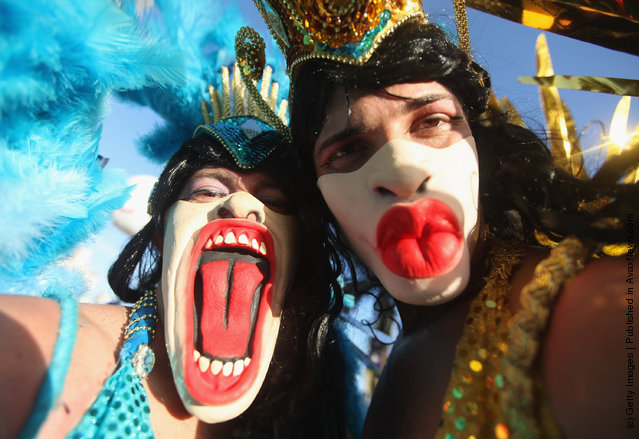
Brazilian revelers pose during Carnival celebrations along Ipanema beach on February 18, 2012 in Rio de Janiero, Brazil. (Photo by Mario Tama/Getty Images)
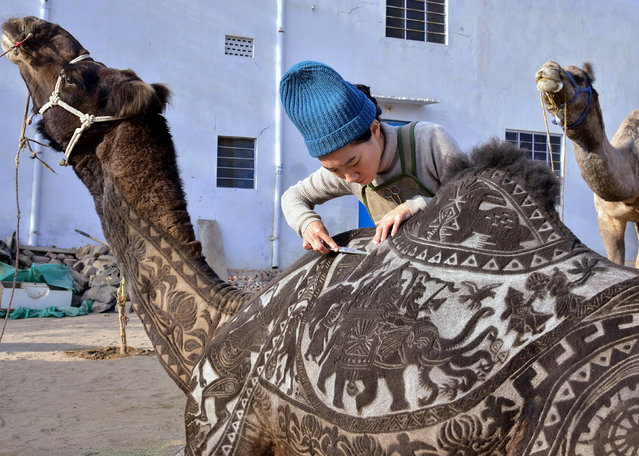
Japanese hairdresser Megumi Takeichi cuts patterns into the hair of a camel ahead of the Bikaner Camel Festival in Bikaner in the western Indian state of Rajasthan on January 10, 2019. (Photo by Dinesh Gupta/AFP Photo)
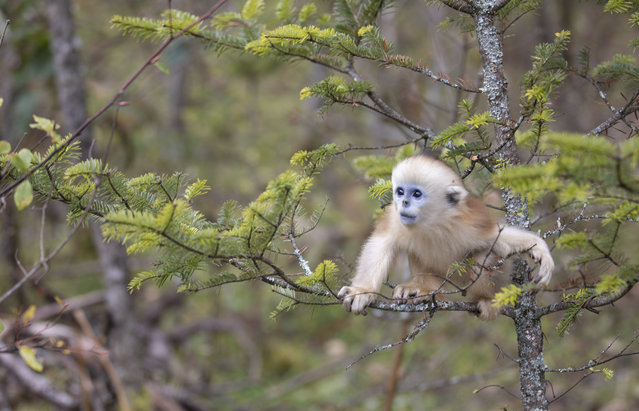
Photo taken on October 11, 2020 shows a golden monkey at Dalongtan Golden Monkey Research Center in Shennongjia National Park of central China's Hubei Province. With the efforts of local authority and improvement of the environment in the past many years, the number of golden monkeys in Shennongjia area reached nearly 1,500 nowadays. (Photo by Xinhua News Agency/Rex Features/Shutterstock)
Sarayna Biswas, 6, wearing a face mask and dressed as Kumari wearing gold, takes part in a ritual during the Durga Puja festival celebrations at a pandal, or a temporary platform, amidst the outbreak of the coronavirus disease (COVID-19), in Kolkata, India, October 24, 2020. (Photo by Rupak De Chowdhuri/Reuters)
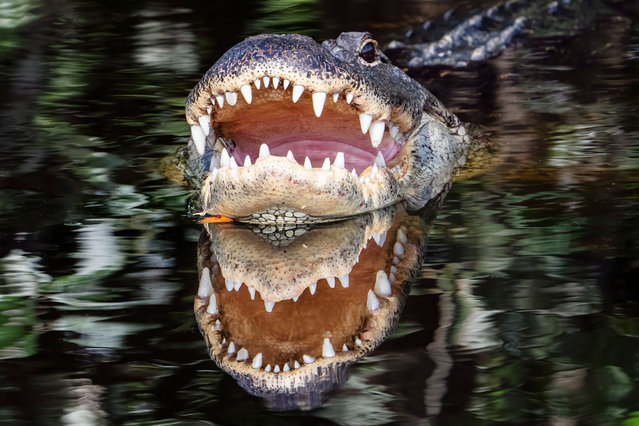
An alligator and his reflection seen in the Wakodahatchee Wetlands in Delray Beach, Florida on May 2, 2024. The wetlands attract nature lovers and wildlife photographers and are home to more than 140 bird species and a variety of other wildlife. (Photo by Ronen Tivony/ZUMA Press Wire/Rex Features/Shutterstock)
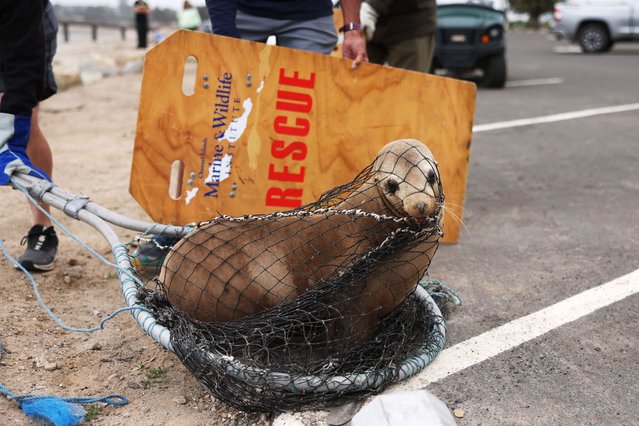
A sick California sea lion with possible domoic acid poisoning is rescued to be evaluated by volunteers from CIMWI (Channel Islands Marine & Wildlife Institute) in Santa Barbara, California, on March 25, 2025. Over a hundred sea lions, dolphins and other marine mammals, including birds, have been sickened by domoic acid poisoning from algal blooms in Southern California since February, US media reported. (Photo by David Swanson/AFP Photo)