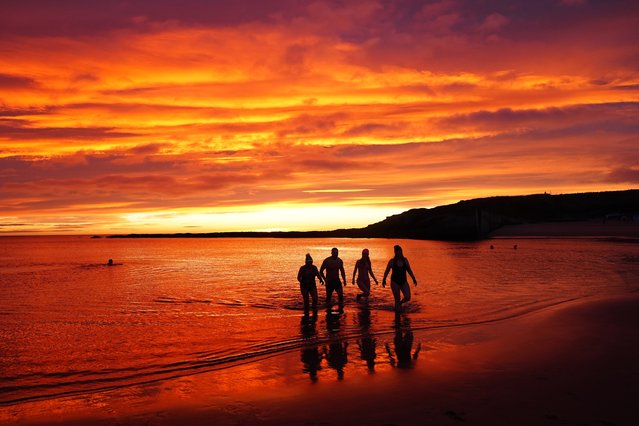
Early morning swimmers at Cullercoats Bay on the north east coast of England on Sunday, December 29, 2024. (Photo by Owen Humphreys/PA Images via Getty Images)
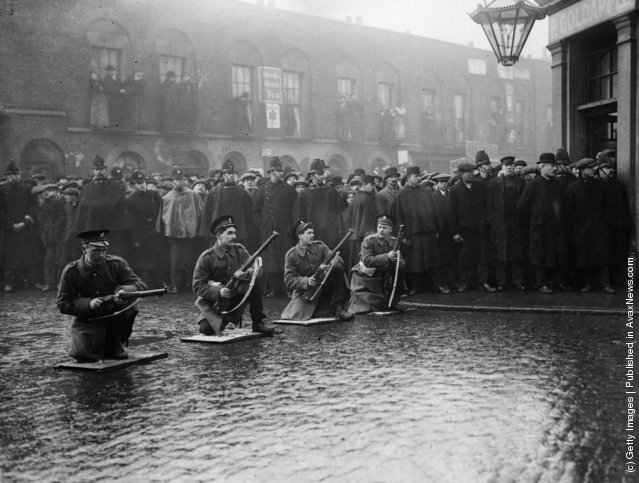
“The Siege of Sidney Street, popularly known as the “Battle of Stepney”, was a notorious gunfight in London's East End on the 2nd of January 1911. Preceded by the Houndsditch Murders, it ended with the deaths of two members of a supposedly politically-motivated gang of burglars supposedly led by Peter Piatkow, a.k.a. “Peter the Painter”, and sparked a major political row over the involvement of the then Home Secretary, Winston Churchill”. – Wikipedia
Photo: Scots Guards and police on duty during the “Siege of Sidney Street” in east London. (Photo by Central Press/Getty Images). 3rd January 1911
A woman is supported by two men while crossing a river, north of Idomeni, Greece, as migrants attempt to reach Macedonia on a route that would bypass the border fence, Monday, March 14, 2016. Hundreds of migrants and refugees walked out of an overcrowded camp on the Greek-Macedonian border Monday, determined to use a dangerous crossing to head north. (Photo by Vadim Ghirda/AP Photo)
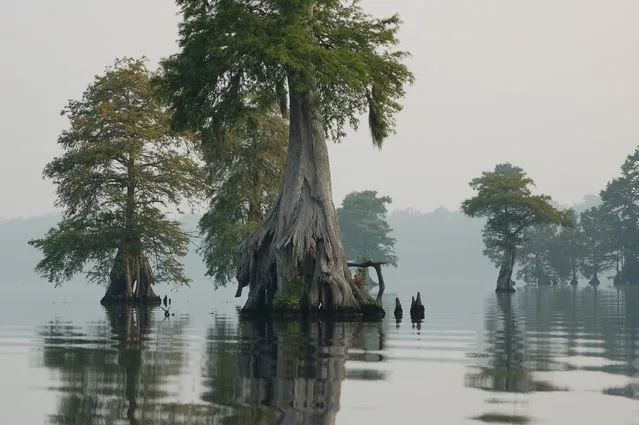
The Great Dismal Swamp is a marshy area in the Coastal Plain Region of southeastern Virginia and northeastern North Carolina, between Norfolk, Virginia, and Elizabeth City, North Carolina. It is located in parts of southern Virginia cities Chesapeake and Suffolk and northern North Carolina counties Gates, Pasquotank and Camden. It is a southern swamp, one of many along the Atlantic Ocean's coast, including the Everglades and Big Cypress Swamp in Florida, the Okefenokee Swamp in Georgia, the Congaree and Four Holes swamps of South Carolina, and some of the Carolina bays in the Carolinas and Georgia. Along the eastern edge runs the Dismal Swamp Canal, completed in 1805.
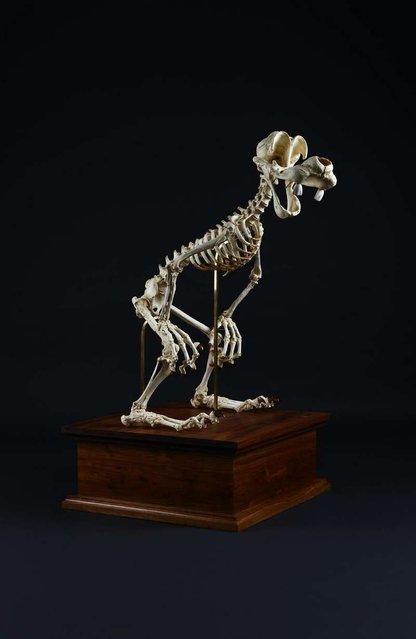
Korean artist Hyungkoo Lee has created a series (Homo Animatus) of works featuring skeletal representations of familiar cartoon characters. He uses resin, aluminum sticks, stainless steel wires, springs, and oil paint. If you look closely, you will see the bones of our favorite childhood friends like Canis Latrans Animatus (Wile E. Coyote), Geococcyx Animatus (Roadrunner), Lepus Animatus (Bugs Bunny), Felis Catus Animatus (Tom), Mus Animatus (Jerry), Anas Animatus (Donald Duck) and his three nephews, Animatus H, D and L ( Huey, Dewey and Louie)
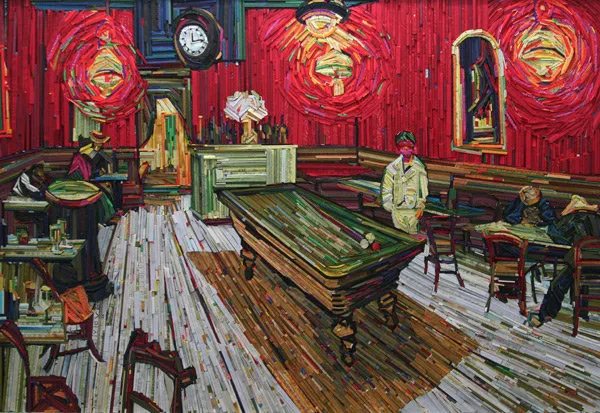
At first glance, Korean artist Kyu-Hak Lee's mixed media mosaics come off as fairly straightforward recreations of iconic works of art. But upon closer inspection, there's more depth to Lee's works than expected. Using a specific technique – rolling strips of magazine and newspaper pages around small bits of wood – Lee replicates brushstrokes, patterns, and colors to create a commentary on consumerism and worth.
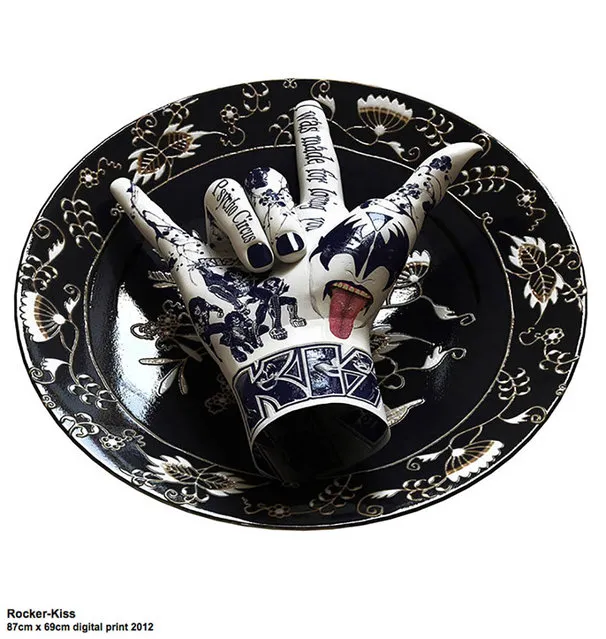
Kim Joon is a Korean artist who specializes in creating images that resemble hollow porcelain human body parts painted in bold patterns from famous ceramic brands including Royal Copenhagen, Herend, and Villeroy & Boch. His latest project is called The Rocker and features a number of pictures of porcelain hands laying on a dish patterned in style of different famous rock bands of the past. The images are so vivid that it makes you think that these hands are actually real and not digitally crafted, though it would be amazing, if someone were to actually make a creation such as this in real life. (Photo by Kim Joon)
Photographer Han Youngsoo captured the ordinary people of Korea as the country emerged from war into an age of prosperity. Han Youngsoo: Photographs of Seoul 1956–63 is at the International Center of Photography (ICP), Jersey City, New Jersey, until June 9, 2017. Here: Seoul, Korea. (Photo by Han Youngsoo/The Guardian)