Loading...
Done
US model Bella Hadid poses as she arrives for the screening of the film “Rocketman” at the 72nd edition of the Cannes Film Festival in Cannes, southern France, on May 16, 2019. (Photo by Antonin Thuillier/AFP Photo)

US model Bella Hadid poses as she arrives for the screening of the film “Rocketman” at the 72nd edition of the Cannes Film Festival in Cannes, southern France, on May 16, 2019. (Photo by Antonin Thuillier/AFP Photo)
Details
20 May 2019 00:01:00


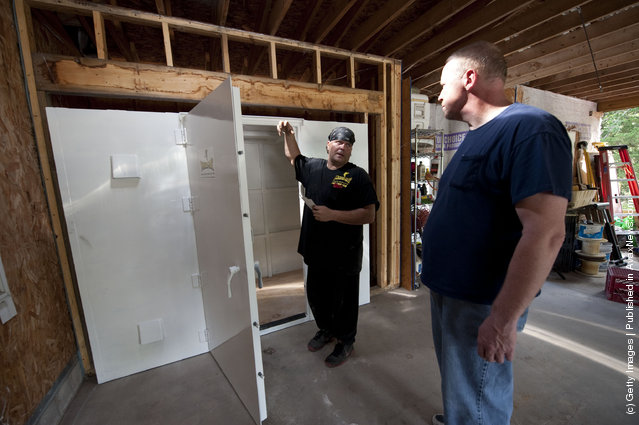
Jeremy Davis (L) demonstrates the operation of the safe room shelter door lock to homeowner Rob Hamlin on June 18, 2011 in Neosho, Missouri. Once thought of as a luxury item there has been a surge of interest from homeowners in purchasing shelters to ride out damaging storms ever since a F5 tornado tore through the town of Joplin, Missouri. Ranging in price from $3,000 to $5,000 homeowners can supplement the cost with a mortgage insurance program offered by the U.S. Department of Housing and Urban Development for installing a safe room built to FEMA specifications. Lawmakers in Alabama have even considered requiring construction of storm shelters in mobile home parks after forty people died in April. (Photo by Julie Denesha/Getty Images)
Details
19 Jun 2011 09:26:00


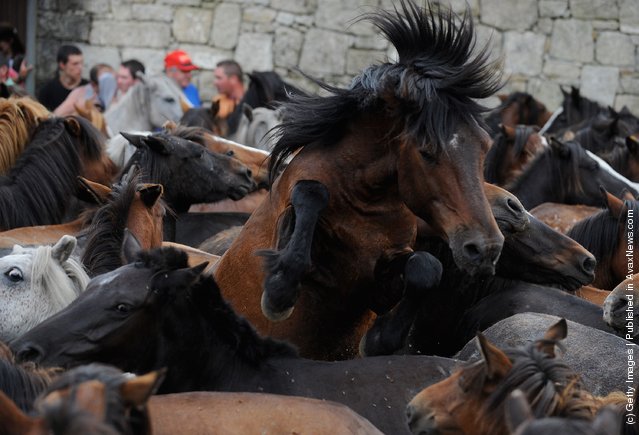
“Rapa das Bestas is the name of an operation that involves cutting the manes of the horses that are performed in the curros (enclosed which retain the horses) held in various locations in Galicia (Spain).

The best known is the Rapa das Bestas of Sabucedo, in the city hall of A Estrada, which lasts three days: the First Saturday, Sunday and Monday in July. In fact, the name given to the celebration (Rapa das Bestas of Sabucedo), while in most places speaking about curros, including curros de Valga, etc”. – Wikipedia

Photo: A wild horse leaps up during the Rapa das Bestas (shearing of the beasts) festival on July 2, 2011 in Sabucedo, Spain. Hundreds of wild horses are rounded up from the mountains and trimmed and marked in the corral. (Photo by Denis Doyle/Getty Images)

Details
03 Jul 2011 12:30:00
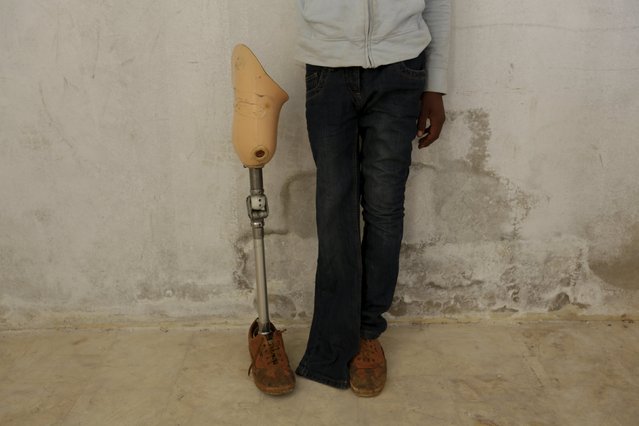
A young man with an amputated leg poses for a photograph standing by his broken artificial limb in the rebel-controlled area of Maaret al-Numan town in Idlib province, Syria March 20, 2016. (Photo by Khalil Ashawi/Reuters)

A young man with an amputated leg poses for a photograph standing by his broken artificial limb in the rebel-controlled area of Maaret al-Numan town in Idlib province, Syria March 20, 2016. Two university students forced to interrupt their studies have learnt to make and fit hundreds of new limbs in the past four years in opposition-held areas of Syria. A mobile clinic operating from a truck has gone some way to improve access to treatment. While most patients are between 15 and 45, the clinic also helps children and the elderly with replacement limbs. (Photo by Khalil Ashawi/Reuters)
Details
16 Apr 2016 12:03:00
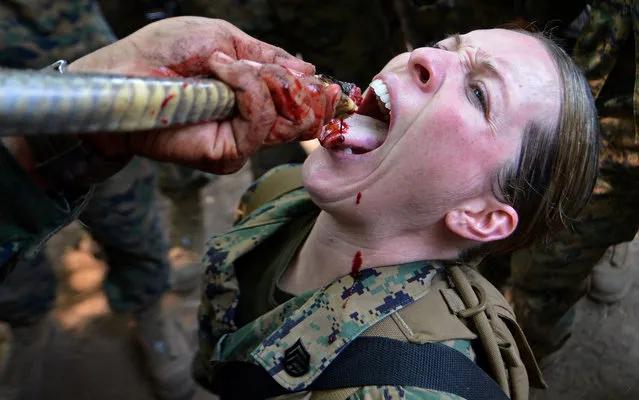
In a military base in the Thai province of Chon Buri February 20 U.S. Marines Navy with Thailand began their studies in jungle survival. The event is held in joint military exercises “Cobra Gold 2013”. During a jungle survival program February 20, 2013 taught by Royal Thai Special Forces in Sannapit, Thailand, U.S. Marines learned to catch cobras and drink their fresh blood, not to mention eat forest insects and pull the heads off of chicken. The training was part of Operation Cobra Gold 13, the 32nd edition of international military exercises hosted by the Thai. According to a U.S. Marines press release, Cobra Gold is the largest exercise of its kind in Asia and incorporates troops from five other nations in addition to the U.S. and Thailand. The Daily Mail reports that the Marines were invited to experience the local custom of drinking cobra blood after being taught to catch and kill cobras in the wild. As CNN notes, Cobra blood is believed to be a panacea and aphrodiasic in parts of Southeast Asia. In Jakarta, vendors can earn over $100 a night selling shots of cobra blood mixed with liquor. (Photo by Pornchai Kittiwongsakul/AFP Photo)

During a jungle survival program February 20, 2013 taught by Royal Thai Special Forces in Sannapit, Thailand, U.S. Marines learned to catch cobras and drink their fresh blood, not to mention eat forest insects and pull the heads off of chicken. The training was part of Operation Cobra Gold 13, the 32nd edition of international military exercises hosted by the Thai. According to a U.S. Marines press release, Cobra Gold is the largest exercise of its kind in Asia and incorporates troops from five other nations in addition to the U.S. and Thailand. The Daily Mail reports that the Marines were invited to experience the local custom of drinking cobra blood after being taught to catch and kill cobras in the wild. As CNN notes, Cobra blood is believed to be a panacea and aphrodiasic in parts of Southeast Asia. In Jakarta, vendors can earn over $100 a night selling shots of cobra blood mixed with liquor. (Photo by Pornchai Kittiwongsakul/AFP Photo)
Details
23 Feb 2013 11:52:00


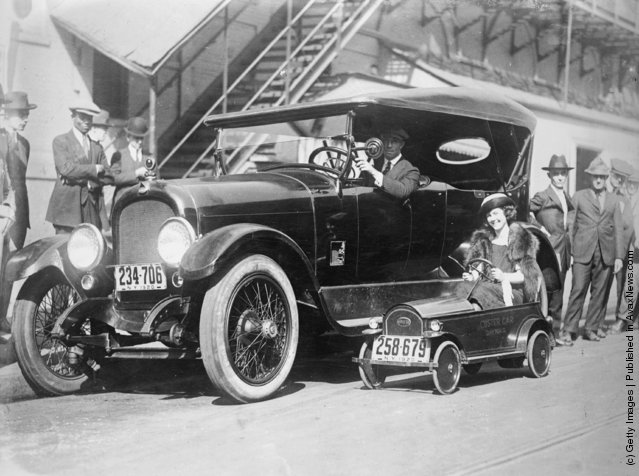
“Custer” the smallest car in the US. (Photo by Topical Press Agency/Getty Images). 1920
Details
28 Mar 2011 14:10:00
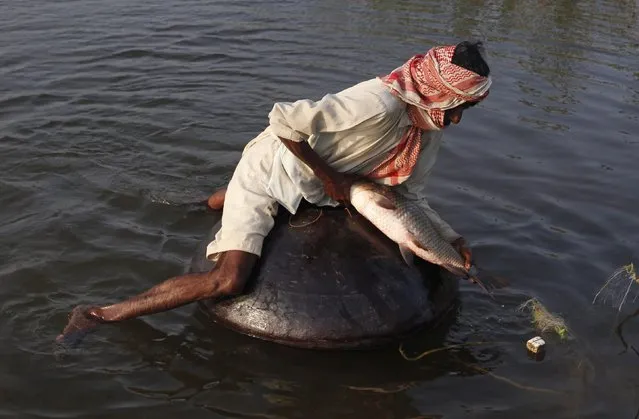
A man uses a floating pitcher to catch a fish after removing it from a net at Keenjhar Lake, near Thatta, February 22, 2015. This technique of fishing using floating pitchers is a unique and traditional one for this community, found only on Keenjhar Lake, one of the largest freshwater lakes in Pakistan, which is famous for its variety of breeding and wintering waterbirds. (Photo by Akhtar Soomro/Reuters)

A man uses a floating pitcher to catch a fish after removing it from a net at Keenjhar Lake, near Thatta, February 22, 2015. This technique of fishing using floating pitchers is a unique and traditional one for this community, found only on Keenjhar Lake, one of the largest freshwater lakes in Pakistan, which is famous for its variety of breeding and wintering waterbirds. (Photo by Akhtar Soomro/Reuters)
Details
23 Feb 2015 13:27:00
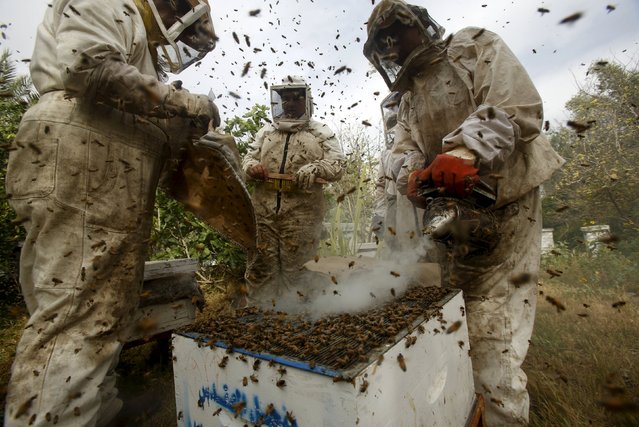
A Palestinian beekeeper uses smoke to calm bees in the process of collecting honey at a farm in Rafah, in the southern Gaza Strip April 11, 2016. (Photo by Suhaib Salem/Reuters)

A Palestinian beekeeper uses smoke to calm bees in the process of collecting honey at a farm in Rafah, in the southern Gaza Strip April 11, 2016. Rateb Samour sees 250 patients a day, whose complaints range from hair loss to cerebral palsy and cancer. He is not a doctor and has never worked in a hospital. Samour inherited the skill of bee-sting therapy from his father. From 2003 the agricultural engineer dedicated all his time to study and develop the alternative-medicine treatment of apitherapy, which uses bee-related products from honey, propolis – or bee glue used to build hives – to venom. (Photo by Suhaib Salem/Reuters)
Details
13 Apr 2016 09:14:00