Loading...
Done
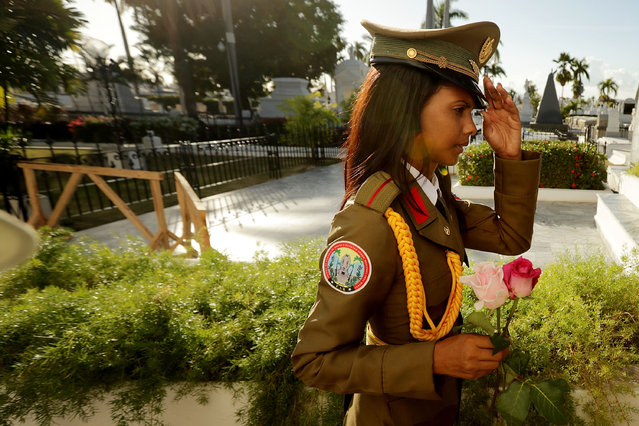
A military guard carries flowers through the Cementerio Santa Ifigenia where the remains of former Cuban President Fidel Castro were entombed December 4, 2016 in Santiago de Cuba, Cuba. The tomb stands to the side of a memorial to the rebel soldiers killed in an attack that Castro led on Santiago's Moncada barracks on July 26, 1953, and in front of the mausoleum of Cuban national hero Jose Marti. (Photo by Chip Somodevilla/Getty Images)

A military guard carries flowers through the Cementerio Santa Ifigenia where the remains of former Cuban President Fidel Castro were entombed December 4, 2016 in Santiago de Cuba, Cuba. The tomb stands to the side of a memorial to the rebel soldiers killed in an attack that Castro led on Santiago's Moncada barracks on July 26, 1953, and in front of the mausoleum of Cuban national hero Jose Marti. (Photo by Chip Somodevilla/Getty Images)
Details
06 Dec 2016 10:50:00
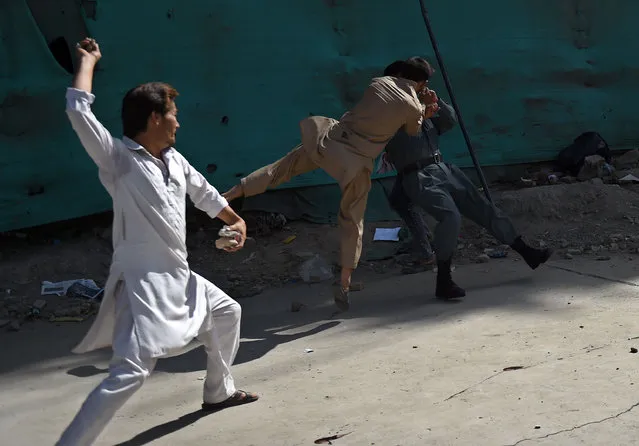
Afghan protesters beat a policeman after a suicide attack that targeted crowds of minority Shiite Hazaras during a demonstration at the Deh Mazang Circle of Kabul on July 23, 2016. Islamic State jihadists claimed responsibility for twin explosions July 23 that ripped through crowds of Shiite Hazaras in Kabul, killing at least 61 people and wounding 207 others in apparently their deadliest attack in the Afghan capital. The bombings during a huge protest over a power transmission line could deepen sectarian divisions in a country well known for communal harmony despite decades of war. (Photo by Wakil Kohsar/AFP Photo)

Afghan protesters beat a policeman after a suicide attack that targeted crowds of minority Shiite Hazaras during a demonstration at the Deh Mazang Circle of Kabul on July 23, 2016. Islamic State jihadists claimed responsibility for twin explosions July 23 that ripped through crowds of Shiite Hazaras in Kabul, killing at least 61 people and wounding 207 others in apparently their deadliest attack in the Afghan capital. The bombings during a huge protest over a power transmission line could deepen sectarian divisions in a country well known for communal harmony despite decades of war. (Photo by Wakil Kohsar/AFP Photo)
Details
25 Jul 2016 11:46:00
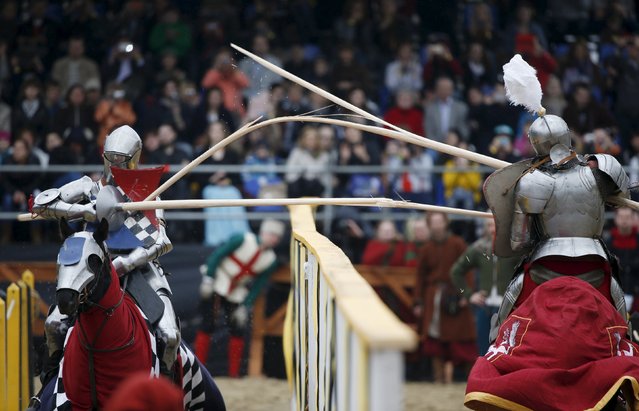
Participants ride horses, hold spears and wear historic armoured suits of the Middle Ages as they compete during the Saint George international knight tournament in Moscow, Russia, May 3, 2015. (Photo by Maxim Zmeyev/Reuters)

Participants ride horses, hold spears and wear historic armoured suits of the Middle Ages as they compete during the Saint George international knight tournament in Moscow, Russia, May 3, 2015. (Photo by Maxim Zmeyev/Reuters)
Details
09 May 2015 11:50:00
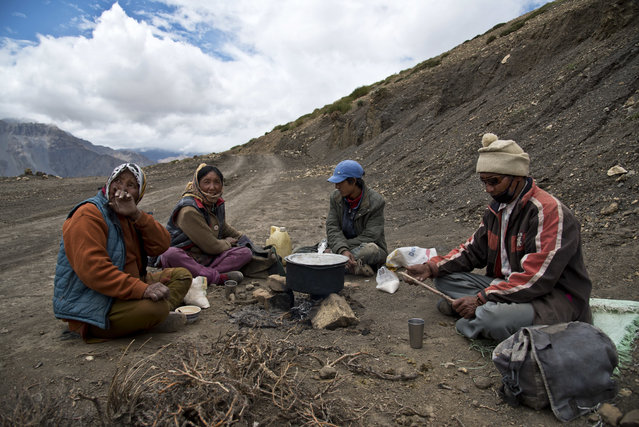
In this August 17, 2016, photo, from left to right, Chhering Chodom, 60, Tashi Yangzom, 50, Lobsang Chhering, 27, and Dorje Tandup, 58, drink milk tea on the side of the road. For centuries, the sleepy valley nestled in the Indian Himalayas remained a hidden Buddhist enclave forbidden to outsiders. Enduring the harsh year-round conditions of the high mountain desert, the people of Spiti Valley lived by a simple communal code – share the Earth's bounty, be hospitable to neighbors, and eschew greed and temptation at all turns. That's all starting to change, for better or worse. Since India began allowing its own citizens as well as outsiders to visit the valley in the early 1990s, tourism and trade have boomed. And the marks of modernization, such as solar panels, asphalt roads and concrete buildings, have begun to appear around some of the villages that dot the remote landscape at altitudes above 4,000 meters (13,000 feet). (Photo by Thomas Cytrynowicz/AP Photo)

In this August 17, 2016, photo, from left to right, Chhering Chodom, 60, Tashi Yangzom, 50, Lobsang Chhering, 27, and Dorje Tandup, 58, drink milk tea on the side of the road. For centuries, the sleepy valley nestled in the Indian Himalayas remained a hidden Buddhist enclave forbidden to outsiders. Enduring the harsh year-round conditions of the high mountain desert, the people of Spiti Valley lived by a simple communal code – share the Earth's bounty, be hospitable to neighbors, and eschew greed and temptation at all turns. That's all starting to change, for better or worse. (Photo by Thomas Cytrynowicz/AP Photo)
Details
15 Sep 2016 09:22:00
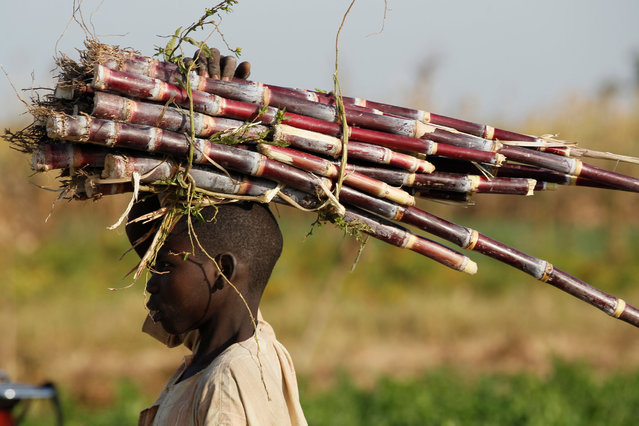
A boy carries sugar cane through a farm on the outskirt of Zaria in Nigeria's northern state of Kaduna November 15, 2016. (Photo by Akintunde Akinleye/Reuters)

A boy carries sugar cane through a farm on the outskirt of Zaria in Nigeria's northern state of Kaduna November 15, 2016. (Photo by Akintunde Akinleye/Reuters)
Details
05 Dec 2016 11:17:00
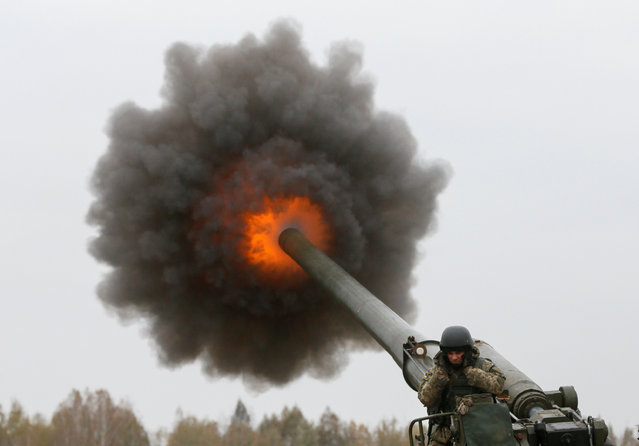
A Ukrainian serviceman fires a 2S7 Pion self-propelled gun during military exercises near the village of Divychky in Kiev region, Ukraine, October 21, 2016. (Photo by Valentyn Ogirenko/Reuters)

A Ukrainian serviceman fires a 2S7 Pion self-propelled gun during military exercises near the village of Divychky in Kiev region, Ukraine, October 21, 2016. (Photo by Valentyn Ogirenko/Reuters)
Details
14 Dec 2016 07:50:00
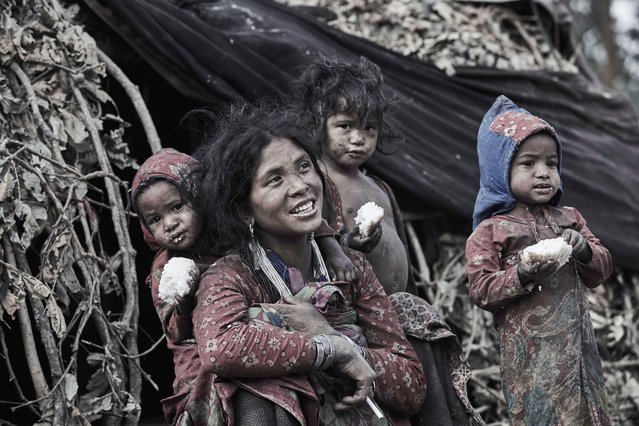
Only 156 people remained in the tribe when Jan visited in Accham District, Nepal, January 2016. (Photo by Jan Moller Hansen/Barcroft Images)

Only 156 people remained in the tribe when Jan visited in Accham District, Nepal, January 2016. Hidden deep in the Himalayan forest is one of the world’s last enduring nomadic tribes who are resisting attempts to move them into permanent settlements. (Photo by Jan Moller Hansen/Barcroft Images)
Details
14 Jan 2017 12:35:00
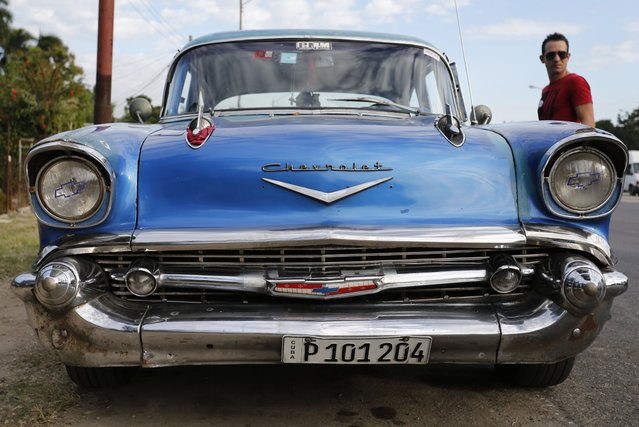
In this December 19, 2014 photo, a man stands beside his 1957 Chevrolet Bel-Air car in Havana, Cuba.  U.S. car sales have been banned in Cuba since 1959. Cubans have been have been forced to patch together Fords, Chevrolets and Chryslers that date back to before Fidel Castro's revolution which can make it appear like the country is stuck in a 1950s time warp. (Photo by Desmond Boylan/AP Photo)

In this December 19, 2014 photo, a man stands beside his 1957 Chevrolet Bel-Air car in Havana, Cuba. U.S. car sales have been banned in Cuba since 1959. Cubans have been have been forced to patch together Fords, Chevrolets and Chryslers that date back to before Fidel Castro's revolution which can make it appear like the country is stuck in a 1950s time warp. Since the Communist economic system isn't likely to change soon, many of those cars will have to stay on the road for years. (Photo by Desmond Boylan/AP Photo)
Details
26 Dec 2014 15:35:00