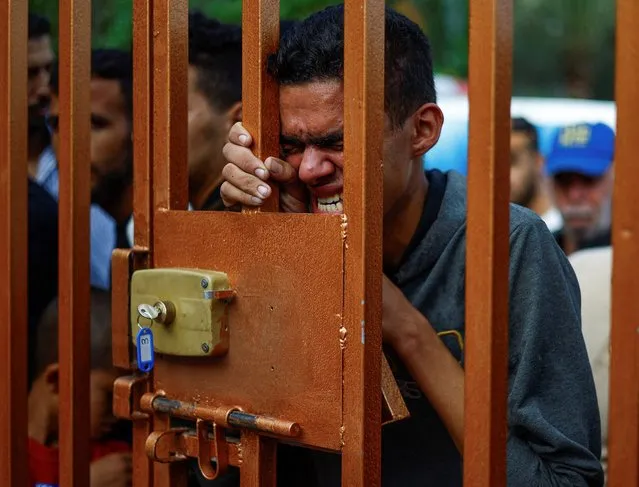
A mourner reacts as bodies of Palestinians killed in Israeli strikes lie at a hospital in Khan Younis in the southern Gaza Strip on October 17, 2023. (Photo by Mohammed Salem/Reuters)
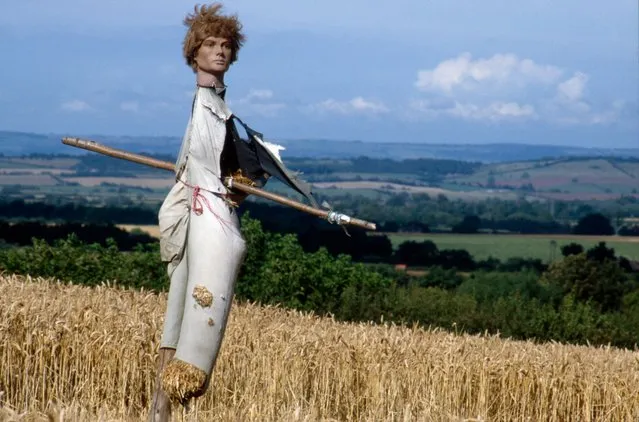
When Colin Garratt went to photograph the traditional sentinels of the British countryside, he found they ranged from the dapper to the downright sinister. “They are not from the anaesthetised world of the craft fair”, says Colin Garratt, “but are the direct descendants of the ancient spectres which have haunted the landscape for centuries”. The Scarecrow Exhibition is at Geddes Gallery, London, from 25 to 30 March. (Photo by Colin Garratt)
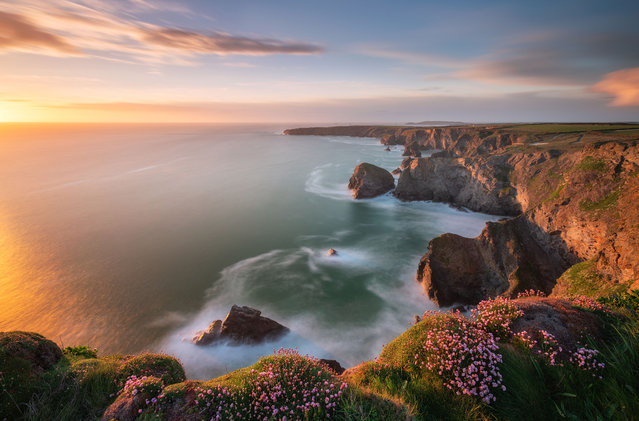
The impressive gallery shows beautiful landscapes that might appear to be from more exotic climes, but they were all taken on British soil. Alessio Putzu, 31, a professional landscape photographer from London, snapped the amazing shots during his trips to Devon and Cornwall, England; Pembrokeshire, Wales; and the Isle of Skye, Scotland. Here: Bedruthan Steps, Cornwall. (Photo by Alessio Putzu/Caters News Agency)
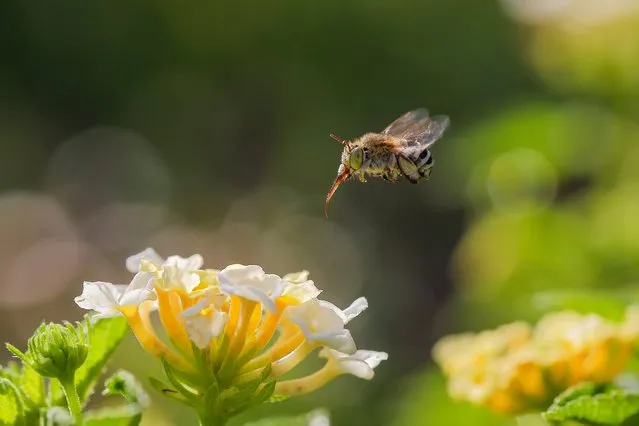
“Tasty Nature” by Dipesh Bhatt. “The blue banded bee (Amegilla cingulata) is pointing this sheath towards the flowers in preparation for sipping nectar”. Taken in Gujarat, India. (Photo by Dipesh Bhatt/2016 Royal Society of Biology Photographer of the Year competition)
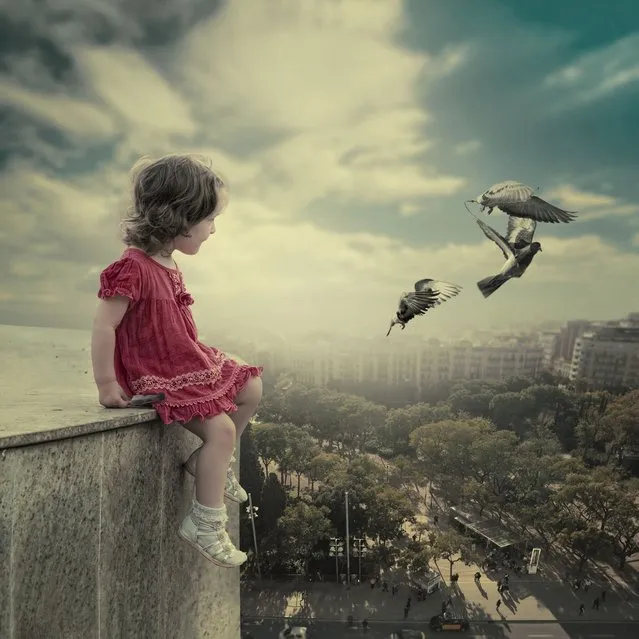
“Photo mechanic” and photographer Ionut Caras creates surreal concepts by combining the everyday with the unthinkable. His use of light and tone takes the viewer into a bizarre and beautiful world only seen in storybooks and our dreams. Photo: “The observer”. (Photo by Ionut Caras)
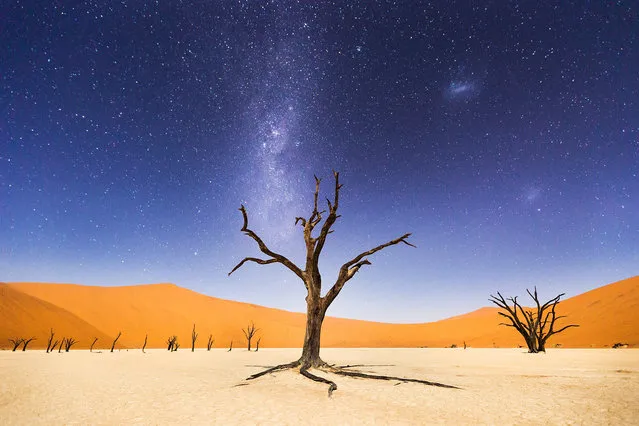
Merit: A Night at Deadvlei. The night before returning to Windhoek, we spent several hours at Deadveli. The moon was bright enough to illuminate the sand dunes in the distance, but the skies were still dark enough to clearly see the milky way and magellanic clouds. Deadveli means “dead marsh. The camelthorn trees are believed to be about 900 years old, but have not decomposed because the environment is so dry. (Photo and caption by Beth McCarley/National Geographic Traveler Photo Contest)
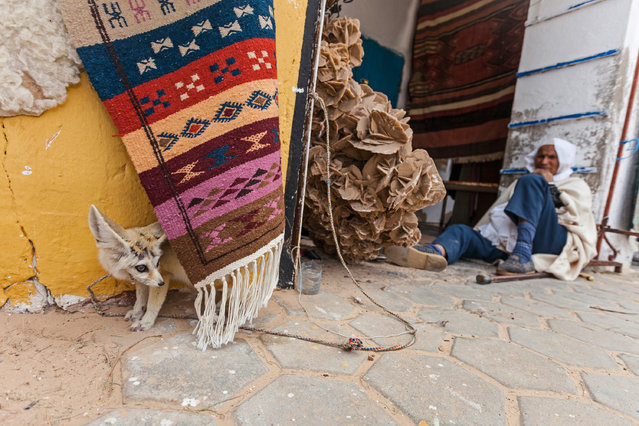
Sultan, a famous captive fennec that is displayed tied on a rope in front of a tourist shop, is the main attraction in the souk of Douz, a desert town in Tunisia. By the display of such a charismatic animal, tourists are often lured to buy things or pay for pictures. On inquiry, although Sultan has been caught as a pup in the wild, the owners of the shop reassure the foreigners stating that the animal is ‘domestic’. (Photo by Bruno D’Amicis/Fritz Pölking Prize/GDT EWPY 2015)