Loading...
Done
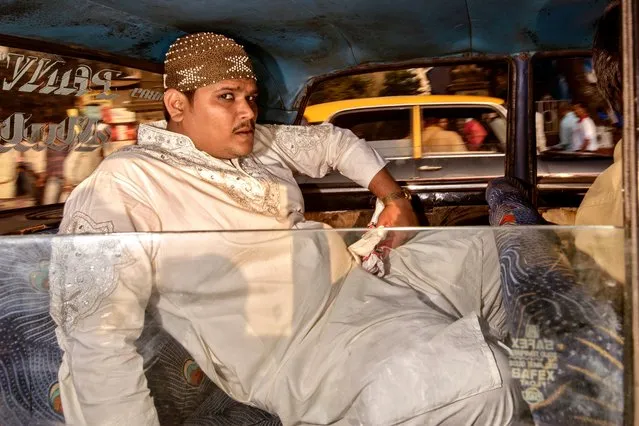
“I’m not scared of breaking the fourth wall”, Wallace has said of the photos where the subject is clearly aware of him taking the shot. “If they are looking at you in a photograph most photographers will think, oh, that’s not a good image. (But) people like to be involved and in the picture. You can see what they are thinking, see them talking”. (Photo by Dougie Wallace/The Guardian)

In Dougie Wallace’s photos of Mumbai taxis, the chatter, yelling, and constant horns of the city are almost audible. A selection of his images is on show at Gayfield Creative Spaces, Edinburgh, as part of the Retina photography festival until 30 July. For four years, the Glasgow-born Wallace focused his photos on one kind of taxi in particular: the Premier Padmini, a 1960s workhorse painted in black and yellow. Locally known as “Kaali-Peeli”, there were once more than 60,000 of them in the Indian city. But thanks to laws restricting pollution, the cars now are fast disappearing from Mumbai’s streets. (Photo by Dougie Wallace/The Guardian)
Details
13 Jul 2016 13:50:00
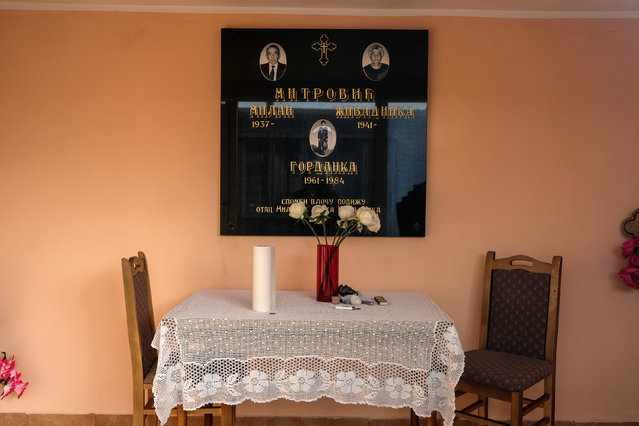
Pictures of deceased people are seen inside a chapel at a cemetery in the village of Smoljinac, Serbia, October 25, 2016. (Photo by Marko Djurica/Reuters)

Pictures of deceased people are seen inside a chapel at a cemetery in the village of Smoljinac, Serbia, October 25, 2016. From a distance, the cemetery in the eastern Serbian village of Smoljinac looks like a residential neighbourhood eerily placed among graves. But once inside the grounds, after passing a section with the usual stone slabs, visitors find rows of small bungalows painted in pastel colours. They have one or two rooms, large windows and ornate plaques – some inside, some outside – memorialising the deceased. These are the burial chapels of Smoljinac, cosy cabins with a furnished room inside, a storage place for wreaths and funeral paraphernalia, and the family crypt below. Some even have electric power inside. (Photo by Marko Djurica/Reuters)
Details
12 Nov 2016 10:37:00
An activist kicks the shields of the military police officers during a demonstration in the military zone of the 27th infantry battalion in Iguala, Guerrero, January 12, 2015. Activists and relatives of the 43 missing trainee teachers from Ayotzinapa's teacher training college broke into the military zone. (Photo by Jorge Dan Lopez/Reuters)

An activist kicks the shields of the military police officers during a demonstration in the military zone of the 27th infantry battalion in Iguala, Guerrero, January 12, 2015. Activists and relatives of the 43 missing trainee teachers from Ayotzinapa's teacher training college broke into the military zone, located less than a mile from where the students went missing, in an attempt to look for the missing students.The remains of only one of the 43 students has been identified so far. (Photo by Jorge Dan Lopez/Reuters)
Details
14 Jan 2015 12:17:00
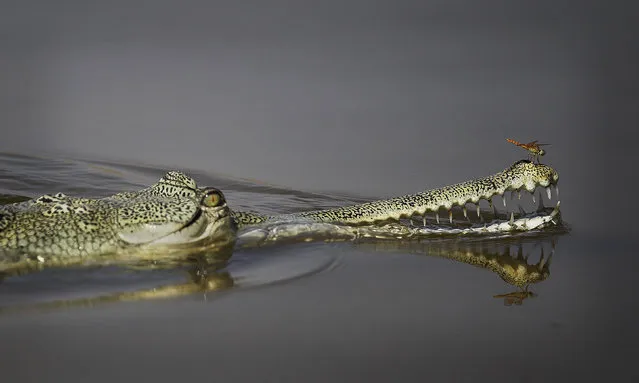
In this photo taken Wednesday, April 30, 2014, a dragonfly sits on the nose of a Gharial, rare crocodile-like creatures, in the River Chambal near Bhopepura village in the northern Indian state of Uttar Pradesh. The narrow 250-mile stretch of the Chambal is a place of crocodiles and jackals, of river dolphins and the occasional wolf. Hundreds of species of birds, storks, geese, babblers, larks, falcons and so many more, nest along the river. (Photo by Altaf Qadri/AP Photo)

In this photo taken Wednesday, April 30, 2014, a dragonfly sits on the nose of a Gharial, rare crocodile-like creatures, in the River Chambal near Bhopepura village in the northern Indian state of Uttar Pradesh. The narrow 250-mile stretch of the Chambal is a place of crocodiles and jackals, of river dolphins and the occasional wolf. Hundreds of species of birds, storks, geese, babblers, larks, falcons and so many more, nest along the river. Endangered birds lay small speckled eggs in tiny pits they dig in the sandbars. Gharials, rare crocodile-like creatures that look like they swaggered out of the Mesozoic Era, are commonplace here and nowhere else. (Photo by Altaf Qadri/AP Photo)
Details
23 Feb 2015 12:55:00
Some of the best entries so far in the 2016 Insight Astronomy Photographer of the Year competition. There are two weeks left to enter, and the winners will be announced in September. Here: Aurora over Laksvatn Fjord, Laksvatn, Norway. The aurora borealis dances in the skies over the town of Laksvatn, with the Milky Way to the left. The image is a single shot with no compositing, only post-processing to bring out the aurora, and some colour corrections. (Photo by Matt Walford/National Maritime Museum)

Some of the best entries so far in the 2016 Insight Astronomy Photographer of the Year competition. There are two weeks left to enter, and the winners will be announced in September. Here: Aurora over Laksvatn Fjord, Laksvatn, Norway. The aurora borealis dances in the skies over the town of Laksvatn, with the Milky Way to the left. The image is a single shot with no compositing, only post-processing to bring out the aurora, and some colour corrections. The photographer Matt Walford said: “I love the way the northern lights look like they are just wistfully dancing over the fjord, framed by the mountains on either side”. (Photo by Matt Walford/National Maritime Museum)
Details
01 Jul 2016 12:13:00
In this February 19, 2014 photo, a skate seller puts slices of skate into styrofoam boxes for shipment to customers around South Korea at a fish market in Mokpo, a port city on the southwestern tip of the Korean Peninsula. The aroma of one of southwestern South Korea's most popular delicacies regularly gets compared to rotting garbage and filthy bathrooms. (Photo by Ahn Young-joon/AP Photo)

In this February 19, 2014 photo, a skate seller puts slices of skate into styrofoam boxes for shipment to customers around South Korea at a fish market in Mokpo, a port city on the southwestern tip of the Korean Peninsula. The aroma of one of southwestern South Korea's most popular delicacies regularly gets compared to rotting garbage and filthy bathrooms. And that's by fans. The unusual dish is typically made by taking dozens of fresh skate, a cartilage-rich fish that looks like a stingray, stacking them up in a walk-in refrigerator and waiting. Up to a month in some cases. (Photo by Ahn Young-joon/AP Photo)
Details
11 Apr 2014 07:41:00
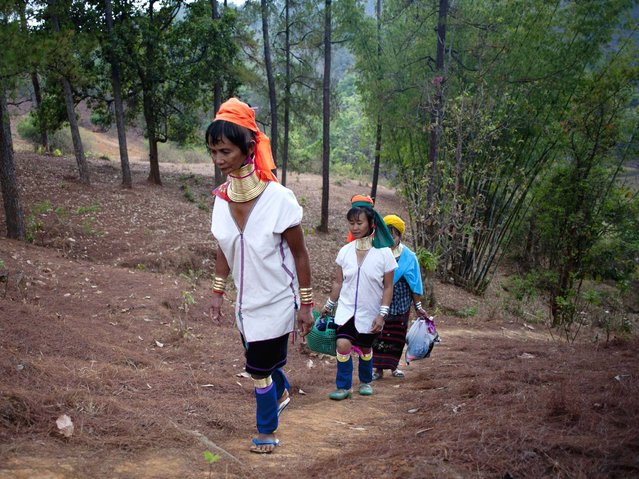
One of the theories says that the coils originate from the desire to look more attractive by exaggerating sexual dimorphism, as women have more slender necks than men. (Photo by Ye Aung Thu/AFP Photo)

This photo taken on April 16, 2014 shows ethnic Kayan women wearing traditional clothes and bronze rings around tbeir neck in Panpet village, Demoso township in Kayah state, eastern Myanmar. Some ethnic Kayan women, also known as Padaung, begin wearing the bronze rings on their neck and legs from a young age. Usually they start wearing six to ten rings when they are five to ten-years-old and then they put on one more ring a year for years after then. (Photo by Ye Aung Thu/AFP Photo)
Details
23 Apr 2014 08:56:00
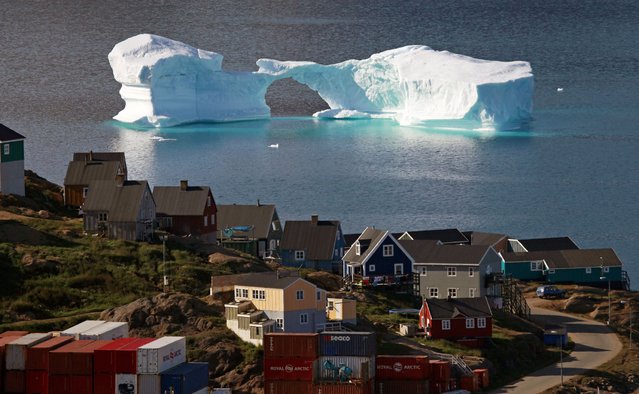
File photo of an iceberg floating near a harbour in the town of Kulusuk, east Greenland August 1, 2009. The United Nations 19th Climate Change Conference (COP19) will take place November 11-22, 2013 in Warsaw. The main goal of the talks with almost almost 200 nations assembled, is to lay the foundation for the new global climate agreement, aiming at further emission reduction, which is to be signed in 2015 in Paris and be launched in 2020. (Photo by Bob Strong/Reuters)

It's taken roughly five months, but a massive iceberg has separated from Antarctica's Pine Island Glacier. According to NASA's Earth Observatory, the estimated size of this iceberg, named B-31, is around 660 square kilometres (33 km long by 20 km wide) – a city-sized block of ice that has slowly migrated away from the continent, and is now floating out to sea. Take a look at some massive icebergs afloat in the oceans. Photo: File photo of an iceberg floating near a harbour in the town of Kulusuk, east Greenland August 1, 2009. (Photo by Bob Strong/Reuters)
Details
27 Apr 2014 07:47:00