Loading...
Done
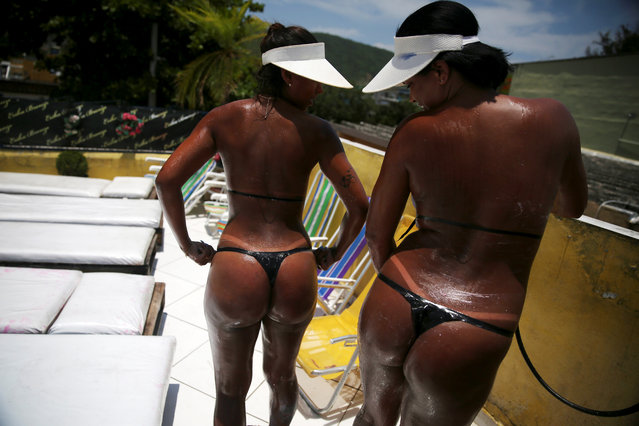
Women compare their bikini marks after sunbathing on a terrace to have the perfect bikini line ('marquinha' in Portuguese), at the Erika Bronze spa in Rio de Janeiro, Brazil, November 17, 2016. (Photo by Pilar Olivares/Reuters)

Women compare their bikini marks after sunbathing on a terrace to have the perfect bikini line (“marquinha” in Portuguese), at the Erika Bronze spa in Rio de Janeiro, Brazil, November 17, 2016. Women start arriving at the spa between 7am and 8am and will tan for approximately 3 hours. (Photo by Pilar Olivares/Reuters)
Details
26 Nov 2016 10:44:00
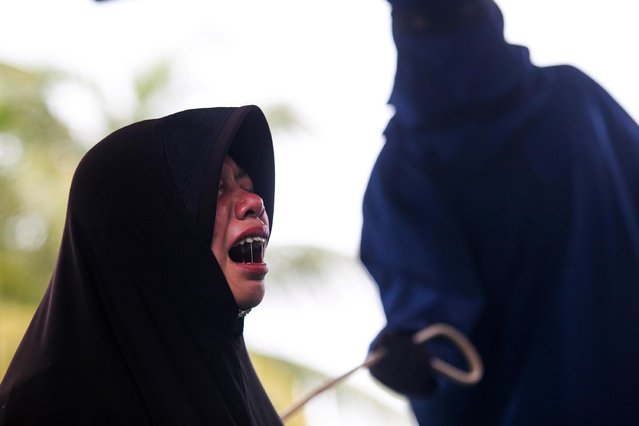
An Acehnese women is whipped in front of the public for violating sharia law in Pidie District on 14 July 2017, Aceh, Indonesia. (Photo by Oviyandi/Barcroft Images)

An Acehnese women is whipped in front of the public for violating sharia law in Pidie District on 14 July 2017, Aceh, Indonesia. Aceh is the only one province in Indonesia which has implemented sharia law, which bans sexual contact between men and women who are not married. Whipping is one form of punishment imposed in Aceh for violating Islamic sharia law. (Photo by Oviyandi/Barcroft Images)
Details
15 Jul 2017 08:18:00
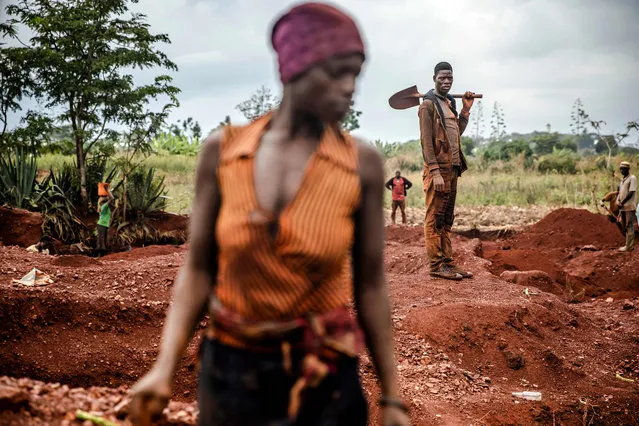
A gold miner observes from the distance how some women miners work at an open-pit gold mine in Nyarugusu, Geita Region, Tanzania on May 27, 2022. Tanzania is a land rich in minerals and one of the main gold producers in Africa, with gold representing more than 90% of the country's mineral exports. Artisanal and small-scale gold mining have culturally and historically relegated women's participation. The extractive sector in Tanzania has historically been a male-dominated industry with high levels of harassment, sеxual abuse, discrimination and misconceptions over women's involvement, and contributions following traditional beliefs. (Photo by Luis Tato/AFP Photo)

A gold miner observes from the distance how some women miners work at an open-pit gold mine in Nyarugusu, Geita Region, Tanzania on May 27, 2022. Tanzania is a land rich in minerals and one of the main gold producers in Africa, with gold representing more than 90% of the country's mineral exports. Artisanal and small-scale gold mining have culturally and historically relegated women's participation. The extractive sector in Tanzania has historically been a male-dominated industry with high levels of harassment, sеxual abuse, discrimination and misconceptions over women's involvement, and contributions following traditional beliefs. (Photo by Luis Tato/AFP Photo)
Details
13 Jun 2022 04:31:00
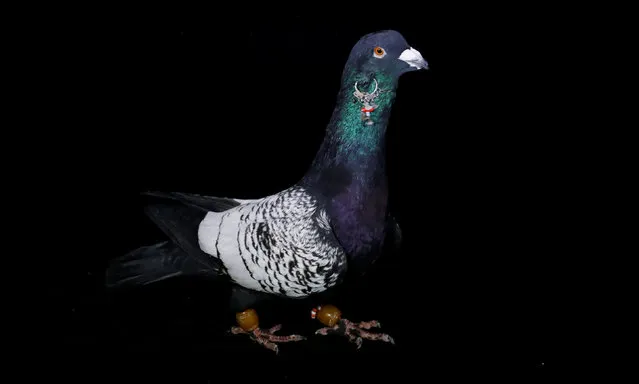
A pigeon, known as Siyah Kinifirli, with an approximate market value of 1000 Turkish Lira ($263), bred by 23-year-old Ismail Ozbek, is pictured in Sanliurfa, Turkey, December 23, 2016. As night-time approaches in Sanliurfa, southeastern Turkey, most of the alleyways of the city's old bazaar are emptying out of buyers and vendors, except for one. The bustle of daytime trading has died down, but on this little street, a stream of men carry cardboard boxes filled with pigeons to a cluster of three teahouses. Here, they sell the birds at Sanliurfa's famed auctions to a dedicated band of pigeon keepers and breeders, a pastime that has been thriving for hundreds of years across the region and over the nearby border into war-torn Syria. In a country where the minimum wage is about 1,400 Liras ($367) a month, enthusiasts regularly easily spend hundreds of dollars for one bird. “I once sold a pair of pigeons for 35,000 Turkish Lira”, says auctioneer Imam Dildas. “This is a passion, a hobby you cannot quit. I've been known to sell the fridge and my wife's gold bracelets to pay for pigeons”. (Photo by Umit Bektas/Reuters)

A pigeon, known as Siyah Kinifirli, with an approximate market value of 1000 Turkish Lira ($263), bred by 23-year-old Ismail Ozbek, is pictured in Sanliurfa, Turkey, December 23, 2016. As night-time approaches in Sanliurfa, southeastern Turkey, most of the alleyways of the city's old bazaar are emptying out of buyers and vendors, except for one. (Photo by Umit Bektas/Reuters)
Details
17 Jan 2017 12:05:00
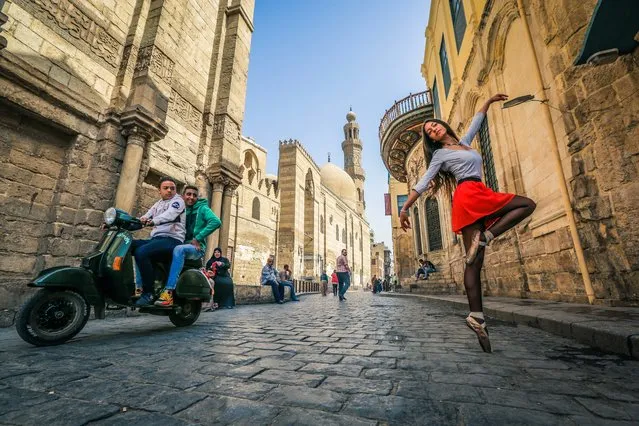
In his series “Ballerinas of Cairo”, photographer Mohamed Taher documents Egyptian dancers making the city streets their stage – pirouetting, leaping and posing their way through their country’s sprawling capital. The photos are, at first glance, stunning snapshots of a city’s vibrant culture in motion. But considering the dangers Egyptian women face for roaming these same streets on a daily basis, their impact is far deeper. Sexual harassment continues to present not just a possibility but a terrifying reality in present-day Egypt. A 2013 United Nations report calculated that 99.3 percent of women in the country have experienced sexual harassment on the streets, a problem that’s sparked initiatives giving women a way to fight back. The violence is rooted in an extreme conservative perspective encouraging women to stay in the home. (Photo by Mohamed Taher/Ballerinas of Cairo)

In his series “Ballerinas of Cairo”, photographer Mohamed Taher documents Egyptian dancers making the city streets their stage – pirouetting, leaping and posing their way through their country’s sprawling capital. The photos are, at first glance, stunning snapshots of a city’s vibrant culture in motion. (Photo by Mohamed Taher/Ballerinas of Cairo)
Details
17 Jan 2017 12:30:00
2016 Rio Olympics, Artistic Gymnastics, Preliminary, Women's Qualification, Subdivisions, Rio Olympic Arena, Rio de Janeiro, Brazil on August 7, 2016. Ruby Harrold (GBR) of United Kingdom (341) applies lipstick for Elissa Downie (GBR) of United Kingdom (centre R) during the women's qualifications. (Photo by Damir Sagolj/Reuters)

2016 Rio Olympics, Artistic Gymnastics, Preliminary, Women's Qualification, Subdivisions, Rio Olympic Arena, Rio de Janeiro, Brazil on August 7, 2016. Ruby Harrold (GBR) of United Kingdom (341) applies lipstick for Elissa Downie (GBR) of United Kingdom (centre R) during the women's qualifications. (Photo by Damir Sagolj/Reuters)
Details
09 Aug 2016 12:32:00
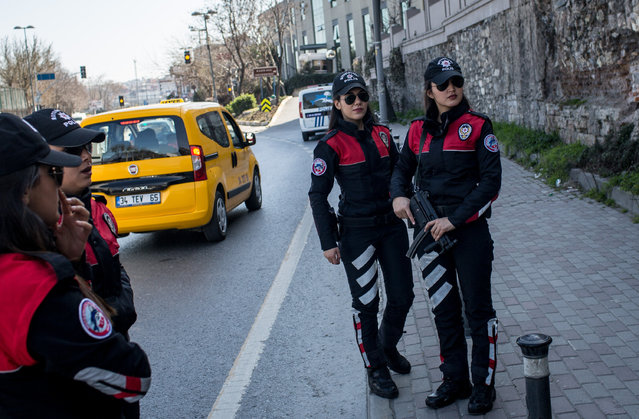
Female police officers from Istanbul's Motorcycled Police Unit wait to search vehicles during a roadside checkpoint operation on March 7, 2017 in Istanbul, Turkey. The rapid response unit nicknamed Dolphins is used primarily in crime prevention operations and has 25 female officers. 6% of Turkey's 250,000 strong police force are women, March 8 marks International Women's Day. (Photo by Chris McGrath/Getty Images)

Female police officers from Istanbul's Motorcycled Police Unit wait to search vehicles during a roadside checkpoint operation on March 7, 2017 in Istanbul, Turkey. The rapid response unit nicknamed Dolphins is used primarily in crime prevention operations and has 25 female officers. 6% of Turkey's 250,000 strong police force are women, March 8 marks International Women's Day. (Photo by Chris McGrath/Getty Images)
Details
09 Mar 2017 11:58:00
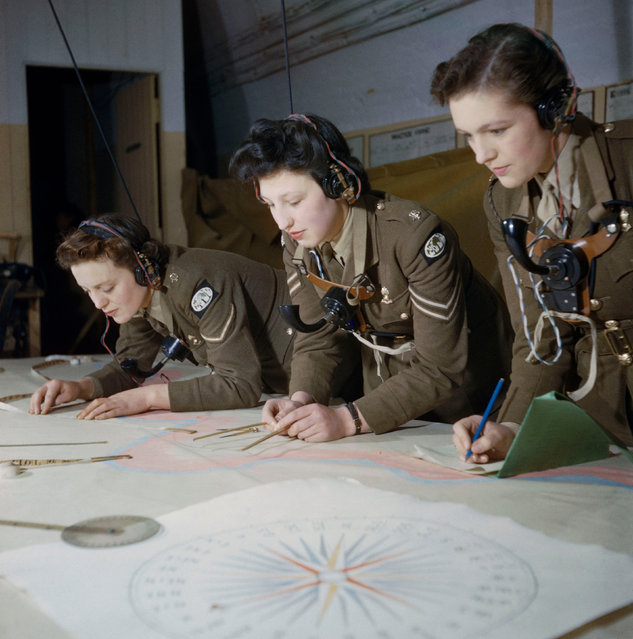
Auxiliary Territorial Service (ATS) plotters at work at Coastal Artillery Headquarters in Dover, December 1942. (Photo by Ted Dearberg/IWM/PA Wire)

Auxiliary Territorial Service (ATS) plotters at work at Coastal Artillery Headquarters in Dover, December 1942. The Auxiliary Territorial Service was the women's branch of the British Army during the Second World War. It was formed on 9 September 1938, initially as a women's voluntary service, and existed until 1 February 1949, when it was merged into the Women's Royal Army Corps. The ATS had its roots in the Women's Auxiliary Army Corps (WAAC), which was formed in 1917 as a voluntary service. During the First World War its members served in a number of jobs including clerks, cooks, telephonists and waitresses. The WAAC was disbanded after four years in 1921. (Photo by Ted Dearberg/IWM/PA Wire)
Details
13 Jul 2017 07:52:00