Loading...
Done
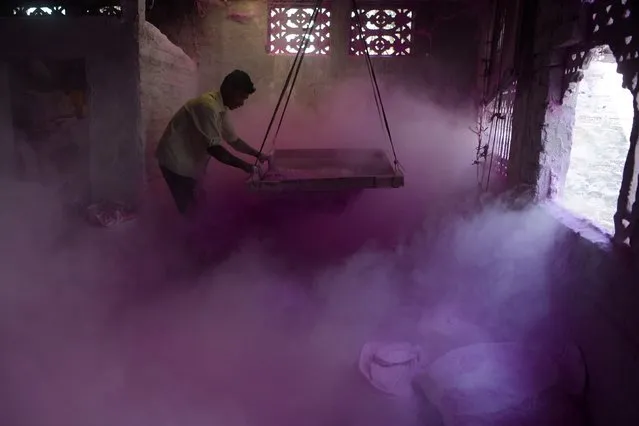
An Indian labourer sifts coloured powder, known as “gulal”, to be used during the forthcoming spring festival of Holi, inside a factory at Fulbari village on the outskirts of Siliguri on March 6, 2017. Holi, the popular Hindu spring festival of colours is observed in India at the end of the winter season on the last full moon of the lunar month, and will be celebrated on March 13 this year. (Photo by Diptendu Dutta/AFP Photo)

An Indian labourer sifts coloured powder, known as “gulal”, to be used during the forthcoming spring festival of Holi, inside a factory at Fulbari village on the outskirts of Siliguri on March 6, 2017. Holi, the popular Hindu spring festival of colours is observed in India at the end of the winter season on the last full moon of the lunar month, and will be celebrated on March 13 this year. (Photo by Diptendu Dutta/AFP Photo)
Details
08 Mar 2017 00:04:00
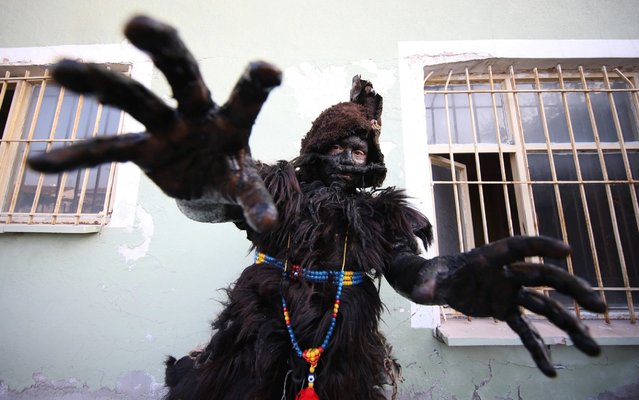
A leather worker with his frightening types of clothes prepares after painted themselves using chimney soot as they participate in a programme within the September 6 celebrations, in Balikesir, Turkey on September 06, 2019. According to the story, “Tulutabaklar” were painting themselves with ash and wearing goatskin or sheep skin to frighten the Greek soldiers occupying Balikesir during the National Struggle period. Every year on September 6, Tulutabaklar perform this ritual as part of the celebration of liberation of the city for 96 years. (Photo by Ali Atmaca/Anadolu Agency via Getty Images)

A leather worker with his frightening types of clothes prepares after painted themselves using chimney soot as they participate in a programme within the September 6 celebrations, in Balikesir, Turkey on September 06, 2019. According to the story, “Tulutabaklar” were painting themselves with ash and wearing goatskin or sheep skin to frighten the Greek soldiers occupying Balikesir during the National Struggle period. Every year on September 6, Tulutabaklar perform this ritual as part of the celebration of liberation of the city for 96 years. (Photo by Ali Atmaca/Anadolu Agency via Getty Images)
Details
09 Sep 2019 00:05:00
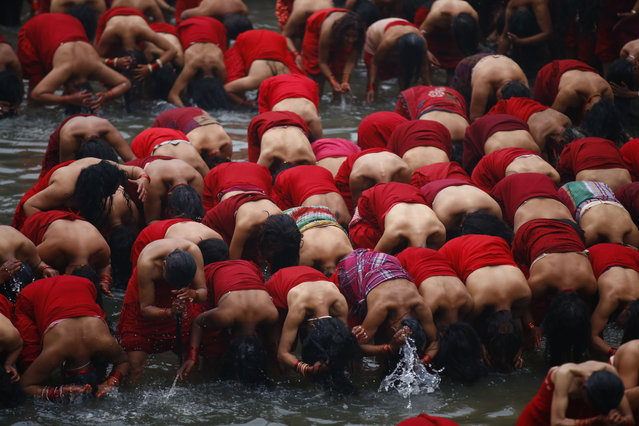
Nepalese devotee women take a holy bath after offering prayers in Pashupathinath Temple premise during the month-long Swasthani Bratakatha festival, devoted to goddess Shree Swasthani in Kathmandu on February 8, 2016. Devotees recite Holy Scripture and women pray for wellbeing of their spouses throughout the month-long fast. (Photo by Skanda Gautam via ZUMA Wire)

Nepalese devotee women take a holy bath after offering prayers in Pashupathinath Temple premise during the month-long Swasthani Bratakatha festival, devoted to goddess Shree Swasthani in Kathmandu on February 8, 2016. Devotees recite Holy Scripture and women pray for wellbeing of their spouses throughout the month-long fast. (Photo by Skanda Gautam via ZUMA Wire)
Details
09 Feb 2016 13:34:00
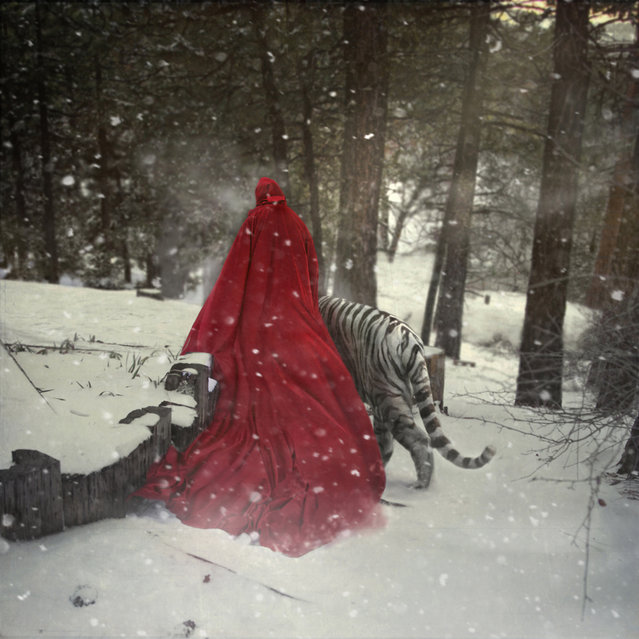
“Walking on Tranquil Paths”. (Photo by Trini61)

“Walking on Tranquil Paths”. (Photo by Trini61)
Details
10 Jun 2013 11:01:00
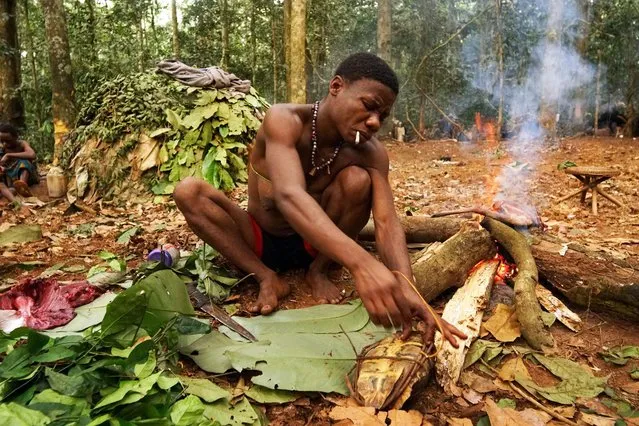
Baka pygmies in their forest home preparing food in, Sangha Forest, Central African Republic, February 2016. (Photo by Susan Schulman/Barcroft Images)

Baka pygmies in their forest home preparing food in, Sangha Forest, Central African Republic, February 2016. Here, in their forest home, traditional life continues in the face of multiplying challenges ranging from poachers, to ill health. Deep in the rainforests of central Africa lives one of the world’s most mysterious tribes. (Photo by Susan Schulman/Barcroft Images)
Details
18 Feb 2017 00:01:00
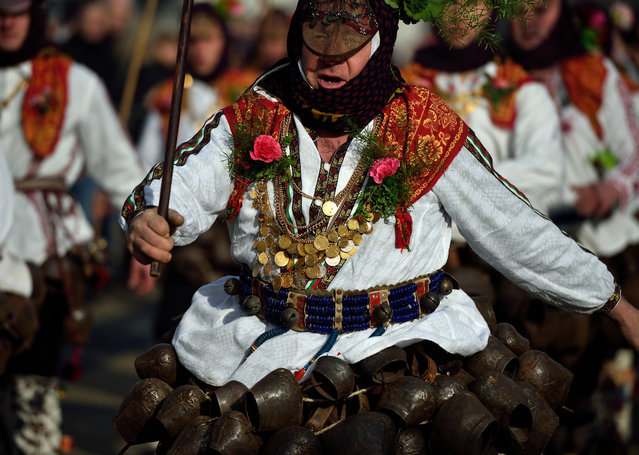
Mask dancers take part in a parade during the the International Festival of Masquerade Games “Surva” in the town of Pernik, some 30 km from Sofia, Bulgaria, January 31, 2016. (Photo by Vassil Donev/EPA)

Mask dancers take part in a parade during the the International Festival of Masquerade Games “Surva” in the town of Pernik, some 30 km from Sofia, Bulgaria, January 31, 2016. (Photo by Vassil Donev/EPA)
Details
01 Feb 2016 13:31:00
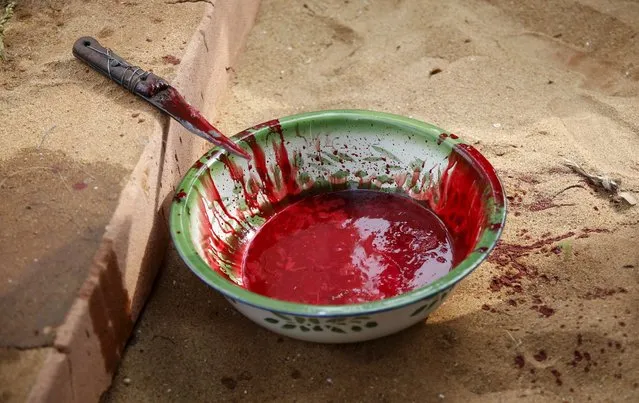
A knife is seen beside a bowl containing blood after a ram was killed as a sacrifice in front of a shrine at the annual voodoo festival in Ouidah, Benin, January 10, 2016. (Photo by Akintunde Akinleye/Reuters)

A knife is seen beside a bowl containing blood after a ram was killed as a sacrifice in front of a shrine at the annual voodoo festival in Ouidah, Benin, January 10, 2016. In Ouidah, a small town and former slave port in the West African country of Benin, the annual voodoo festival gathers visitors from far and wide. It's a week that brings together priests and dignitaries, rich and poor, locals and visitors from as far afield as the Caribbean and France. The festival commemorates the estimated 60 million people who lost their homelands and their freedom during the African slave trade. (Photo by Akintunde Akinleye/Reuters)
Details
23 Jan 2016 12:55:00
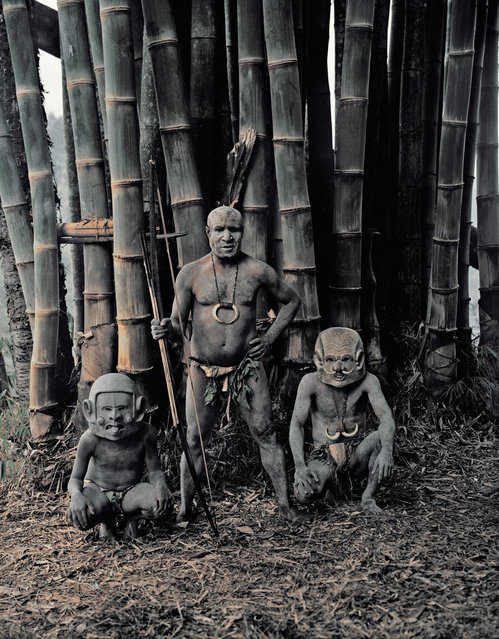
“Asaro from the Eastern Highlands”. The mudmen could not cover their faces with mud because the people of Papua New Guinea thought that the mud from the Asaro river was poisonous. So instead of covering their faces with this alleged poison, they made masks from pebbles that they heated and water from the waterfall, with unusual designs such as long or very short ears either going down to the chin or sticking up at the top, long joined eyebrows attached to the top of the ears, horns and sideways mouths. (Jimmy Nelson)

“Asaro from the Eastern Highlands”. The mudmen could not cover their faces with mud because the people of Papua New Guinea thought that the mud from the Asaro river was poisonous. So instead of covering their faces with this alleged poison, they made masks from pebbles that they heated and water from the waterfall, with unusual designs such as long or very short ears either going down to the chin or sticking up at the top, long joined eyebrows attached to the top of the ears, horns and sideways mouths. (Photo and caption by Jimmy Nelson)
Details
20 Oct 2013 08:54:00