Loading...
Done
A photograph of a dog taken from underneath on December 2016 in VA, Canada. (Photo by The Underdogs Project/Barcroft Images)

A photograph of a dog taken from underneath on December 2016 in VA, Canada. Forget the cats, itÌs just raining dogs! A creative duo have come up with an innovative way to raise money for animal welfare; photographing dogs as youÌve never seen them before. Professional photographer Jason Kenzie and designer Tania Ryan have created a unique set of images from the underside of dogs, named The Underdogs Project. The project will be featured as a 2017 calendar, with each month belonging to a quirky canine. (Photo by The Underdogs Project/Barcroft Images)
Details
20 Dec 2016 12:32:00
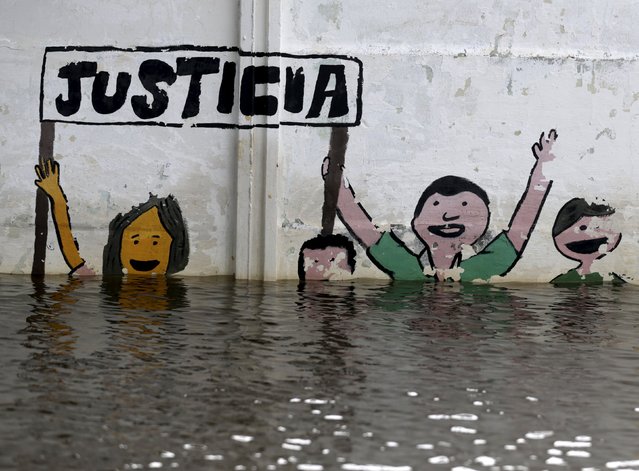
Graffiti saying “justice” partially seen above flood waters in Asuncion, December 27, 2015. (Photo by Jorge Adorno/Reuters)

Graffiti saying “justice” partially seen above flood waters in Asuncion, December 27, 2015. More than 100,000 people have had to evacuate from their homes in the bordering areas of Paraguay, Uruguay, Brazil and Argentina due to severe flooding in the wake of heavy summer rains brought on by El Nino, authorities said on Saturday. (Photo by Jorge Adorno/Reuters)
Details
29 Dec 2015 08:02:00
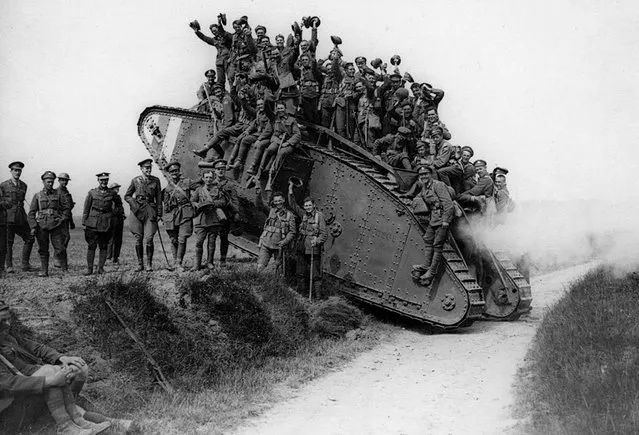
These black-and-white photos are taken from the new book “Armoured Warfare in the First World War 1916 – 1918” by Anthony Tucker-Jones and published by Pen & Sword Military. “Interestingly the British, French and Germans took completely different approaches with varying results”. The British military produced “Little Willie” in Autumn 1915 weighing 18 tonnes, which had a crew of two plus four gunners. “Inspired by a tracked artillery tractor “Little Willie” was referred to as a water tank – hence the name tank – to ensure secrecy”, said Anthony. “This led to the strange looking Mark I with its peculiar rhomboid shape, designed to cross trenches with guns in sponsons on either side. The Germans saw the tank as unchivalrous and were slow to grasp its utility. They favoured the Stormtrooper (specialist soldiers used to infiltrate enemy trenches) and artillery, not the tank”, said Anthony. “However, they didn’t hesitate to make use of captured British tanks. Although the tank helped secure victory and German soldiers dubbed it “Germany’s Downfall” the country was ultimately brought to its knees by the Allies blockade”. Here: British troops hitch a ride on a Mark IV after the massed tank fleet spearheading attack at Cambrai on November 20, 1917. (Photo by Anthony Tucker-Jones/Mediadrumworld.com)

These black-and-white photos are taken from the new book “Armoured Warfare in the First World War 1916 – 1918” by Anthony Tucker-Jones and published by Pen & Sword Military. Here: British troops hitch a ride on a Mark IV after the massed tank fleet spearheading attack at Cambrai on November 20, 1917. (Photo by Anthony Tucker-Jones/Mediadrumworld.com)
Details
23 Feb 2017 00:02:00
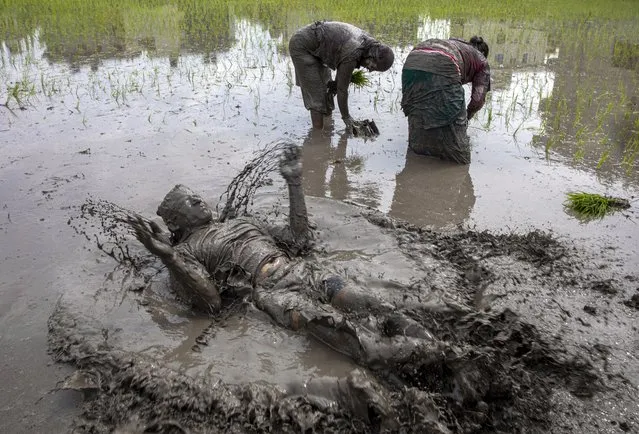
People splash mud water in a paddy field on National Paddy Day in Tokha village, on the outskirt of capital Kathmandu, Nepal, 29 June 2021. Nepal is celebrating National Paddy Day with various events on 29 June. On this day, known as Asar Pandra, farmers begin the annual rice planting season and mark the day with various festivities such as preparing rice meals with muddy water, mud being a symbol for a prosperous season. Sixty percent of Nepal's agriculture industry relies on monsoon rain while 40 percent is carried out through irrigation. Agriculture is a major contributor to the country's GDP. (Photo by Narendra Shrestha/EPA/EFE)

People splash mud water in a paddy field on National Paddy Day in Tokha village, on the outskirt of capital Kathmandu, Nepal, 29 June 2021. Nepal is celebrating National Paddy Day with various events on 29 June. On this day, known as Asar Pandra, farmers begin the annual rice planting season and mark the day with various festivities such as preparing rice meals with muddy water, mud being a symbol for a prosperous season. Sixty percent of Nepal's agriculture industry relies on monsoon rain while 40 percent is carried out through irrigation. Agriculture is a major contributor to the country's GDP. (Photo by Narendra Shrestha/EPA/EFE)
Details
10 Jul 2021 08:53:00
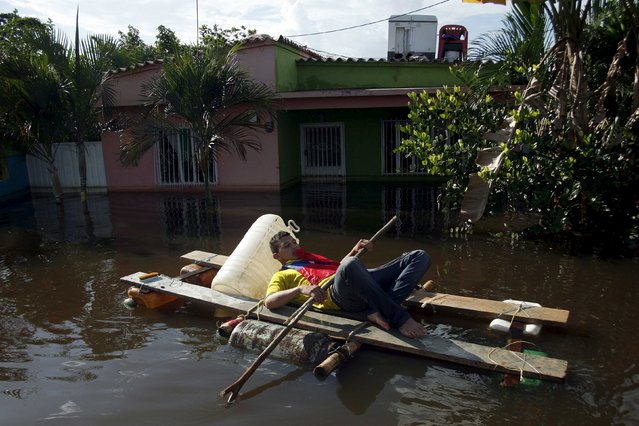
A man paddles a makeshift boat along a flooded street in Guasdualito, in the state of Apure, Venezuela, July 4, 2015. (Photo by Carlos Eduardo Ramirez/Reuters)

A man paddles a makeshift boat along a flooded street in Guasdualito, in the state of Apure, Venezuela, July 4, 2015. A total of 9,000 families have been affected by the overflowing of rivers Arauca and Sarare in Guasdualito, Apure state, because of the heavy rains in recent days in this area of the country, local media reported. (Photo by Carlos Eduardo Ramirez/Reuters)
Details
06 Jul 2015 10:22:00
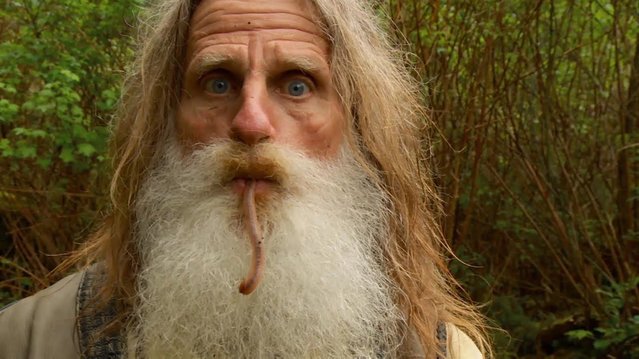
Mick Dodge AKA "The Barefoot Sensei

If you were to meet this guy in the woods, especially if it’s nighttime, you’d probably think that it’s a local troll or a yeti. However, in reality, he’s no yeti. His name is Mick Dodge, and before deciding to live in the woods, he was a marine for six years at Fort Lewis. It is hard to tell what moved him to leave the busy life of the city and start living in the Hoh Rain Forest. It could have been that he decided the leave the stressful life of the city, or maybe he simply loves the solitary life of a hermit. Another thing that is peculiar about Mick Dodge is that most of the time he walks barefoot, hence the nickname “The Barefoot Sensei”.
Details
27 Nov 2014 14:54:00
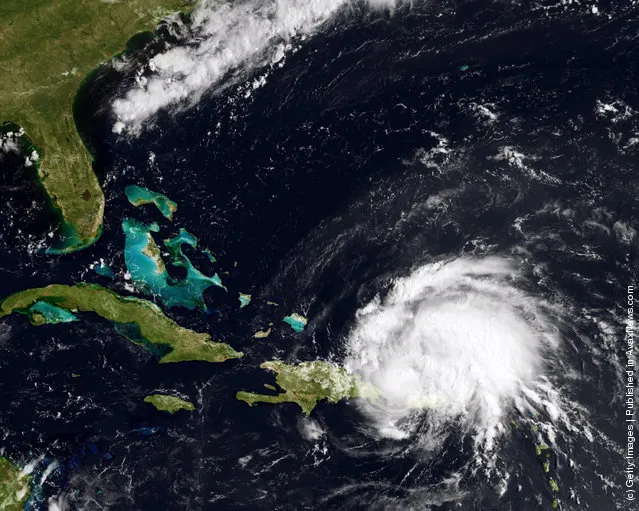
Hurricane Irene

In this handout GOES satellite image provided by the National Oceanic and Atmospheric Administration (NOAA), Irene reaches hurricane strength as it moves across Puerto Rico towards Hispaniola August 22, 2011 in the Caribbean Sea. Irene, the first hurricane of the Atlantic storm season, brought torrential rains and winds to Puerto Rico, downing trees and powerlines and flooding streets. The expected path will bring Irene through the Bahamas and is likely to hit Florida and up the east coast of the U.S. (Photo by NOAA via Getty Images)
Details
23 Aug 2011 12:47:00
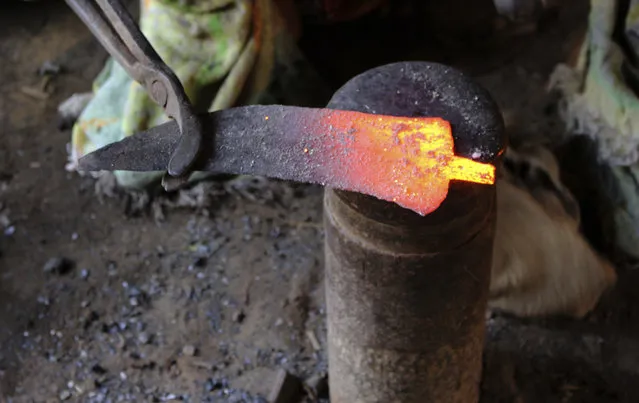
In this October 6, 2018, photo, a craftsman makes daggers or “Jambiyya” in Yemeni Arabic, made out of remains of missiles, at his workshop, in Hajjah, Yemen. (Photo by Hammadi Issa/AP Photo)

In this October 6, 2018, photo, a craftsman makes daggers or “Jambiyya” in Yemeni Arabic, made out of remains of missiles, at his workshop, in Hajjah, Yemen. Missiles raining on Yemen from the jets of the Saudi-led coalition fighting Houthi rebels are killing thousands of civilians and militiamen alike, but amid crashing economy, some Yemenis see the bright side of it: they make daggers out of the fragments of the missiles for ordinary men traditionally wear for prestige and a show of courage. (Photo by Hammadi Issa/AP Photo)
Details
10 Oct 2018 00:01:00