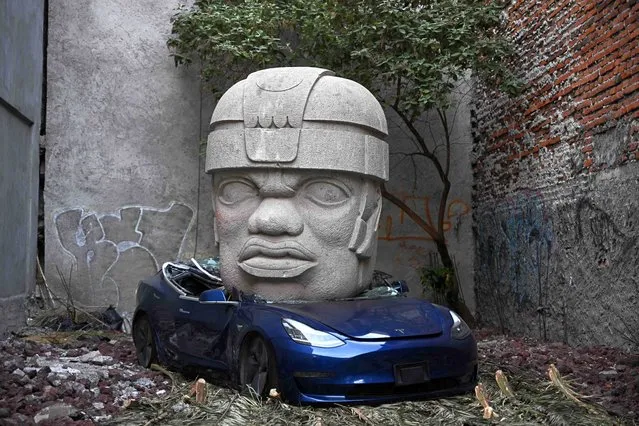
An artwork by artist Chavis Marmol, a Tesla 3 car crushed by a nine-ton Olmec-inspired head, is pictured in Mexico City on March 13, 2024. (Photo by Carl de Souza/AFP Photo)
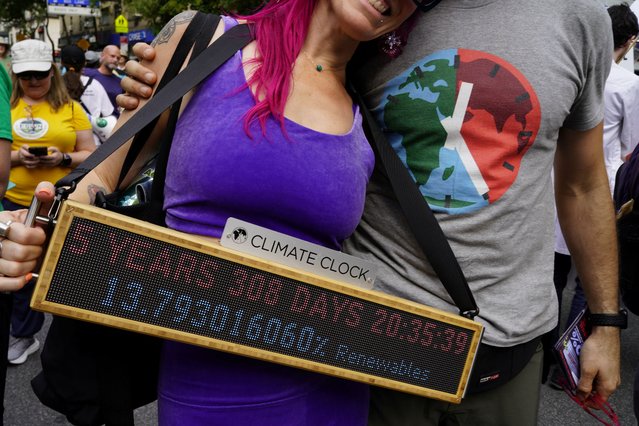
A woman carries a 'Climate Clock' as activists mark the start of Climate Week in New York during a demonstration calling for the U.S. government to take action on climate change and reject the use of fossil fuels in New York City, New York, U.S., September 17, 2023. (Photo by Eduardo Munoz/Reuters)
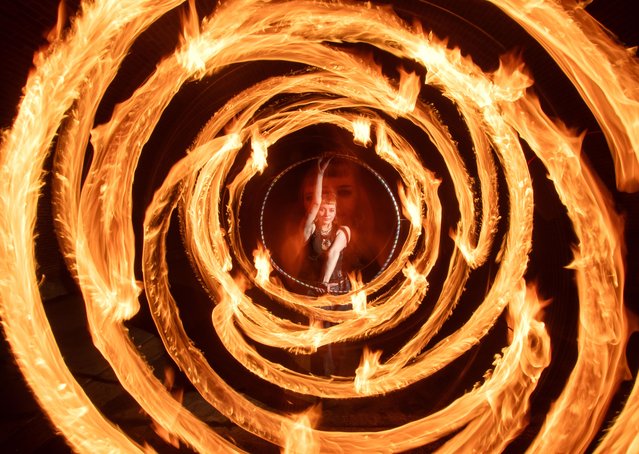
The M25 Fire Spinners practise their skills along the Thames path at Runnymede in Surrey, UK on February 22, 2025. (Photo by Kevin Jay/Picture Exclusive)
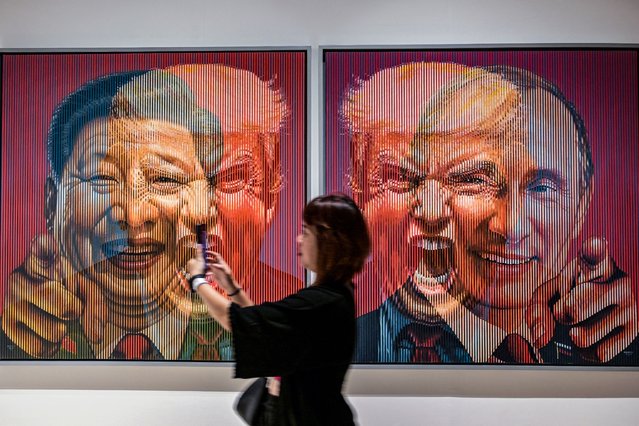
A visitor stands near an art installation portraying China's President Xi Jinping, U.S. President Donald Trump and Russia's President Vladimir Putin during the ARTSUBS exhibition in Surabaya, Indonesia on August 2, 2025. (Photo by Juni Kriswanto/AFP Photo)
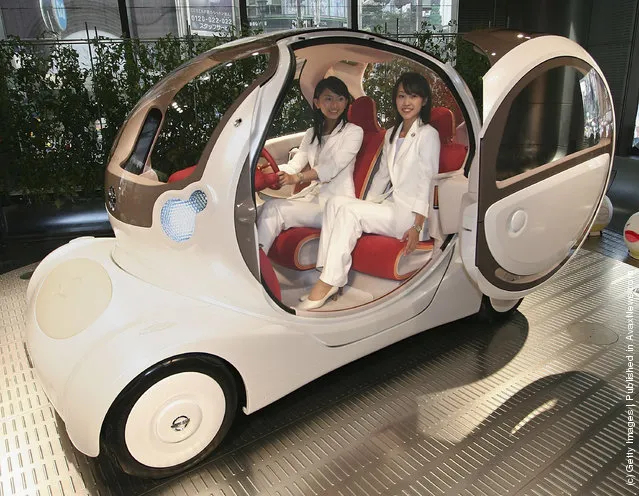
“Pivo”, Nissan's concept car is introduced at Nissan's Gallery on September 30, 2005 in Tokyo, Japan. “Pivo” is an electric car in which the direction of the cabin moves 180 degrees, therefore, when making a turn in a different direction, it simply needs to move the cabin without moving the car. (Photo by Koichi Kamoshida/Getty Images)
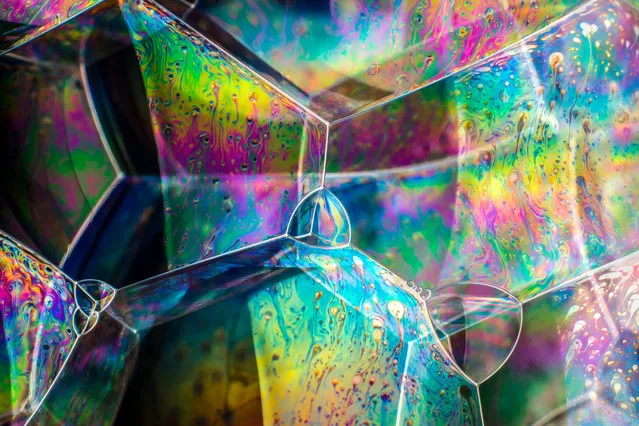
Soap Bubble Structures by Kym Cox. Bubbles optimise space and minimise their surface area for a given volume of air. This phenomenon makes them a useful tool in many areas of research, in particular, materials science and “packing” – how things fit together. Bubble walls drain under gravity, thin at the top, thick at the bottom, which interferes with travelling lightwaves to create bands of colour. Black spots show the wall is too thin for interference colours, indicating the bubble is about to burst. (Photo by Kym Cox/2019 Science Photographer of the Year/RPS)
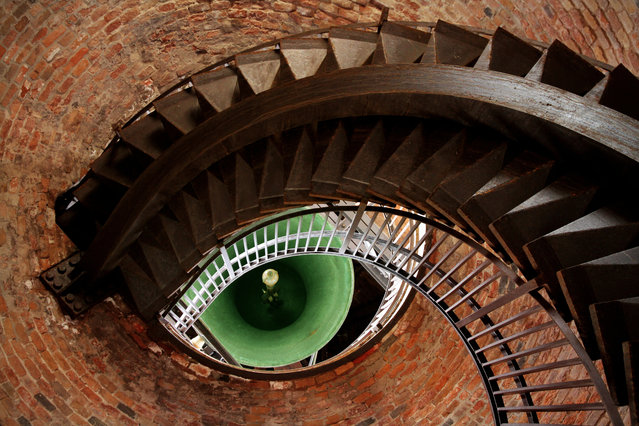
“Eye of the Tower” by Mehmet Yasa; Verona, Italy. “The staircase and the bell looks like an eye. Architecture can fascinate us in many ways”. (Photo by Mehmet Yasa/Art of Building Photography Awards 2017)