Loading...
Done
Reverse Side Of A Mother’s Love By Anna Radchenko

Photographer Anna Radchenko explores this theme in her project “Reverse Side of a Mother’s Love,” where mother love becomes more than just mother-daughter relationship and causes some strange feelings. She visualizes, sadly, typical psychological problems in parent-child relationship: unrealized wishes of the parents, excessive strictness, total control and overprotection.
Details
08 May 2014 11:07:00
Italy's Arianna Valcepina falls during the women's 500 m qualifying race at the ISU Short Track Speed Skating World Cup in Gdansk, Poland, 16 February 2024. (Photo by Adam Warzawa/EPA)

Italy's Arianna Valcepina falls during the women's 500 m qualifying race at the ISU Short Track Speed Skating World Cup in Gdansk, Poland, 16 February 2024. (Photo by Adam Warzawa/EPA)
Details
23 Feb 2024 08:19:00
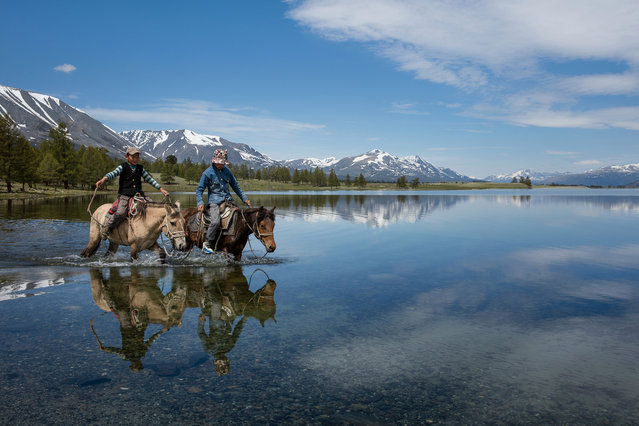
Joel said documenting the Kazakh nomad summer migration was really an epic journey – a time travel journey – and at the same time was possible to get an understanding of how the balance of nature is still possible in Altai Mountains, Mongolia, June 2015. (Photo by Joel Santos/Barcroft Images)

Joel said documenting the Kazakh nomad summer migration was really an epic journey – a time travel journey – and at the same time was possible to get an understanding of how the balance of nature is still possible in Altai Mountains, Mongolia, June 2015. (Photo by Joel Santos/Barcroft Images)
Details
30 Nov 2016 13:23:00
Two victims amid the rubble of a garment factory building collapse in Savar, near Dhaka, Bangladesh, April 25, 2013. (Photo by Taslima Akhter)

Many powerful photographs have been made in the aftermath of the devastating collapse of a garment factory on the outskirts of Dhaka, Bangladesh. But one photo, by Bangladeshi photographer Taslima Akhter, has emerged as the most heart wrenching, capturing an entire country’s grief in a single image... Photo: Two victims amid the rubble of a garment factory building collapse in Savar, near Dhaka, Bangladesh, April 25, 2013. (Photo by Taslima Akhter)
Details
10 May 2013 11:19:00
In late summer and early autumn polar bears flock to the native village of Kaktovik in the Alaskan Arctic to eat at “the boneyard” – the remains of whales annually hunted by the community. (Photo by Katie Orlinsky/Getty Images)

A selection of work by four photojournalists who have won grants of $10,000 and editorial support from the agency. Here: “Chasing Winter” by Katie Orlinksy. In late summer and early autumn polar bears flock to the native village of Kaktovik in the Alaskan Arctic to eat at “the boneyard” – the remains of whales annually hunted by the community. (Photo by Katie Orlinsky/Getty Images)
Details
02 Sep 2016 13:55:00
An alien-shaped hot air balloon flies during a mass launch at the annual Bristol International Balloon Fiesta, near Bristol, Britain, on August 8, 2025. (Photo by Toby Melville/Reuters)

An alien-shaped hot air balloon flies during a mass launch at the annual Bristol International Balloon Fiesta, near Bristol, Britain, on August 8, 2025. (Photo by Toby Melville/Reuters)
Details
10 Oct 2025 04:33:00
Tiffany Porter of Britain falls after competing in the women's 100 metres hurdles final during the 15th IAAF World Championships at the National Stadium in Beijing, China August 28, 2015. (Photo by David Gray/Reuters)

Tiffany Porter of Britain falls after competing in the women's 100 metres hurdles final during the 15th IAAF World Championships at the National Stadium in Beijing, China August 28, 2015. (Photo by David Gray/Reuters)
Details
29 Aug 2015 10:54:00
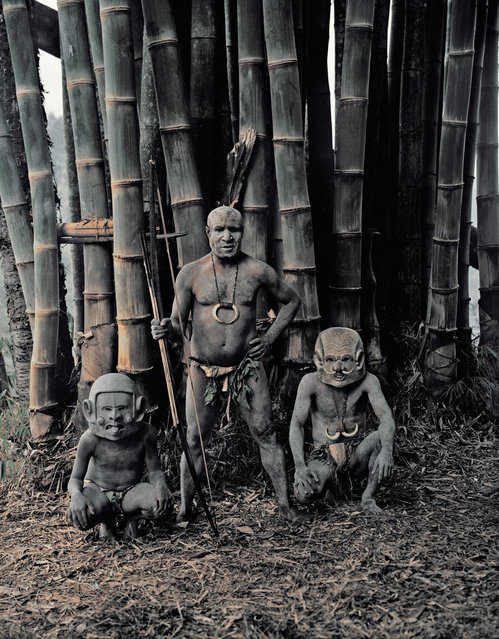
“Asaro from the Eastern Highlands”. The mudmen could not cover their faces with mud because the people of Papua New Guinea thought that the mud from the Asaro river was poisonous. So instead of covering their faces with this alleged poison, they made masks from pebbles that they heated and water from the waterfall, with unusual designs such as long or very short ears either going down to the chin or sticking up at the top, long joined eyebrows attached to the top of the ears, horns and sideways mouths. (Jimmy Nelson)

“Asaro from the Eastern Highlands”. The mudmen could not cover their faces with mud because the people of Papua New Guinea thought that the mud from the Asaro river was poisonous. So instead of covering their faces with this alleged poison, they made masks from pebbles that they heated and water from the waterfall, with unusual designs such as long or very short ears either going down to the chin or sticking up at the top, long joined eyebrows attached to the top of the ears, horns and sideways mouths. (Photo and caption by Jimmy Nelson)
Details
20 Oct 2013 08:54:00