Loading...
Done
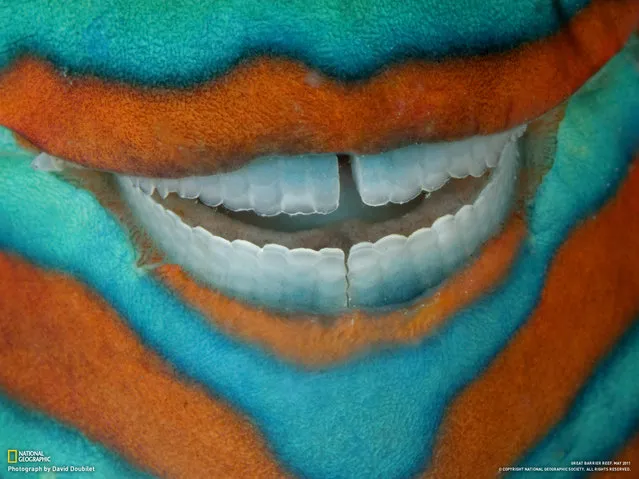
Photographers: David Doubilet

“David Doubilet (born 28 November 1946) is a well known underwater photographer known primarily for his work published in National Geographic Magazine. He was born in New York and started taking photos underwater at the young age of 12. He started with a Brownie Hawkeye in a rubber anesthesiologist's bag to keep the water out of the camera. During his summer holidays, he spent his time along the New Jersey coast. He later worked as a diver and photographer for the Sandy Hook Marine Laboratories in New Jersey. He also spent much time in the Caribbean. While a dive instructor in the Bahamas he found his motivation to capture the beauty of the sea and everything in it”. – Wikipedia. (Photo by David Doubilet/National Geographic)
Details
16 May 2012 12:21:00
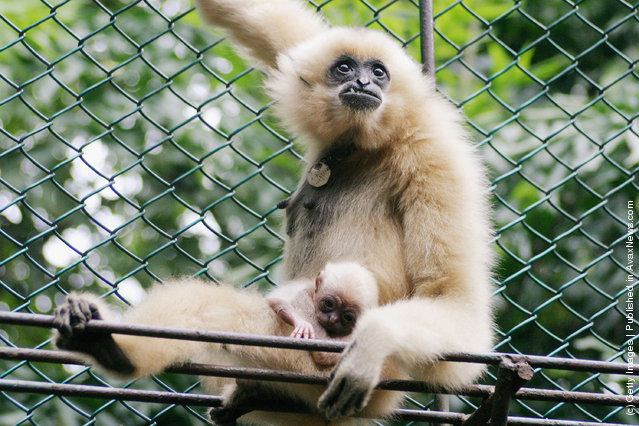
Newborn White-Cheeked Gibbon Nomascus

“Nomascus is the second most speciose genus of gibbons (family Hylobatidae). Originally this genus was a subgenus of Hylobates, and all individuals were considered one species, Hylobates concolor. Species within Nomascus are characterized by 52 chromosomes. Some species are all black, some light with a distinct black tuft of crown fur, and some by distinct, light-colored cheek patches. Nomascus is found from southern China (Yunnan) to southern Vietnam, and also on Hainan Island. One of the genus' species, Nomascus nasutus, has been deemed “the most critically endangered ape species in the world”. All of the species in this genus are endangered or critically endangered”. – Wikipedia

Photo: A newborn White-Cheeked Gibbon clings to its mother in the Nanning Zoo on April 12, 2004 in Nanning, Guangxi province, China. The White-Cheeked Gibbon's natural habitat is Southern China as well as Vietnam and Laos. They are classified as highly endangered and are on the brink of extinction due to poaching and reduction of natural rainforests. (Photo by Getty Images)

Details
12 Aug 2011 11:51:00
Filipino children frolic next to ships taking shelter inside a seaport in Navotas city, north of Manila, Philippines, 27 August 2019. According to the latest advisory from Philippine Atmospheric Geophysical and Astronomical Services Administration (PAGASA), Tropical Storm Podul intensified from a tropical depression into a tropical storm on August 27, while moving toward Central Luzon with a maximum winds of 65 kilometers per hour and gustiness of up to 80 km/h. (Photo by Francis R. Malasig/EPA/EFE)

Filipino children frolic next to ships taking shelter inside a seaport in Navotas city, north of Manila, Philippines, 27 August 2019. According to the latest advisory from Philippine Atmospheric Geophysical and Astronomical Services Administration (PAGASA), Tropical Storm Podul intensified from a tropical depression into a tropical storm on August 27, while moving toward Central Luzon with a maximum winds of 65 kilometers per hour and gustiness of up to 80 km/h. (Photo by Francis R. Malasig/EPA/EFE)
Details
14 Jan 2020 00:01:00
In this Wednesday, April 3, 2019, photo, children play in the water on a beach as a mosque collapsed during the Sept. 28, 2018, earthquake is seen in the background in Palu, Central Sulawesi, Indonesia. The earthquake spawned a large localized tsunami that wiped out coastal areas, while liquefaction caused by the shaking turned entire neighborhoods into rivers of sludge. The disaster killed thousands of people, making it the world’s deadliest seismic event in 2018. (Photo by Tatan Syuflana/AP Photo)

In this Wednesday, April 3, 2019, photo, children play in the water on a beach as a mosque collapsed during the Sept. 28, 2018, earthquake is seen in the background in Palu, Central Sulawesi, Indonesia. The earthquake spawned a large localized tsunami that wiped out coastal areas, while liquefaction caused by the shaking turned entire neighborhoods into rivers of sludge. The disaster killed thousands of people, making it the world’s deadliest seismic event in 2018. (Photo by Tatan Syuflana/AP Photo)
Details
04 May 2019 00:05:00
Aliana Alexis of Haiti stands on the concrete slab of what is left of her home after destruction from Hurricane Dorian in an area called “The Mud” at Marsh Harbour in Great Abaco Island, Bahamas on September 5, 2019. (Photo by Al Diaz/Zuma Press via AFP Photo)

Aliana Alexis of Haiti stands on the concrete slab of what is left of her home after destruction from Hurricane Dorian in an area called “The Mud” at Marsh Harbour in Great Abaco Island, Bahamas on September 5, 2019. Hurricane Dorian lashed the Carolinas with driving rain and fierce winds as it neared the US east coast Thursday after devastating the Bahamas and killing at least 20 people. (Photo by Al Diaz/Zuma Press via AFP Photo)
Details
07 Sep 2019 00:05:00
In this September 1, 2016 photo, 90-year-old street vendor Antonio Bauza waits for tourists to sell his bananas, next to the village church in Remedios, Cuba. With the arrival of the first commercial flights from the U.S. to Cuba in more than 50 years, the Cuban government is welcoming the wave of new visitors and struggling to update infrastructure that's already overwhelmed. (Photo by Ramon Espinosa/AP Photo)

In this September 1, 2016 photo, 90-year-old street vendor Antonio Bauza waits for tourists to sell his bananas, next to the village church in Remedios, Cuba. With the arrival of the first commercial flights from the U.S. to Cuba in more than 50 years, the Cuban government is welcoming the wave of new visitors and struggling to update infrastructure that's already overwhelmed. (Photo by Ramon Espinosa/AP Photo)
Details
10 Sep 2016 08:54:00
Luling, Louisiana US. New evidence contradicts previous claims of the relative safety of glyphosate, the world’s most widely used herbicide, which is manufactured here. It is often used in conjunction with seeds that have been genetically modified to tolerate its application, meaning that anyone consuming these crops is eating a genetically modified plant, and whatever residue of the pesticide that remains. (Photo by J. Henry Fair/Industrial Scars/Papadakis Publisher)

Luling, Louisiana, US. New evidence contradicts previous claims of the relative safety of glyphosate, the world’s most widely used herbicide, which is manufactured here. It is often used in conjunction with seeds that have been genetically modified to tolerate its application, meaning that anyone consuming these crops is eating a genetically modified plant, and whatever residue of the pesticide that remains. (Photo by J. Henry Fair/Industrial Scars/Papadakis Publisher)
Details
25 Oct 2016 10:40:00
Baby Parrots meet each other after they were caught and preserved by local hunters for sale. Parrots, are among the most intelligent birds, and the ability of some species to imitate human voices enhances their popularity as pets. (Photo by Caisii Mao/NurPhoto/Sipa USA)

Wildlife are hunted down for consumption or for sale in the India eastern state of Nagaland. Hunters can make a good living, with some bred for food or to be sold as pets. These baby parrots, photographed by Caisii Mao via Sipa USA, are seen after they were caught and preserved by a local hunter and for sale at a private residence in Dimapur, India north eastern state of Nagaland on Wednesday, July 24, 2013. (Photo by Caisii Mao/NurPhoto/Sipa USA)
Details
28 Jul 2013 08:45:00