Loading...
Done
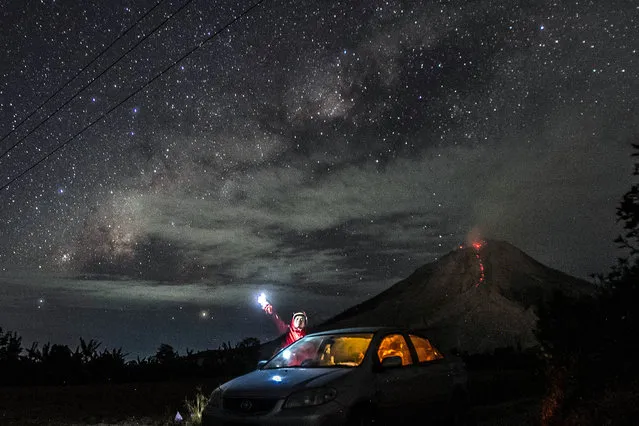
Long Exposure pictures showing Mount Sinabung spewing out hot lava on August 2, 2017 in Karo, Indonesia. Sinabung located in North Sumatra Province roared back to life in 2010 for the first time in 400 years. After another period of inactivity it erupted once more in 2013, and has remained highly active since. (Photo by Albert Damanik/Barcroft Images)

Long Exposure pictures showing Mount Sinabung spewing out hot lava on August 2, 2017 in Karo, Indonesia. Sinabung located in North Sumatra Province roared back to life in 2010 for the first time in 400 years. After another period of inactivity it erupted once more in 2013, and has remained highly active since. (Photo by Albert Damanik/Barcroft Images)
Details
03 Aug 2017 09:09:00
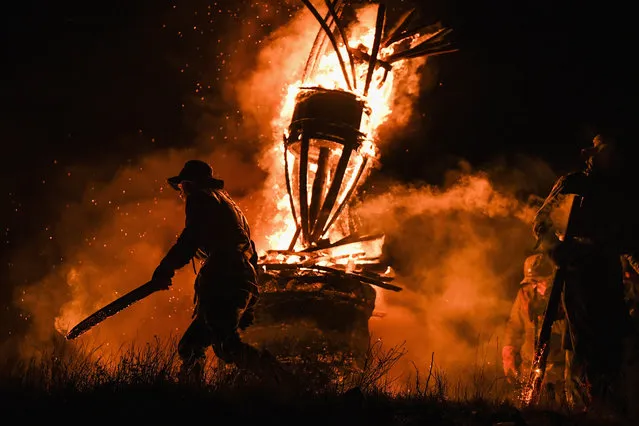
The Clavie, a burning barrel packed with tar soaked sticks fixed on the top of a pole, is surrounded by people at the Doorie Hill on January 11, 2018 in Burghead, Scotland. People welcome in the New Year with the fire ceremony which has ancient roots dating back to the 1750s, when the Julian calendar was reformed in Britain. It is believed to bring good luck for the coming year. (Photo by Jeff J. Mitchell/Getty Images)

The Clavie, a burning barrel packed with tar soaked sticks fixed on the top of a pole, is surrounded by people at the Doorie Hill on January 11, 2018 in Burghead, Scotland. People welcome in the New Year with the fire ceremony which has ancient roots dating back to the 1750s, when the Julian calendar was reformed in Britain. It is believed to bring good luck for the coming year. (Photo by Jeff J. Mitchell/Getty Images)
Details
12 Jan 2018 08:34:00
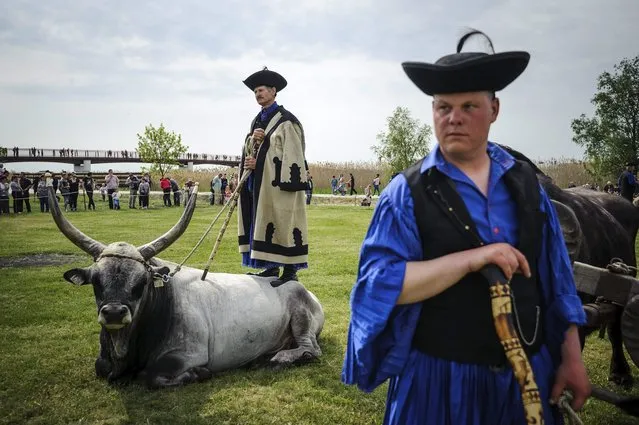
A herdsman stands on the back of a grey bull during a ceremony of driving sheep from their winter habitat to their summer pasture in the puszta or Hungarian steppe of Hortobagy, 183 kms east of Budapest, Hungary, 23 April 2016. Sheep are traditionally driven to their summer pasture at around St. George's Day in the Hortobagy region, because livestock breeding people traditionally consider St. George's Day the beginning of spring. (Photo by Zsolt Czegledi/EPA)

A herdsman stands on the back of a grey bull during a ceremony of driving sheep from their winter habitat to their summer pasture in the puszta or Hungarian steppe of Hortobagy, 183 kms east of Budapest, Hungary, 23 April 2016. Sheep are traditionally driven to their summer pasture at around St. George's Day in the Hortobagy region, because livestock breeding people traditionally consider St. George's Day the beginning of spring. (Photo by Zsolt Czegledi/EPA)
Details
24 Apr 2016 09:27:00
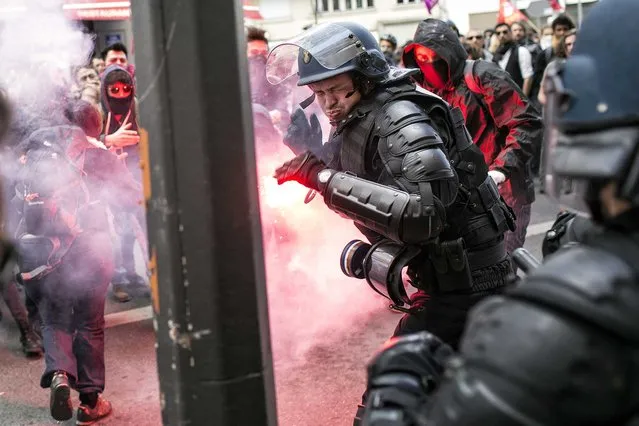
A policeman reacts during a clash with protestors during a protest against the proposed changes to France's working week and layoff practices, in Lyon, central France, Thursday, April 28, 2016. French protesters are back on the streets over proposed reforms to the country's labor rules and strikers have forced cancellations and delays at two airports serving Paris. (Photo by Laurent Cipriani/AP Photo)

A policeman reacts during a clash with protestors during a protest against the proposed changes to France's working week and layoff practices, in Lyon, central France, Thursday, April 28, 2016. French protesters are back on the streets over proposed reforms to the country's labor rules and strikers have forced cancellations and delays at two airports serving Paris. (Photo by Laurent Cipriani/AP Photo)
Details
29 Apr 2016 12:08:00
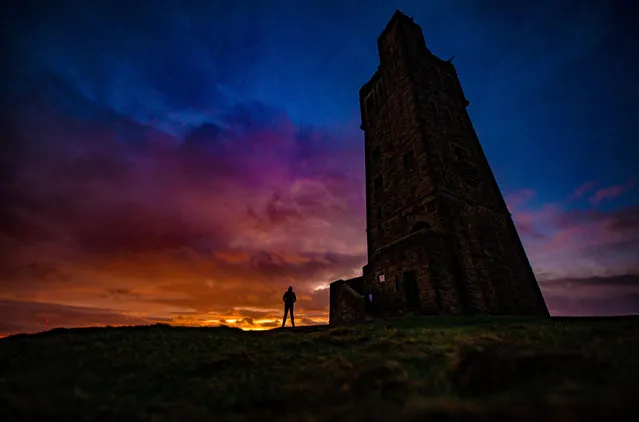
A colourful morning sunrise on Christmas Eve at Victoria Tower on Castle Hill, West Yorkshire, England on December 24, 2017. The history of human activity on the Castle Hill goes back over 4000 years. The site was developed as an iron age hill fort, surrounded by defensive ditches and ramparts. In the Middle Ages there was a castle on the hill, of which the well remains. The present tower was built to commemorate Queen Victoria's Diamond Jubilee of 1897. (Photo by Charlotte Graham/ZUMA Wire/Rex Features/Shutterstock)

A colourful morning sunrise on Christmas Eve at Victoria Tower on Castle Hill, West Yorkshire, England on December 24, 2017. The history of human activity on the Castle Hill goes back over 4000 years. The site was developed as an iron age hill fort, surrounded by defensive ditches and ramparts. In the Middle Ages there was a castle on the hill, of which the well remains. The present tower was built to commemorate Queen Victoria's Diamond Jubilee of 1897. (Photo by Charlotte Graham/ZUMA Wire/Rex Features/Shutterstock)
Details
31 Mar 2018 00:03:00


“The Southern Tamandua, Collared Anteater or Lesser Anteater (Tamandua tetradactyla) is a species of anteater from South America. It is a solitary animal, found in many habitats from mature to highly disturbed secondary forests and arid savannas. It feeds on ants, termites and bees. It has very strong foreclaws that can be used to break insect nests or to defend itself”. – Wikipedia

Photo: A three-month-old baby Southern Tamandua “Konbu” lies on its mother Tae's back at Sunshine International Aquarium on July 7, 2009 in Tokyo, Japan. Baby Southern Tamandua feels safe and comfortable holding onto something and normally stays on the mother's back until around 3 months old. (Photo by Junko Kimura/Getty Images)
Details
19 May 2011 10:31:00
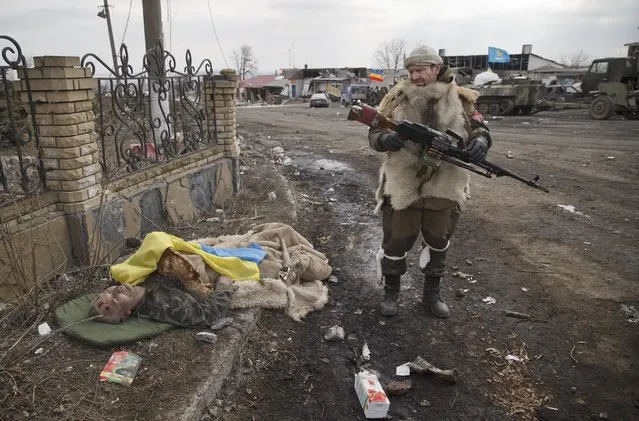
A Russia-backed rebel looks at the flag covered body of an Ukrainian serviceman in Debaltseve, Ukraine, February 20, 2015. The struggle for the strategic rail hub, Debaltseve, a sleepy town with a pre-war population of 25,000 people, left the town in ruins and became one of the darkest pages in the ongoing conflict in eastern Ukraine, which has already killed more than 6,000 people. (Photo by Vadim Ghirda/AP Photo/File)

A Russia-backed rebel looks at the flag covered body of an Ukrainian serviceman in Debaltseve, Ukraine, February 20, 2015. The struggle for the strategic rail hub, Debaltseve, a sleepy town with a pre-war population of 25,000 people, left the town in ruins and became one of the darkest pages in the ongoing conflict in eastern Ukraine, which has already killed more than 6,000 people. (Photo by Vadim Ghirda/AP Photo/File)
Details
12 Feb 2022 06:20:00
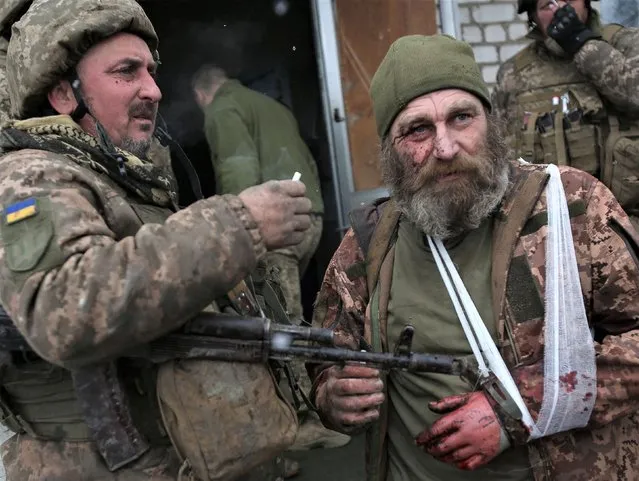
A wounded servicemen of Ukrainian Military Forces looks on after the battle with Russian troops and Russia-backed separatists in Lugansk region on March 8, 2022. The number of refugees flooding across Ukraine's borders to escape towns devastated by shelling and air strikes passed two million, in Europe's fastest-growing refugee crisis since World War II, according to the United Nations. (Photo by Anatolii Stepanov/AFP Photo)

A wounded servicemen of Ukrainian Military Forces looks on after the battle with Russian troops and Russia-backed separatists in Lugansk region on March 8, 2022. The number of refugees flooding across Ukraine's borders to escape towns devastated by shelling and air strikes passed two million, in Europe's fastest-growing refugee crisis since World War II, according to the United Nations. (Photo by Anatolii Stepanov/AFP Photo)
Details
10 Mar 2022 06:30:00