Loading...
Done
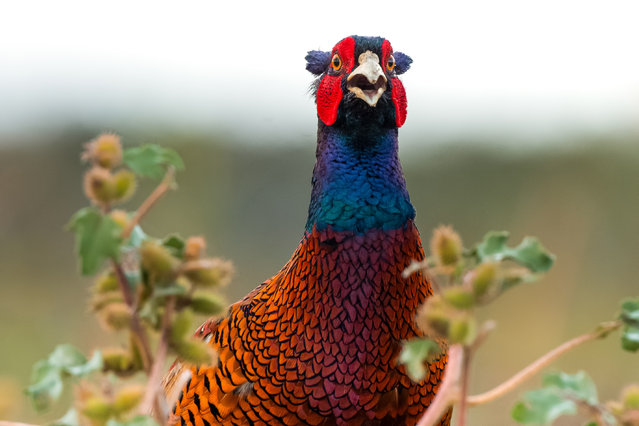
A pheasant is seen among grasses in Bursa, Turkiye on October 07, 2024. Pheasants mostly live in forested areas, thickets and wetlands. Unlike females, male pheasants have a much more remarkable structure with their long tails and feathers in bright and variable colors. Also, they feed on fruits, grains, seeds and invertebrates. (Photo by Alper Tuydes/Anadolu via Getty Images)

A pheasant is seen among grasses in Bursa, Turkiye on October 07, 2024. Pheasants mostly live in forested areas, thickets and wetlands. Unlike females, male pheasants have a much more remarkable structure with their long tails and feathers in bright and variable colors. Also, they feed on fruits, grains, seeds and invertebrates. (Photo by Alper Tuydes/Anadolu via Getty Images)
Details
27 Oct 2024 04:43:00
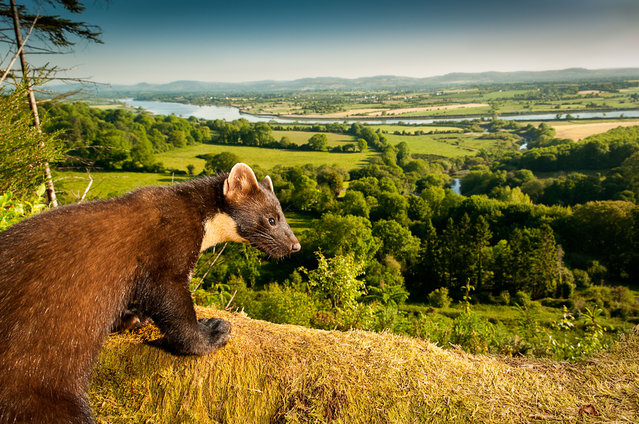
A pine marten – one of a few wild mammals doing well in Britain (although they number just 3,700). A fifth of the country’s wild mammals are at high risk of extinction, research shows. (Photo by Maurice Flynn/The Mammal Society)

A pine marten – one of a few wild mammals doing well in Britain (although they number just 3,700). A fifth of the country’s wild mammals are at high risk of extinction, research shows. (Photo by Maurice Flynn/The Mammal Society)
Details
08 Jul 2018 00:01:00
The Yakutat Glacier is seen during a flight over southeastern Alaska near the town of Yakutat, October 7, 2014. (Photo by Bob Strong/Reuters)

The Yakutat Glacier is seen during a flight over southeastern Alaska near the town of Yakutat, October 7, 2014. (Photo by Bob Strong/Reuters)
Details
29 Oct 2014 12:26:00
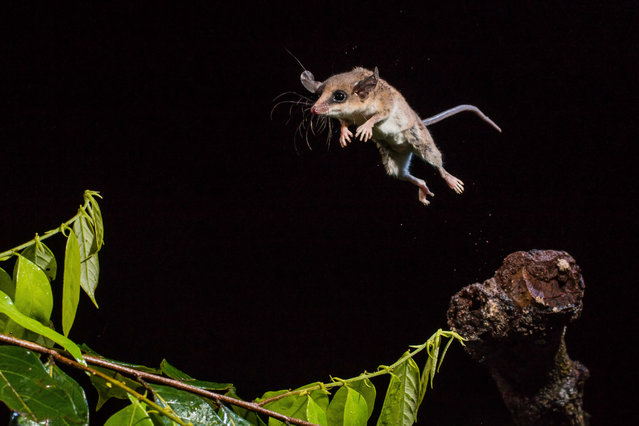
Tropical acrobatics by Adrià López Baucells in Manaus, Brazil. An unidentified South American marsupial, although the characteristic black markings on its face indicate it may be a mouse opossum. These small creatures are nocturnal and feed on bugs, fruit and bird eggs. (Photo by Adrià López Baucells/2019 Royal Society of Biology Photography Competition)

Tropical acrobatics by Adrià López Baucells in Manaus, Brazil. An unidentified South American marsupial, although the characteristic black markings on its face indicate it may be a mouse opossum. These small creatures are nocturnal and feed on bugs, fruit and bird eggs. (Photo by Adrià López Baucells/2019 Royal Society of Biology Photography Competition)
Details
10 Oct 2019 00:03:00
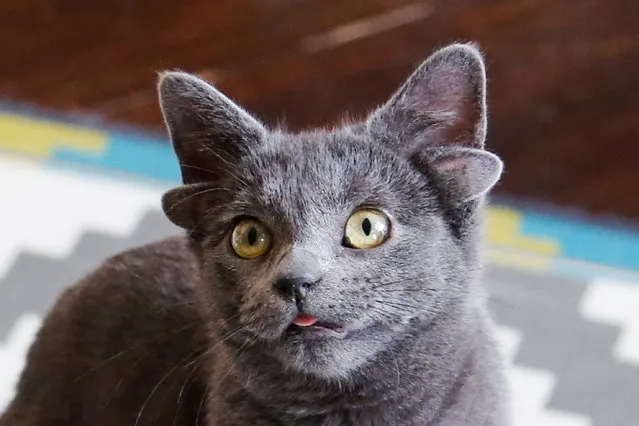
Midas, a four-month-old kitten born with four ears, is pictured at her home in Ankara, Turkey on November 19, 2021. (Photo by Cagla Gurdogan/Reuters)

Midas, a four-month-old kitten born with four ears, is pictured at her home in Ankara, Turkey on November 19, 2021. (Photo by Cagla Gurdogan/Reuters)
Details
12 Dec 2021 05:34:00
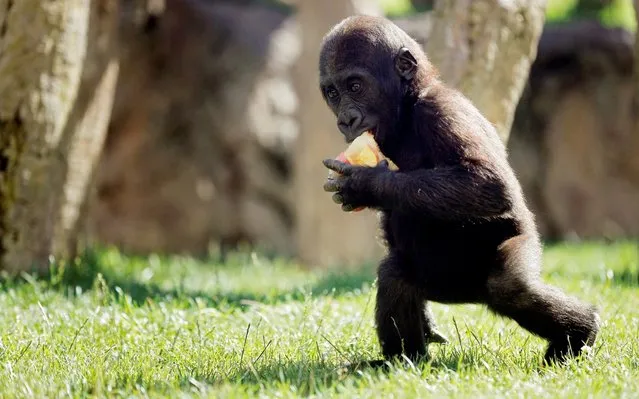
A gorilla cube named Pepe eats frozen fruit to fight high temperatures at the Bioparc zoo in Valencia, eastern Spain, 28 June 2019. Spanish peninsula is suffering a heat wave with temperatures reaching up to 45 degrees. (Photo by Kai Foersterling/EPA/EFE/Rex Features/Shutterstock)

A gorilla cube named Pepe eats frozen fruit to fight high temperatures at the Bioparc zoo in Valencia, eastern Spain, 28 June 2019. Spanish peninsula is suffering a heat wave with temperatures reaching up to 45 degrees. (Photo by Kai Foersterling/EPA/EFE/Rex Features/Shutterstock)
Details
30 Jun 2019 00:03:00
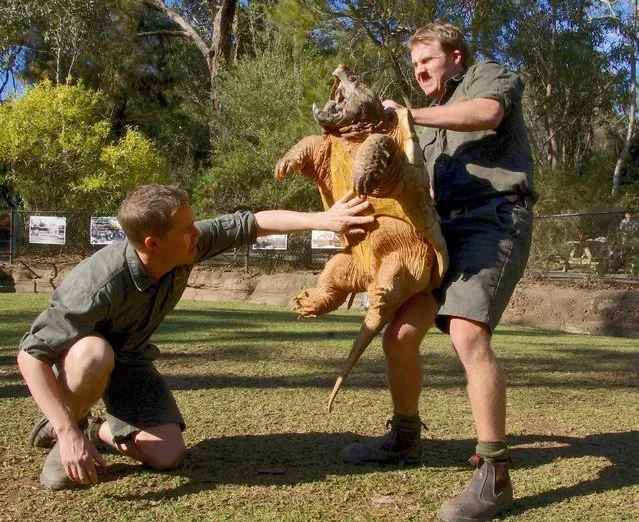
Two keepers at the Australian Reptile Park in New South Wales struggle with Leonardo, an alligator snapping turtle weighing 45 kilos at the park in Gosford, NSW 2 July 2015. The 50cm long Leonardo – who was smuggled illegally into Australia and found in a Sydney sewer in November 200 – was removed from his tank for an annual health check. And as a gesture to onlooking press photographers demonstrated his strength by snapping a piece of bamboo in half. (Photo by EPA/HO)

Two keepers at the Australian Reptile Park in New South Wales struggle with Leonardo, an alligator snapping turtle weighing 45 kilos at the park in Gosford, NSW 2 July 2015. The 50cm long Leonardo – who was smuggled illegally into Australia and found in a Sydney sewer in November 2000 – was removed from his tank for an annual health check. And as a gesture to onlooking press photographers demonstrated his strength by snapping a piece of bamboo in half. (Photo by EPA/HO)
Details
03 Jul 2015 12:53:00
Centre of the Heart Nebula by Ivan Eder (Hungary). Situated 7500 light years away in the ‘W’-shaped constellation of Cassiopeia, the Heart Nebula is a vast region of glowing gas, energized by a cluster of young stars at its centre. The image depicts the central region, where dust clouds are being eroded and moulded into rugged shapes by the searing cosmic radiation. (Photo by Ivan Eder)

The competition, which is run by the Royal Observatory Greenwich in association with BBC Sky at Night Magazine, is now in its sixth year and has received over 2,500 entries. Photo: Centre of the Heart Nebula by Ivan Eder (Hungary). Situated 7500 light years away in the “W”-shaped constellation of Cassiopeia, the Heart Nebula is a vast region of glowing gas, energized by a cluster of young stars at its centre. The image depicts the central region, where dust clouds are being eroded and moulded into rugged shapes by the searing cosmic radiation. (Photo by Ivan Eder)
Details
03 Jul 2014 11:59:00