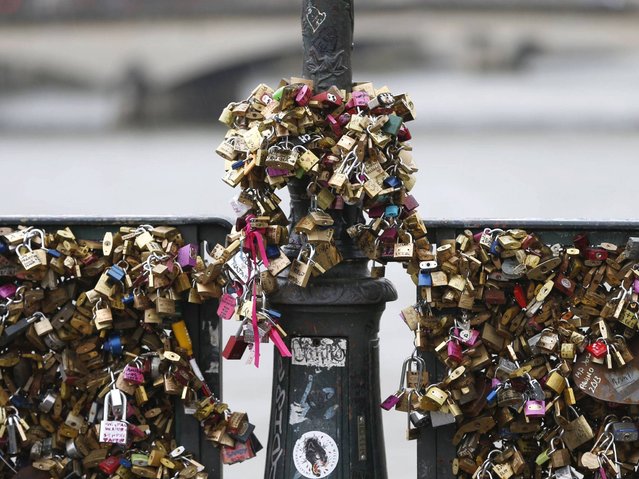
The love padlocks, called cadenas d’amour, multiplied until there were thousands of love tokens on the bridge, each engraved with a message of love. (Photo by Charles Platiau/Reuters)
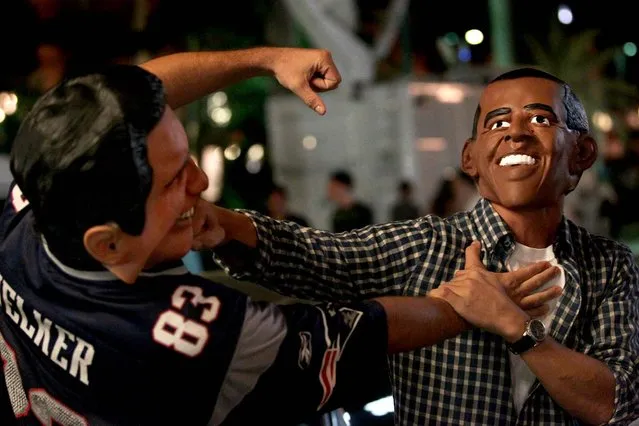
Patrick Scolaro and Cory Sullivan of Boca Raton playfully duke it out wearing masks that were handed out to attendees of the Rock the Vote concert at Mizner Park after the debate. (Photo by Allen Eyestone/The Palm Beach Post)
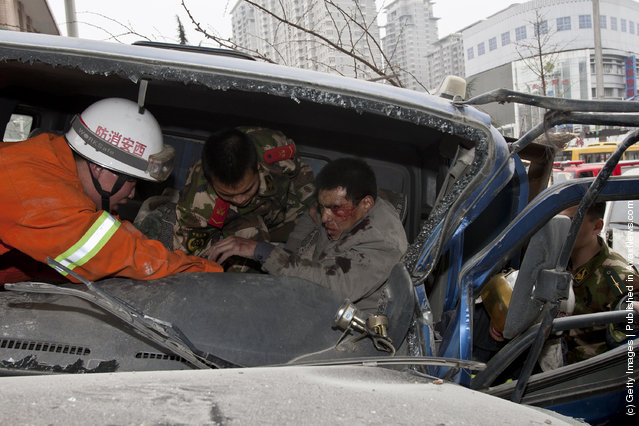
Rescuers work at the traffic accident site on April 1, 2011 in Xi'an, Shaanxi province of China. A truck collided with a bus at a cross on Friday morning. As the truck headed for the sidewalk, it collided into a pedestrian and 6 vehicles which were stopped nearby. As a result 16 people were injuried, one currently has severe injuries. (Photo by ChinaFotoPress/Getty Images)
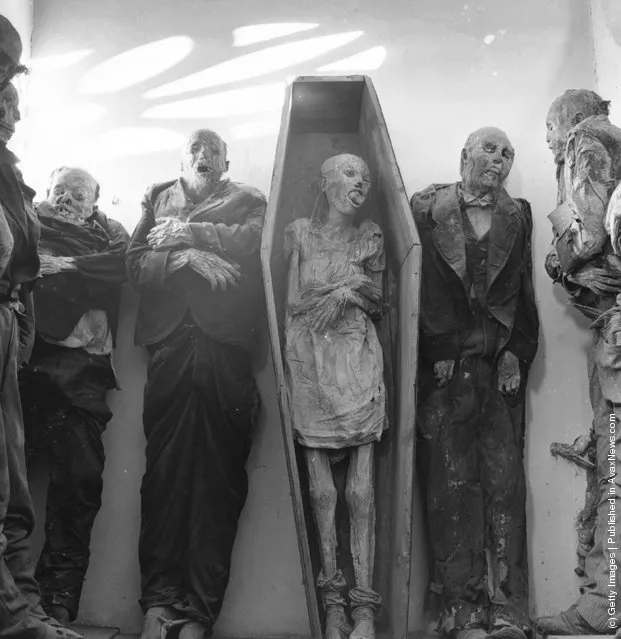
Dried and shrivelled corpses, some fully clothed and some in coffins, line the wall of a vault of the Pantheon Cemetery on the summit of Cerro del Trozado in Mexico. They were removed from the crypts because of non-payment of cemetery fees. The hot dry air stopped the bodies from rotting. Most of them were placed here between the turn of the century and WW I. (Photo by Three Lions/Getty Images). Circa 1955
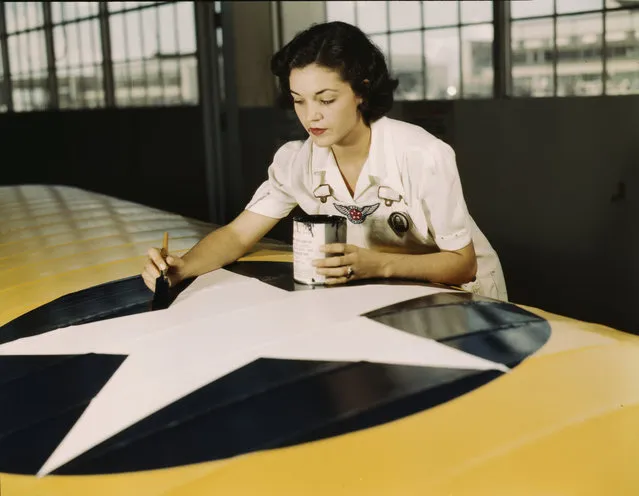
These stunning color portraits, produced by the U.S. Office of War Information during World War II depict the role of women in the US war effort. All of the images were shot on 4x5 color transparency film by Howard R. Hollem and Alfred T. Palmer during 1942 and 1943 and were turned over to the Library of Congress Prints and Photographs Division in 1944. They are seen here with their original captions.
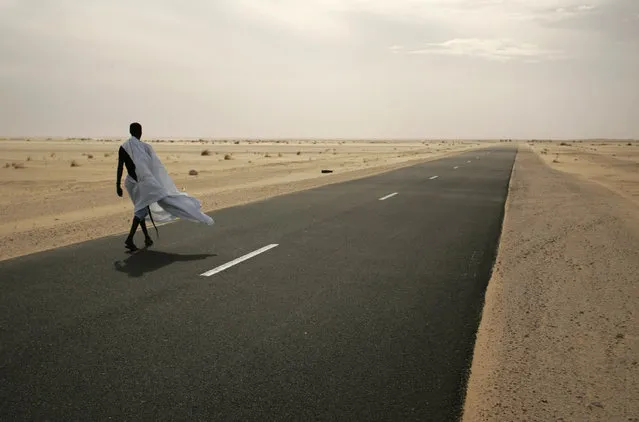
A man walks on the road between Nouahibou and Nouakchott, where three Spanish aid workers were abducted in Mauritania, December 3, 2009. (Photo by Rafael Marchante/Reuters)
A Turkish Airlines plane lies on a field after it overshot the runway at Tribhuvan International Airport in Kathmandu March 4, 2015. According to local media, all passengers and crew members were rescued. REUTERS/Navesh Chitrakar
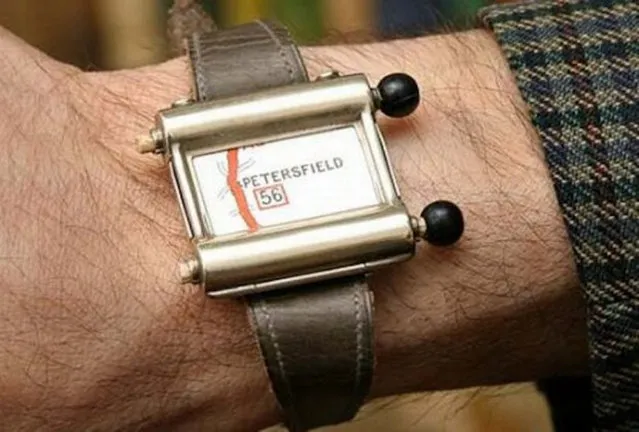
Invented in 1920′s this could be world’s first navigation system. No satellites or digital screens were used in the making of this portable navigation system. Called Plus Fours Routefinder, this little invention was designed to be worn on your wrist, and the “maps” were printed on little wooden rollers which you would turn manually as you drove along.