Loading...
Done
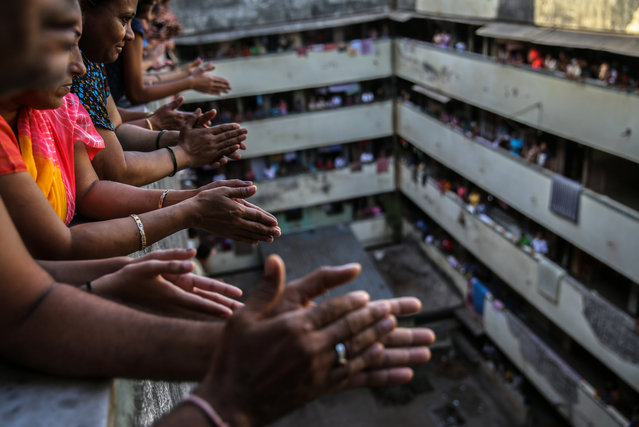
Indian people bang utensils and clap from the balconies of a residential building in Mumbai, India, 22 March 2020. Prime Minister Narendra Modi asks citizens to impose self-curfew to fight Coronavirus COVID-19 and also ask them to clap, bang the bells and utensils at 5pm Indian time to mark of respect and to thank the medical staff and others working 24 hours, during Covid-19 outbreak to keeping the Indians safe. (Photo by Divyakant Solanki/EPA/EFE)

Indian people bang utensils and clap from the balconies of a residential building in Mumbai, India, 22 March 2020. Prime Minister Narendra Modi asks citizens to impose self-curfew to fight Coronavirus COVID-19 and also ask them to clap, bang the bells and utensils at 5pm Indian time to mark of respect and to thank the medical staff and others working 24 hours, during Covid-19 outbreak to keeping the Indians safe. (Photo by Divyakant Solanki/EPA/EFE)
Details
29 Mar 2020 00:05:00
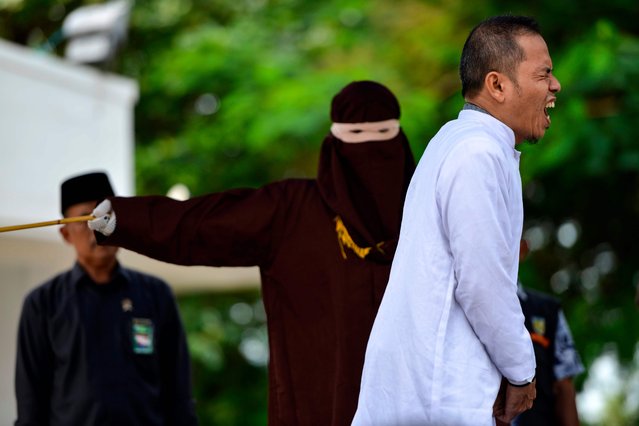
Aceh Ulema Council (MPU) member Mukhlis reacts as he is whipped in public by a member of the Sharia police in Banda Aceh on October 31, 2019. An Indonesian man working for an organisation which helped draft strict religious laws ordering adulterers to be flogged was himself publically whipped on October 31 after he was caught having an affair with a married woman. (Photo by Chaideer Mahyuddin/AFP Photo)

Aceh Ulema Council (MPU) member Mukhlis reacts as he is whipped in public by a member of the Sharia police in Banda Aceh on October 31, 2019. An Indonesian man working for an organisation which helped draft strict religious laws ordering adulterers to be flogged was himself publically whipped on October 31 after he was caught having an affair with a married woman. (Photo by Chaideer Mahyuddin/AFP Photo)
Details
26 Dec 2019 00:01:00
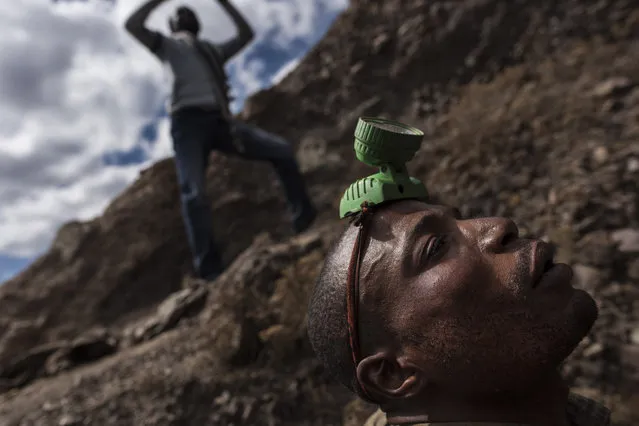
A “creuseur”, or digger, a plastic lantern on his head, readies to enter a copper and cobalt mine in Kawama, Democratic Republic of Congo on June 8, 2016. Cobalt is used in the batteries for electric cars and mobile phones. Working conditions are dangerous, often with no safety equipment or structural support for the tunnels. The diggers say they are paid on average US$2-3/day. (Photo by Michael Robinson Chavez/The Washington Post)

A “creuseur”, or digger, a plastic lantern on his head, readies to enter a copper and cobalt mine in Kawama, Democratic Republic of Congo on June 8, 2016. Cobalt is used in the batteries for electric cars and mobile phones. Working conditions are dangerous, often with no safety equipment or structural support for the tunnels. The diggers say they are paid on average US$2-3/day. (Photo by Michael Robinson Chavez/The Washington Post)
Details
30 Dec 2016 10:29:00
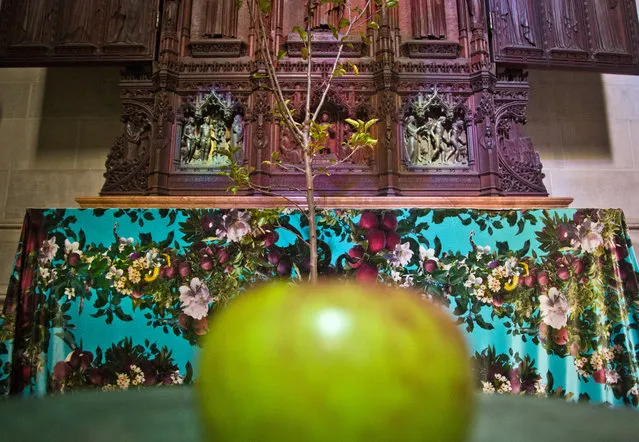
"Temptation", part of an installation from the artist-duo David Burns and Austin Young, appears among the works of 30 artists in the multimedia exhibition "The Value of Food: Sustaining a Green Planet" at the Cathedral of St. John the Divine, Wednesday, October 7, 2015, in New York.  (Photo by Bebeto Matthews/AP Photo)

"Temptation", part of an installation from the artist-duo David Burns and Austin Young, appears among the works of 30 artists in the multimedia exhibition "The Value of Food: Sustaining a Green Planet" at the Cathedral of St. John the Divine, Wednesday, October 7, 2015, in New York. The exhibition, installed in the cathedral's seven chapels and 14 bays, explores food accessibility, sustainability and other food-related issues and runs through April 3, 2016. (Photo by Bebeto Matthews/AP Photo)
Details
16 Oct 2015 08:01:00
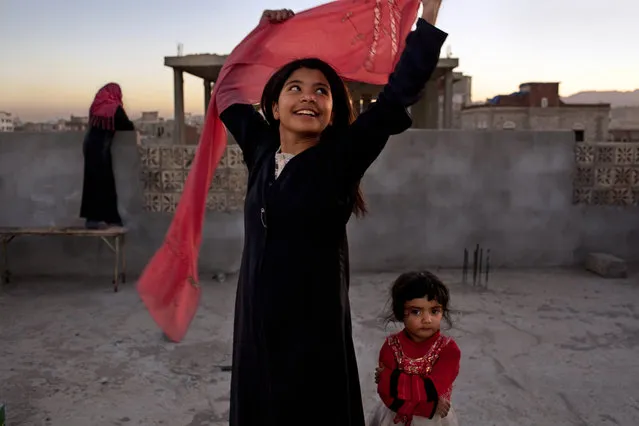
Some of the most powerful narratives of the past decade have been produced by a forward-thinking generation of women photojournalists as different as the places and the subjects they have covered. National Geographic's “Women of Vision” exhibit features the work of 11 photographers and is on display at the Fernbank Museum of Natural History in Atlanta until January 3, 2016. (Photo by Stephanie Sinclair/National Geographic)

Some of the most powerful narratives of the past decade have been produced by a forward-thinking generation of women photojournalists as different as the places and the subjects they have covered. National Geographic's “Women of Vision” exhibit features the work of 11 photographers and is on display at the Fernbank Museum of Natural History in Atlanta until January 3, 2016. Here: Nujood Ali stunned the world in 2008 by obtaining a divorce at age 10 in Yemen, striking a blow against forced marriage. (Photo by Stephanie Sinclair/National Geographic)
Details
11 Dec 2015 08:05:00
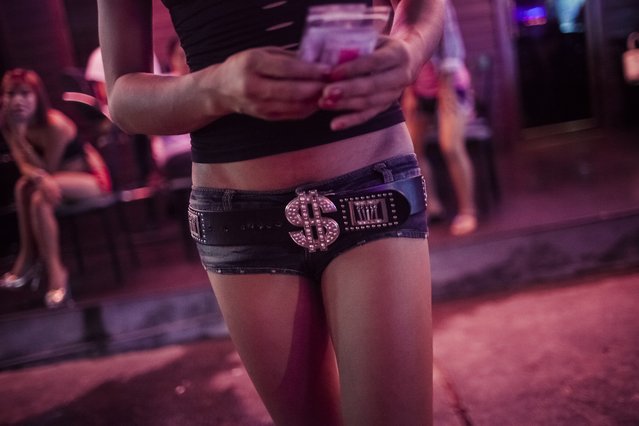
A ladyboy s*x worker wears a belt with a dollar sign on it while holding condoms and lube handed to her by Sisters, a transgendered outreach and community services organization in Pattaya, Thailand on August 25, 2016. Many of Thailand's ladyboys live in Pattaya, a large percentage of whom work in the s*x industry there. (Photo by Aaron Joel Santos/Getty Images/Aurora Creative)

A ladyboy sеx worker wears a belt with a dollar sign on it while holding condoms and lube handed to her by Sisters, a transgendered outreach and community services organization in Pattaya, Thailand on August 25, 2016. Many of Thailand's ladyboys live in Pattaya, a large percentage of whom work in the sеx industry there. (Photo by Aaron Joel Santos/Getty Images/Aurora Creative)
Details
26 Aug 2016 11:04:00
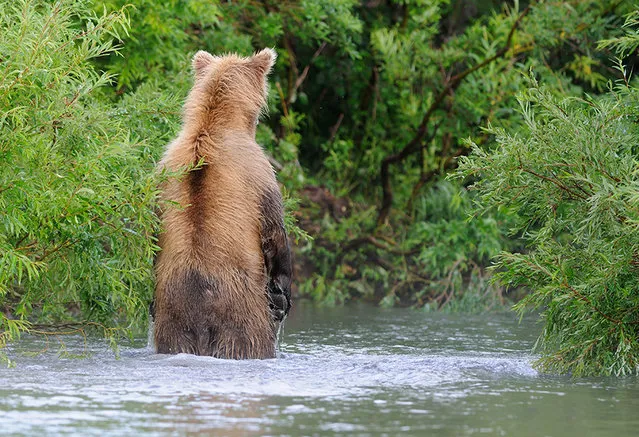
Where's the fish?/n. South Kamchatka Sanctuary<><>South Kamchatka Sanctuary; Kuril Lake; Kamchatka; bear; salmon; spawning

Igor Shpilenok works in the reserve at Kamchatka, Russia. Igor is a fellow of the International League of Conservation Photographers and a winner of the 2006 BBC Wildlife Photographer Competition. Igor’s work has been published in numerous international and Russian magazines, including Smithsonian, National Wildlife, Geo, and BBC Wildlife.

“How does a bear behave when encounter a human? In most cases he runs away. But before running he almost always would rise to stand on his rear feet. And this behavior does not indicate the attack, as many people think...” – Igor Shpilenok. (Photo by Igor Shpilenok via Wildlife Photo Russia)
Details
16 Sep 2012 12:54:00
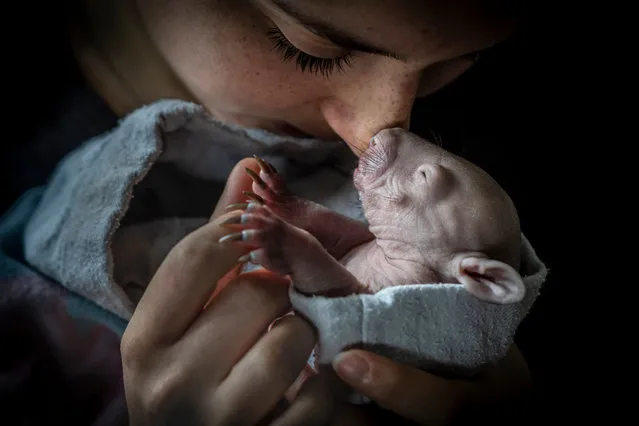
Nose to Nose; Human/Nature winner. “Doug Gimesy was documenting work at the Joey and Bat Sanctuary near Melbourne when he met a wombat (Vombatus ursinus) whose mother had been killed by a car. Gimesy watched as a young veterinary student bottle-fed the orphaned joey, then touched her nose to the joey’s in a tender moment of interspecies bonding”. (Photo by Doug Gimesy/BigPicture)

Nose to Nose; Human/Nature winner. “Doug Gimesy was documenting work at the Joey and Bat Sanctuary near Melbourne when he met a wombat (Vombatus ursinus) whose mother had been killed by a car. Gimesy watched as a young veterinary student bottle-fed the orphaned joey, then touched her nose to the joey’s in a tender moment of interspecies bonding”. (Photo by Doug Gimesy/BigPicture)
Details
25 Jun 2023 05:33:00