Loading...
Done
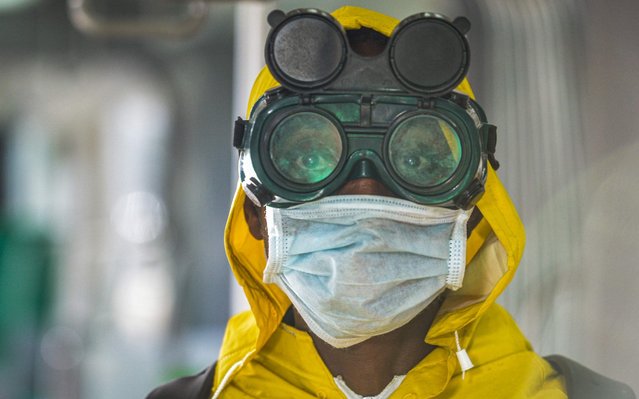
A cleaning staff waers protective gear to disinfect a metro carriage as a prevemtive measure against the spreading of the COVID-19 coronavirus in Addis Ababa, Ethiopia, on March 20, 2020. African countries have been among the last to be hit by the global COVID-19 coronavirus epidemic but as cases rise, many nations are now taking strict measures to block the deadly illness. (Photo by Michael Tewelde/AFP Photo)

A cleaning staff waers protective gear to disinfect a metro carriage as a prevemtive measure against the spreading of the COVID-19 coronavirus in Addis Ababa, Ethiopia, on March 20, 2020. African countries have been among the last to be hit by the global COVID-19 coronavirus epidemic but as cases rise, many nations are now taking strict measures to block the deadly illness. (Photo by Michael Tewelde/AFP Photo)
Details
23 Mar 2020 00:07:00
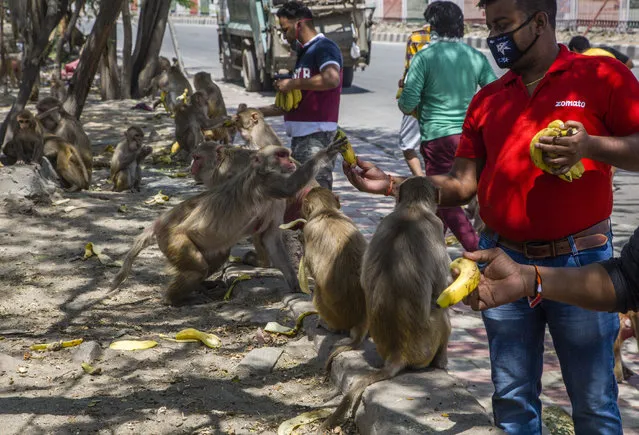
Men give bananas to monkeys gathered on the side of the road as India remains under an unprecedented lockdown over the highly contagious coronavirus (COVID-19) on April 08, 2020 in New Delhi, India. Wild animals, including monkeys, are roaming human settlements in India as people are staying indoors due to the 21-day lockdown. With India's 1.3 billion population and tens of millions of cars off the roads, wildlife is moving towards areas inhabited by humans. Wild animals in many countries have been seen roaming streets. A study says some 60 percent of the new diseases found around the globe every year are zoonotic, meaning they originate in animals and are passed on to humans. COVID-19 is a zoonotic disease that is suspected to have come from the wet markets of Wuhan, China. (Photo by Yawar Nazir/Getty Images)

Men give bananas to monkeys gathered on the side of the road as India remains under an unprecedented lockdown over the highly contagious coronavirus (COVID-19) on April 08, 2020 in New Delhi, India. Wild animals, including monkeys, are roaming human settlements in India as people are staying indoors due to the 21-day lockdown. (Photo by Yawar Nazir/Getty Images)
Details
12 Apr 2020 00:05:00
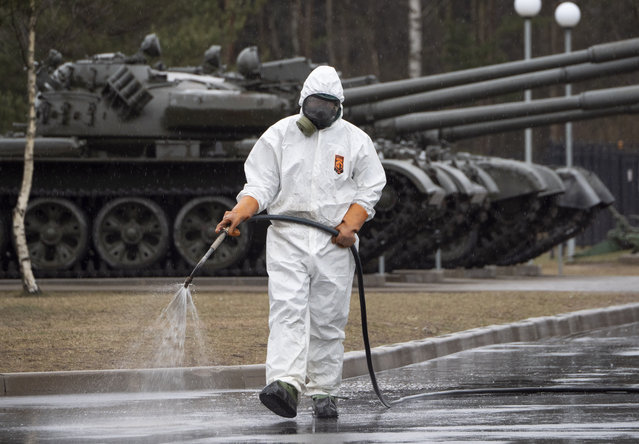
A specialist from a local veterinary service wears a protective suit as sprays disinfectant near Russian tanks displayed at area near Proryv (The Breakthrough) museum dedicated to the breakthrough of the Siege of Leningrad during World WarII near Kirovsk, about 30 kilometres (19 miles) east of St.Petersburg, Russia, Thursday, April 2, 2020. (Photo by Dmitri Lovetsky/AP Photo)

A specialist from a local veterinary service wears a protective suit as sprays disinfectant near Russian tanks displayed at area near Proryv (The Breakthrough) museum dedicated to the breakthrough of the Siege of Leningrad during World WarII near Kirovsk, about 30 kilometres (19 miles) east of St.Petersburg, Russia, Thursday, April 2, 2020. (Photo by Dmitri Lovetsky/AP Photo)
Details
13 Apr 2020 00:01:00
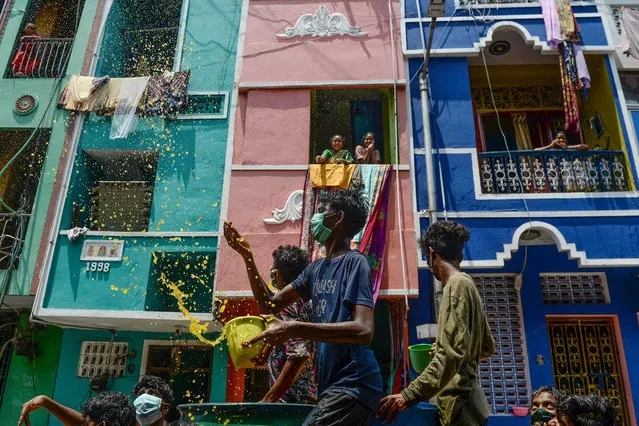
Volunteers throw a mixture of water, neem herb and turmeric as an alleged natural disinfectant on a street in a residential area during a government-imposed nationwide lockdown as a preventive measure against the COVID-19 coronavirus, in Chennai on April 7, 2020. (Photo by Arun Sankar/AFP Photo)

Volunteers throw a mixture of water, neem herb and turmeric as an alleged natural disinfectant on a street in a residential area during a government-imposed nationwide lockdown as a preventive measure against the COVID-19 coronavirus, in Chennai on April 7, 2020. (Photo by Arun Sankar/AFP Photo)
Details
20 Apr 2020 00:03:00
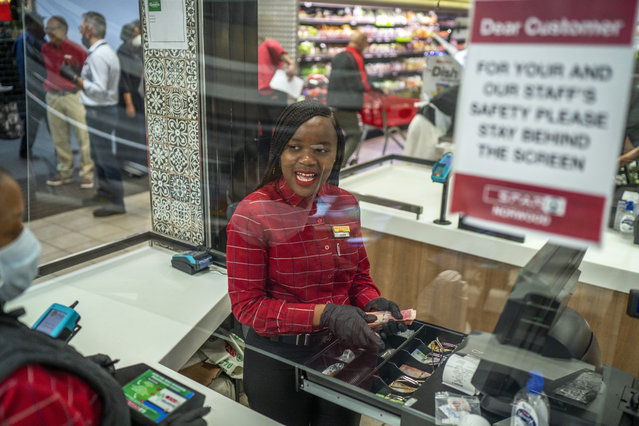
In this March 30, 2020, photo, Zandile Mlotshwa, 21, cashier at Spar supermarket in the Norwood suburb of Johannesburg, counts her cash at the end of her shift. From South Africa to Italy to the U.S., grocery workers – many in low-wage jobs – are manning the front lines amid worldwide lockdowns, their work deemed essential to keep food and critical goods flowing. (Photo by Jerome Delay/AP Photo)

In this March 30, 2020, photo, Zandile Mlotshwa, 21, cashier at Spar supermarket in the Norwood suburb of Johannesburg, counts her cash at the end of her shift. From South Africa to Italy to the U.S., grocery workers – many in low-wage jobs – are manning the front lines amid worldwide lockdowns, their work deemed essential to keep food and critical goods flowing. (Photo by Jerome Delay/AP Photo)
Details
25 Apr 2020 00:03:00
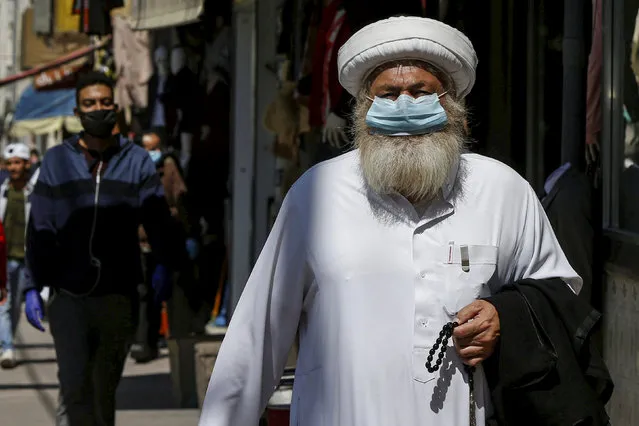
A man wears a protective face mask as he walks along the main market in downtown after the government eased the restrictions on movement aimed at containing the spread of the coronavirus disease (COVID-19), in Amman, Jordan on April 29, 2020. (Photo by Muhammad Hamed/Reuters)

A man wears a protective face mask as he walks along the main market in downtown after the government eased the restrictions on movement aimed at containing the spread of the coronavirus disease (COVID-19), in Amman, Jordan on April 29, 2020. (Photo by Muhammad Hamed/Reuters)
Details
01 May 2020 00:07:00
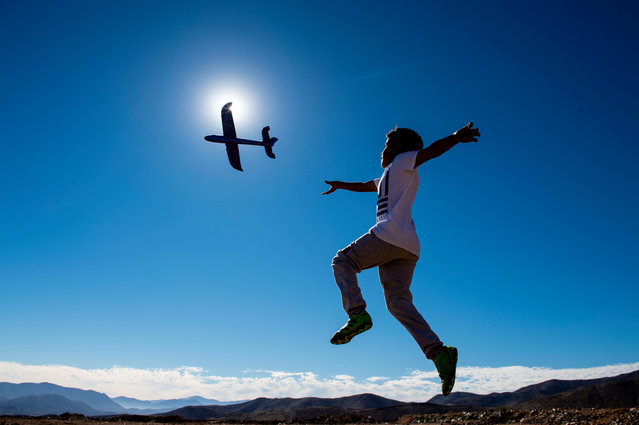
A boy plays with a toy plane on the eve of a solar eclipse, in La Higuera, Coquimbo Region, in the Atacama desert about 580 km north of Santiago, on July 1, 2019. A total solar eclipse will be visible from small parts of Chile and Argentina on July 2. (Photo by Martin Bernetti/AFP Photo)

A boy plays with a toy plane on the eve of a solar eclipse, in La Higuera, Coquimbo Region, in the Atacama desert about 580 km north of Santiago, on July 1, 2019. A total solar eclipse will be visible from small parts of Chile and Argentina on July 2. (Photo by Martin Bernetti/AFP Photo)
Details
14 May 2020 00:03:00
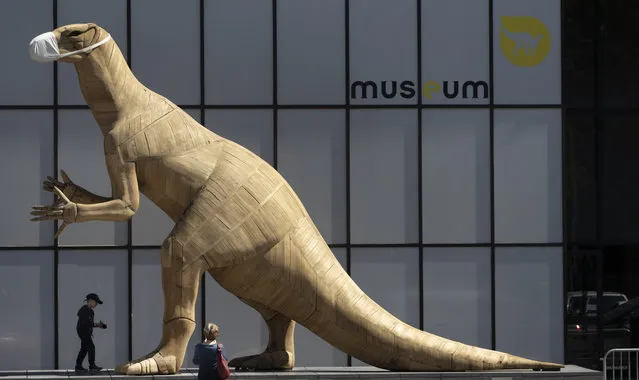
A boy walks by a model of a dinosaur wearing a face mask, during a partial lockdown to prevent the spread of the coronavirus, at the Museum of Natural History in Brussels, Tuesday, May 19, 2020. Museums are hesitantly starting to reopen as the coronavirus lockdown measures are relaxed, yet experts say that one in eight in the world could potentially face permanent closure because of the pandemic. (Photo by Virginia Mayo/AP Photo)

A boy walks by a model of a dinosaur wearing a face mask, during a partial lockdown to prevent the spread of the coronavirus, at the Museum of Natural History in Brussels, Tuesday, May 19, 2020. Museums are hesitantly starting to reopen as the coronavirus lockdown measures are relaxed, yet experts say that one in eight in the world could potentially face permanent closure because of the pandemic. (Photo by Virginia Mayo/AP Photo)
Details
21 May 2020 00:07:00