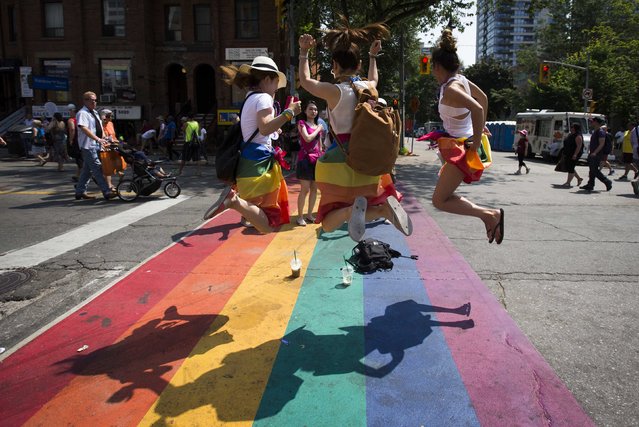
Revelers jump on a rainbow painted crosswalk in Church Street, Toronto's LGBT neighbourhood, before “WorldPride”, a gay pride parade, in Toronto, June 29, 2014. Toronto is hosting WorldPride, a week-long event that celebrates the lesbian, gay, bisexual and transgender (LGBT) community. (Photo by Mark Blinch/Reuters)
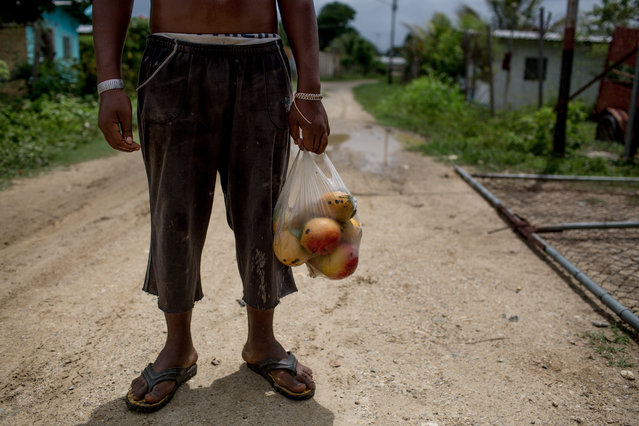
A teenager holds a bag of Mangos, a tropical fruit who grow up in threes in Caracas, Venezuela on June 22, 2016. The shortage of food especially in areas in extreme poverty had made Mangos the daily food. (Photo by Alejandro Cegarra/The Washington Post)
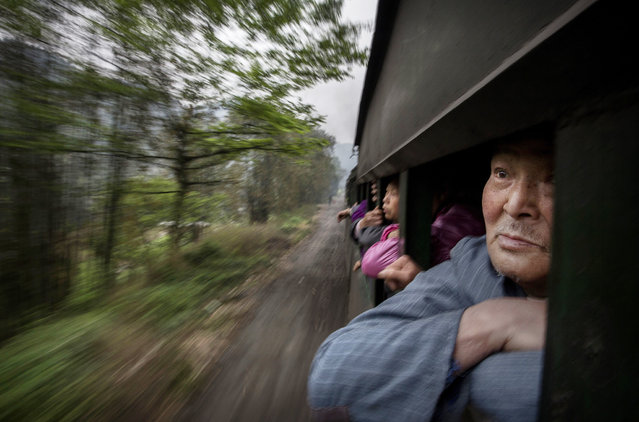
Local villagers ride a local coal powered steam train on March 27, 2015 at a station in the town of Shixi , Sichuan Province, in Southern China. While China boasts the world's most extensive high-speed rail infrastructure with over 16,000 kilometers of track, the Shixi-Bagou railway is still a primary connection for local villagers between towns and is kept alive by tourist cars carrying passengers for ten times the price. The rail line came into service in the late 1950s and the train was initially used to transport coal from a now-shuttered mine before passenger carriages were added. (Photo by Kevin Frayer/Getty Images)
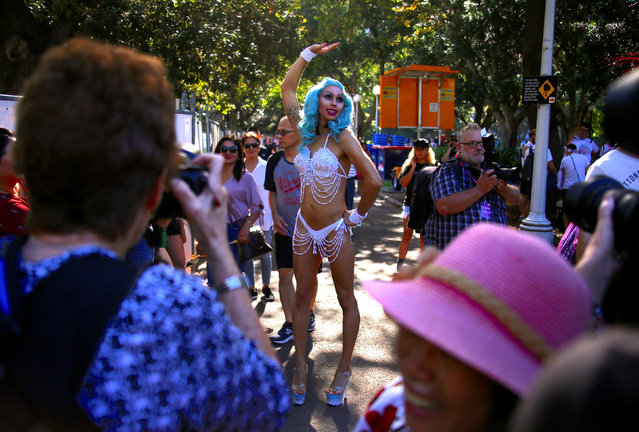
A participant wearing a costume poses for members of the public before the 40th anniversary of the Sydney Gay and Lesbian Mardi Gras Parade in central Sydney, Australia, March 3, 2018. (Photo by David Gray/Reuters)
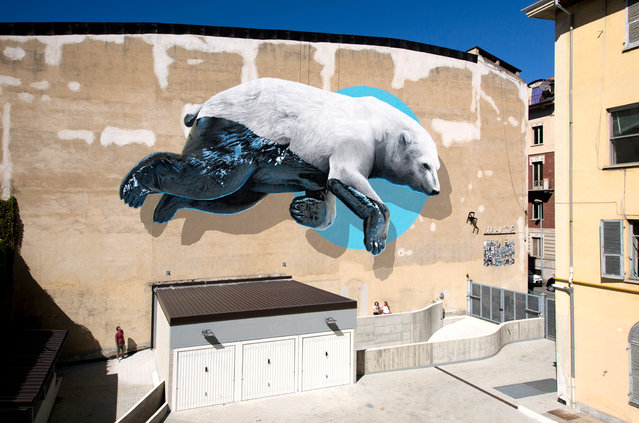
A polar bear whose bottom half is caked in oily black gunk. A whale wrapped in striped fabric: a pseudo straightjacket. These are the messes climate change leaves behind, the things we know are happening but often don’t have the opportunity to see with our own eyes. Swiss street art duo Christian Rebecchi and Pablo Togni, otherwise known as NeverCrew, met in art school when they were 15 and started making work together soon after. As a team, the artists adorn the world with eye-popping and gut-wrenching images depicting the consequences of humanity’s actions on earth. (Photo by NeverCrew/The Huffington Post)