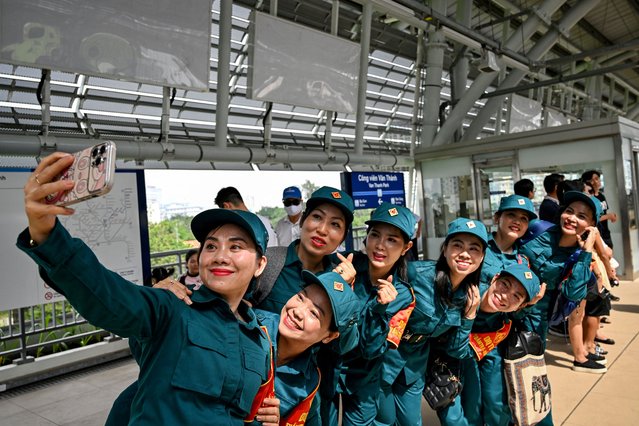
Soldiers take a selfie on the plateform at a metro station in Ho Chi Minh City on December 22, 2024. Thousands of selfie-taking Ho Chi Minh City residents crammed into train carriages on December 22, as the traffic-clogged business hub celebrated the opening of its first-ever metro line after years of delays. (Photo by Nhac Nguyen/AFP Photo)
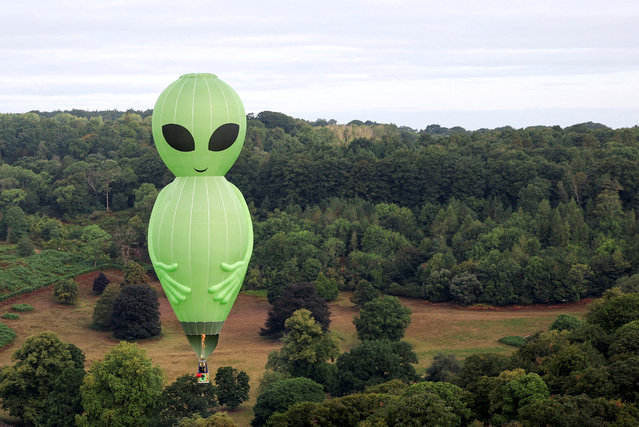
An alien-shaped hot air balloon flies during a mass launch at the annual Bristol International Balloon Fiesta, near Bristol, Britain, on August 8, 2025. (Photo by Toby Melville/Reuters)
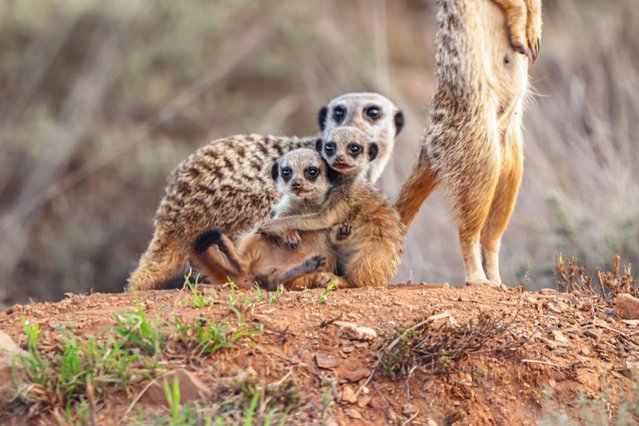
A meerkat stands guard as her pups cuddle at Mountain Zebra National Park, South Africa early November 2025. (Photo by Nadine Leonard/Two Point O Media)
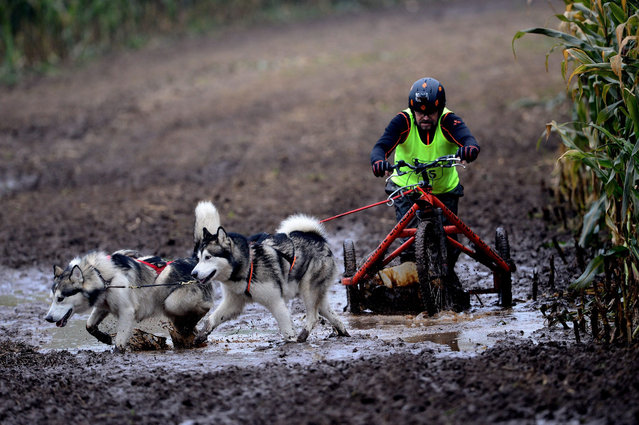
A participant of the sled dogs race in action with the dogs in Stroehen (Lower Saxony), Germany, 18 October 2015. It is the first round of the North German Championship. (Photo by Peter Steffen/EPA)
Artist Le Pustra and organiser Else Edelstahl pose for a picture at Simon Dach Strasse, a street filled with many bars, in Berlin, Germany, August 28, 2016. Else Edelstahl organises the party series “Boheme Sauvage”, in which people dress up in 1920s style, celebrating Berlin nightlife of a past era. (Photo by Hannibal Hanschke/Reuters)
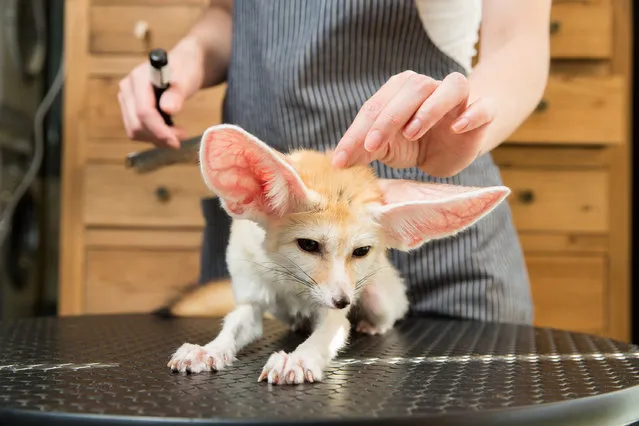
A dramatic rise in owning exotic pets in China is fuelling global demand for threatened species. The growing trade in alligators, snakes, monkeys, crocodiles and spiders is directly linked to species loss in some of the world’s most threatened ecosystems. Here: A fennec fox (Vulpes zerda) is groomed in a pet store in central Beijing. Native to the Sahara in North Africa, the species became a popular pet after being depicted as a character in Disney’s 2016 animated movie Zootopia. Individuals can cost between $2,000–$3,000. (Photo by Sean Gallagher/The Guardian)
Police officers wield their batons against a man as a punishment for breaking the lockdown rules after India ordered a 21-day nationwide lockdown to limit the spread of coronavirus in New Delhi, India, March 25, 2020. (Photo by Adnan Abidi/Reuters)