Loading...
Done
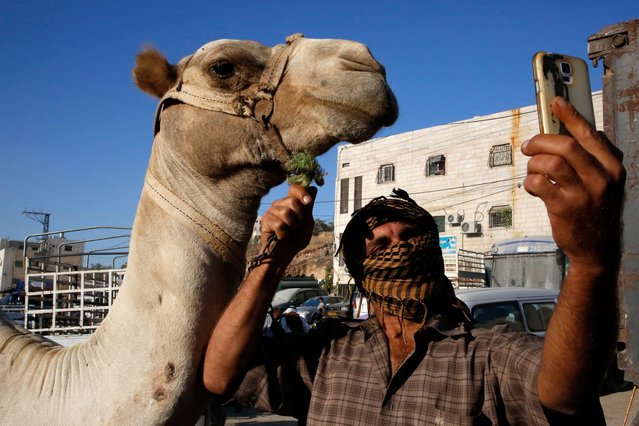
A Palestinian man takes a selfie picture next to a camel at a livestock market in the West Bank city of Hebron on August 9, 2019, as muslims prepare for the Eid al-Adha celebrations. Known as the “big” festival, Eid Al-Adha is celebrated each year by Muslims sacrificing various animals according to religious traditions, including cows, camels, goats and sheep. (Photo by Hazem Bader/AFP Photo)

A Palestinian man takes a selfie picture next to a camel at a livestock market in the West Bank city of Hebron on August 9, 2019, as muslims prepare for the Eid al-Adha celebrations. Known as the “big” festival, Eid Al-Adha is celebrated each year by Muslims sacrificing various animals according to religious traditions, including cows, camels, goats and sheep. (Photo by Hazem Bader/AFP Photo)
Details
11 Aug 2019 00:07:00
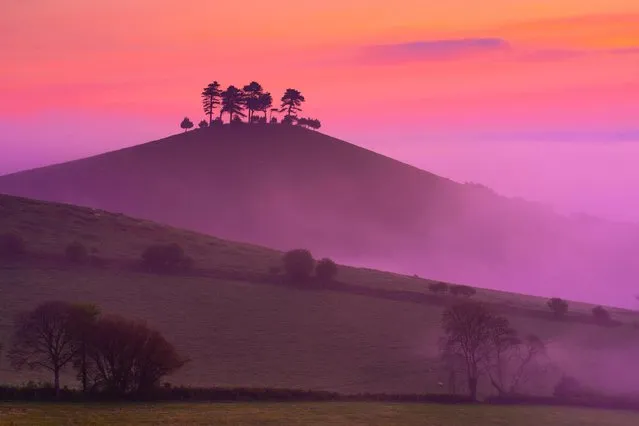
The trees on the iconic local landmark are silhouetted against glorious sunrise colours on a misty morning near Colmers Hill in Dorset, England on May 1, 2019. (Photo by Celia McMahon/Alamy Live News)

The trees on the iconic local landmark are silhouetted against glorious sunrise colours on a misty morning near Colmers Hill in Dorset, England on May 1, 2019. (Photo by Celia McMahon/Alamy Live News)
Details
26 Aug 2019 00:03:00
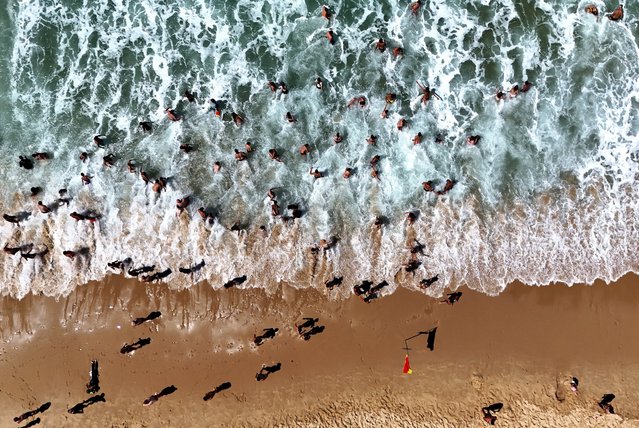
This aerial photograph shows beach-goers gathering on a beach alongside the Atlantic Ocean in Carcans, south-western France on July 22, 2025. (Photo by Christophe Archambault/AFP Photo)

This aerial photograph shows beach-goers gathering on a beach alongside the Atlantic Ocean in Carcans, south-western France on July 22, 2025. (Photo by Christophe Archambault/AFP Photo)
Details
13 Aug 2025 03:40:00
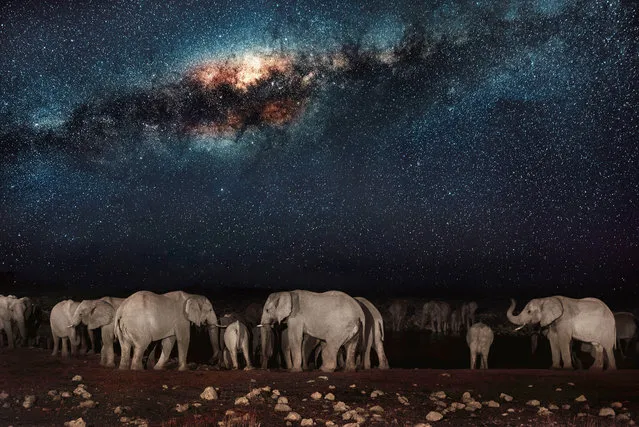
This watering hole is the social hub of the veldt; the scrubby grasslands that stretch across Namibia. The scorched earth supports sometimes fragile populations of magnificent wildlife – from endangered predators to plentiful herds of game. But these gentle giraffes and elephants need to be careful: lions don’t sleep at night, they hunt! The spectacular starscape above southern Africa is unchanged since explorers first mapped the continent. The photographer, Pietro Olivetta from Italy, said he had to be patient to capture these shots – but it was worth the wait. (Photo by Pietro Olivetta/Caters News)

This watering hole is the social hub of the veldt; the scrubby grasslands that stretch across Namibia. The scorched earth supports sometimes fragile populations of magnificent wildlife – from endangered predators to plentiful herds of game. But these gentle giraffes and elephants need to be careful: lions don’t sleep at night, they hunt! The spectacular starscape above southern Africa is unchanged since explorers first mapped the continent. The photographer, Pietro Olivetta from Italy, said he had to be patient to capture these shots – but it was worth the wait. (Photo by Pietro Olivetta/Caters News)
Details
20 Feb 2017 00:05:00
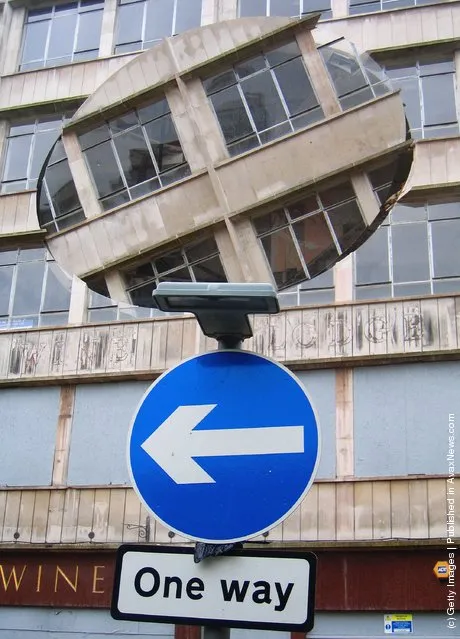
An installation by the artist Richard Wilson, entitled 'Turning the Place Over', is built into the condemned Cross Keys House in Moorfields as part of the Capital of Culture for 2008

“Richard Wilson (born May 24, 1953) is a sculptor, installation artist and musician. Wilson's work is characterised by architectural concerns with volume, illusionary spaces and auditory perception”. – Wikipedia

Photo: An installation by the artist Richard Wilson, entitled “Turning the Place Over”, is built into the condemned Cross Keys House in Moorfields as part of the Capital of Culture for 2008, on June 25, 2007 in Liverpool, England. The piece consists of an 8 metre ovoid cut from the building's facade that oscillates in three dimensions. (Photo by Jim Dyson/Getty Images)
Details
27 Mar 2012 10:31:00
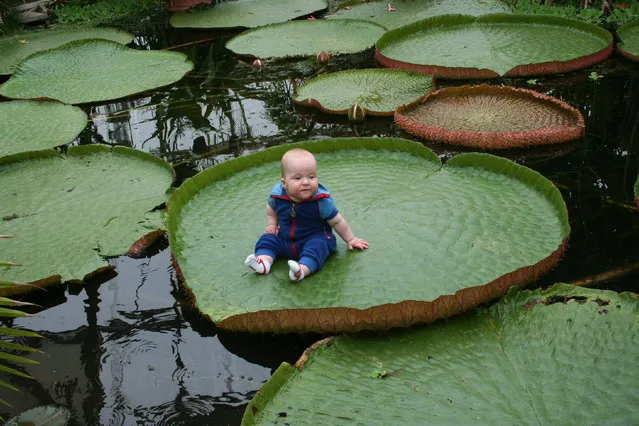
Victoria amazonica

The species has very large leaves, up to 3 m in diameter, that float on the water's surface on a submerged stalk, 7–8 m in length. The species was once called Victoria regia after Queen Victoria, but the name was superseded. V. amazonica is native to the shallow waters of the Amazon River basin, such as oxbow lakes and bayous. It is depicted in the Guyanese coat of arms. The flowers are white the first night they are open and become pink the second night. They are up to 40 cm in diameter, and are pollinated by beetles.
Details
03 Sep 2012 06:58:00
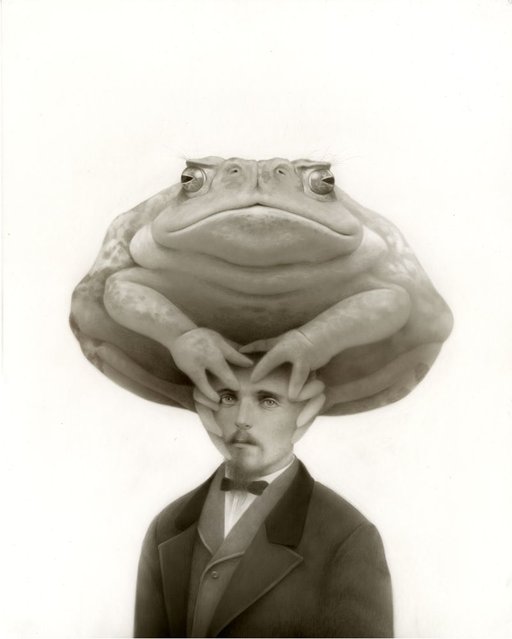
Travis Louie and The Strange Portraits

Travis Louie’s paintings are inspired by 19th-century portrait photographs. Instead of people, however, his subjects are goofy-looking monsters. His work is beyond mere art for children, however. There is a refined eeriness to his pieces that give them depth and an elusive quality that really makes them stand out.
Details
30 Nov 2012 10:47:00


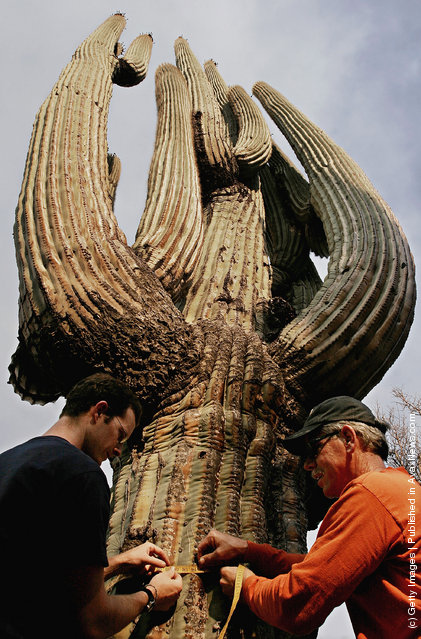
“The saguaro (scientific name Carnegiea gigantea) is a large, tree-sized cactus species in the monotypic genus Carnegiea. It is native to the Sonoran Desert in the U.S. state of Arizona, the Mexican state of Sonora, a small part of Baja California in the San Felipe Desert and an extremely small area of California, U.S. The saguaro blossom is the State Wildflower of Arizona”. – Wikipedia

Photo: Daniel Appel (L), a firefighter with Engine 84 from the Lassen National Forest in California and Mike Hallen, (R), Arizona representative of the National Register of Big Trees, measure the circumference of this Saguaro cactus called the "Grand One," in the Tonto National Forest on July 1, 2005 35 miles north of Phoenix, near Carefree, Arizona. The cactus, estimated to be more than 200 years old, measures a circumference of 7 feet, 10 inches (2.4 meters) and stands 46 feet high (14 meters). The cactus was burned in the Cave Creek Complex fire and may not survive. It was once the largest Saguaro in the world, two others have been found recently that have tied it's measurements. The fire has burned more than 214,000 acres of the Sonoran desert. (Photo by Jeff Topping/Getty Images)

Details
26 Jul 2011 12:27:00