Loading...
Done
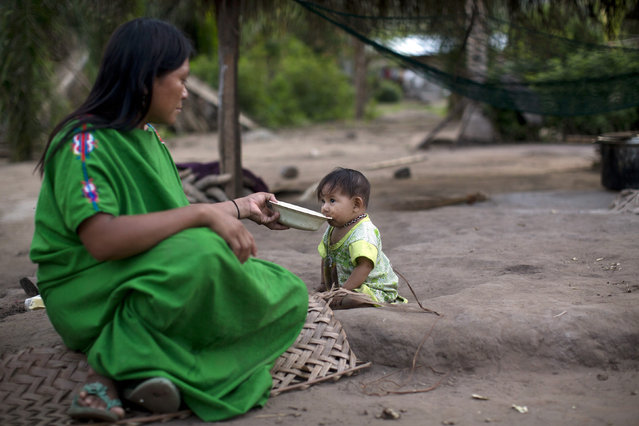
In this November 19, 2015 photo, Ester Melendez feeds banana porridge to her nine-month-old daughter Dina, in Pichiquia, an Ashaninka indigenous community in Peru's Junin region. Incursions and assaults by loggers, miners, colonists and leftist guerrillas have reduced the lands of the Ashaninka people in the Peruvian Amazon, leaving many of the 97,000 members of the group malnourished, despite efforts by the government and independent organizations to help. (Photo by Rodrigo Abd/AP Photo)

In this November 19, 2015 photo, Ester Melendez feeds banana porridge to her nine-month-old daughter Dina, in Pichiquia, an Ashaninka indigenous community in Peru's Junin region. Incursions and assaults by loggers, miners, colonists and leftist guerrillas have reduced the lands of the Ashaninka people in the Peruvian Amazon, leaving many of the 97,000 members of the group malnourished, despite efforts by the government and independent organizations to help. (Photo by Rodrigo Abd/AP Photo)
Details
10 Dec 2015 08:00:00
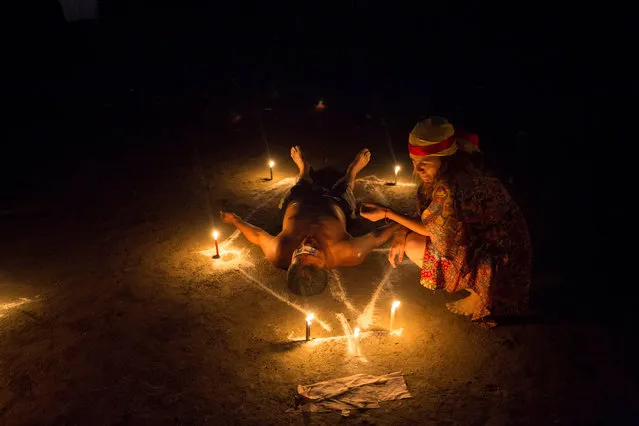
A man lies on the floor during a ritual at the Sorte Mountain on the outskirts of Chivacoa, in the state of Yaracuy, Venezuela October 10, 2015. (Photo by Marco Bello/Reuters)

A man lies on the floor during a ritual at the Sorte Mountain on the outskirts of Chivacoa, in the state of Yaracuy, Venezuela October 10, 2015. One long night every year in a mountainous rainforest in Venezuela, hundreds gather to dance on red-hot embers, enter trance-like states, and worship an ancient goddess known as Maria Lionza. Those who travel to the mountain known as Sorte in central Venezuela are practitioners of a cult that is built on local indigenous traditions. (Photo by Marco Bello/Reuters)
Details
08 Jul 2016 12:19:00
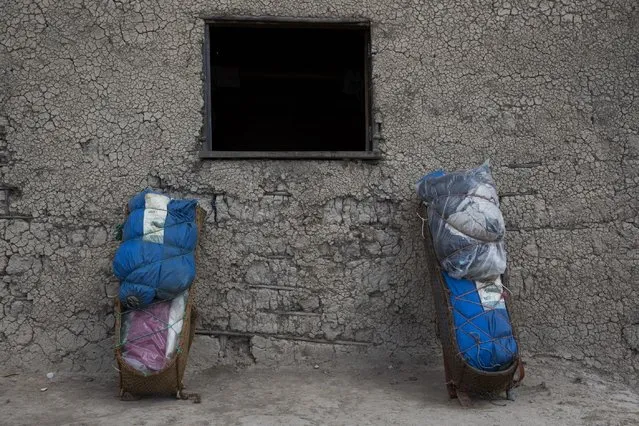
Indigenous woven backpacks called guayare are seen in front of a house in Paraitepui village, before a walking excursion to Mount Roraima, near Venezuela's border with Brazil January 13, 2015. A mysterious table-topped mountain on the Venezuela-Brazil border that perplexed 19th century explorers and inspired “The Lost World” novel is attracting ever more modern-day adventurers. (Photo by Carlos Garcia Rawlins/Reuters)

Indigenous woven backpacks called guayare are seen in front of a house in Paraitepui village, before a walking excursion to Mount Roraima, near Venezuela's border with Brazil January 13, 2015. A mysterious table-topped mountain on the Venezuela-Brazil border that perplexed 19th century explorers and inspired “The Lost World” novel is attracting ever more modern-day adventurers. (Photo by Carlos Garcia Rawlins/Reuters)
Details
04 Feb 2015 12:09:00
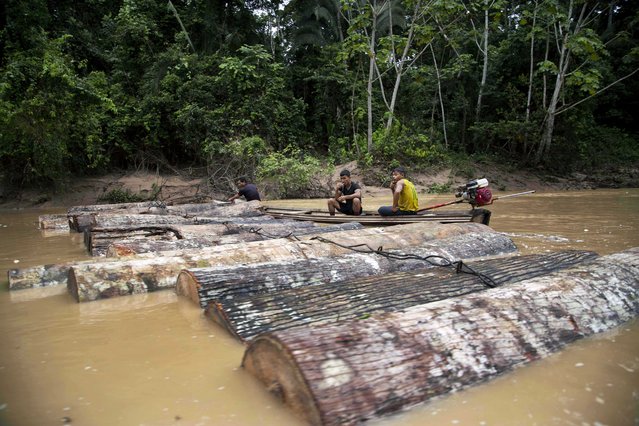
In this March 17, 2015 photo, Ashaninka Indian men, identified by locals as illegal loggers, tie tree trunks together to move them along the Putaya River near the hamlet of Saweto, Peru. Illegal logging persists unabated in this remote Amazon community where four indigenous leaders who resisted it were slain in September. The Putaya River is the waterway that transports felled trees, cut both legally and illegally, to the city of Pucallpa. (Photo by Martin Mejia/AP Photo)

In this March 17, 2015 photo, Ashaninka Indian men, identified by locals as illegal loggers, tie tree trunks together to move them along the Putaya River near the hamlet of Saweto, Peru. Illegal logging persists unabated in this remote Amazon community where four indigenous leaders who resisted it were slain in September. The Putaya River is the waterway that transports felled trees, cut both legally and illegally, to the city of Pucallpa. (Photo by Martin Mejia/AP Photo)
Details
27 Mar 2015 12:40:00
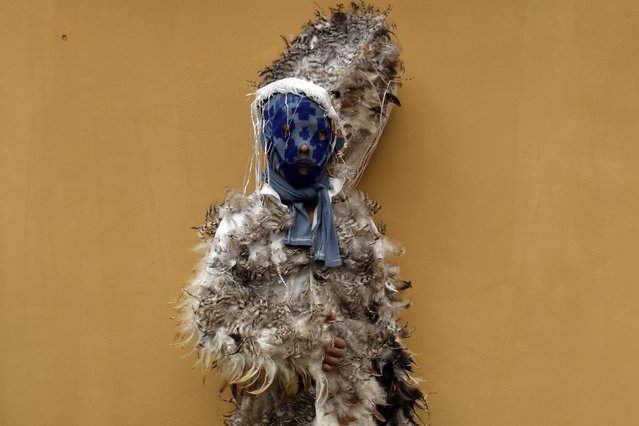
Francisco Solano poses for a photo in his bird-feather suit after attending a Mass commemorating the feast day of St. Francis Solano, in Emboscada, Paraguay, Friday, July 24, 2015. Some 500 people attended the festivity - a mix of indigenous and Guarani Indian beliefs. The festival begins with a Mass, continues with a procession of the diminutive wooden statue of St. Francis, and ends with people dancing in suits made with black, white, brown and grey feathers. (Photo by Jorge Saenz/AP Photo)

Francisco Solano poses for a photo in his bird-feather suit after attending a Mass commemorating the feast day of St. Francis Solano, in Emboscada, Paraguay, Friday, July 24, 2015. Some 500 people attended the festivity – a mix of indigenous and Guarani Indian beliefs. The festival begins with a Mass, continues with a procession of the diminutive wooden statue of St. Francis, and ends with people dancing in suits made with black, white, brown and grey feathers. (Photo by Jorge Saenz/AP Photo)
Details
26 Jul 2015 10:58:00
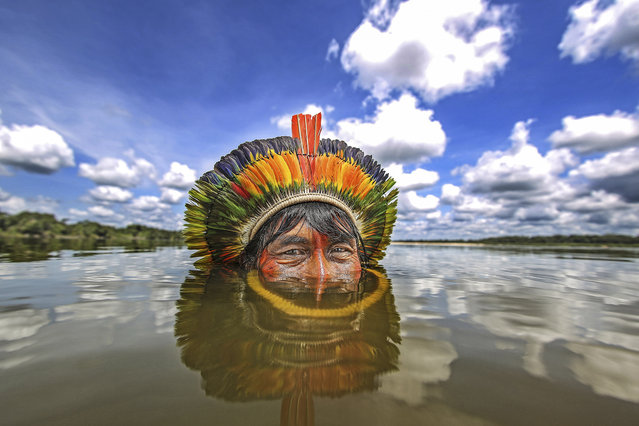
Bej indian in the Xingu river, state of Mato Grosso, Brazil on December 20, 2015 .(Photo by Ricardo Stuckert/Caters News Agency)

These images offer a rare glimpse of life within remote Brazilian tribes. Award winning photographer Ricardo, 47, said: “The pictures show the traditional way of life of these people who live in harmony with nature. The photos provide an overview of the contemporary situation of the indigenous people in Brazil”. Here: Bej indian in the Xingu river, state of Mato Grosso, Brazil on December 20, 2015 .(Photo by Ricardo Stuckert/Caters News Agency)
Details
12 Dec 2017 06:46:00
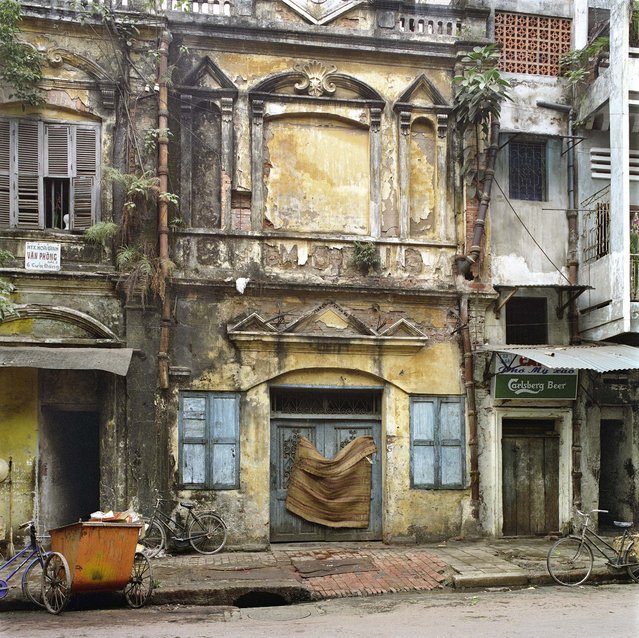
54 Hàng Ga (Chicken Street), 1994. (Photo by  William E. Crawford from the book “Hanoi Streets 1985-2015: In the Years of Forgetting”)

Documentary photographer William E. Crawford was one of the first Western photographers to gain access to North Vietnam after the war ended. He has photographed the capital, Hanoi, at regular intervals since 1985, concentrating on the colonial and indigenous architecture, urban details, landscapes and intimate portraits of people in their home settings, street scenes and the city’s surrounding countryside. Here: 54 Hàng Ga (Chicken Street), 1994. (Photo by William E. Crawford from the book “Hanoi Streets 1985-2015: In the Years of Forgetting”)
Details
27 Jun 2018 00:01:00
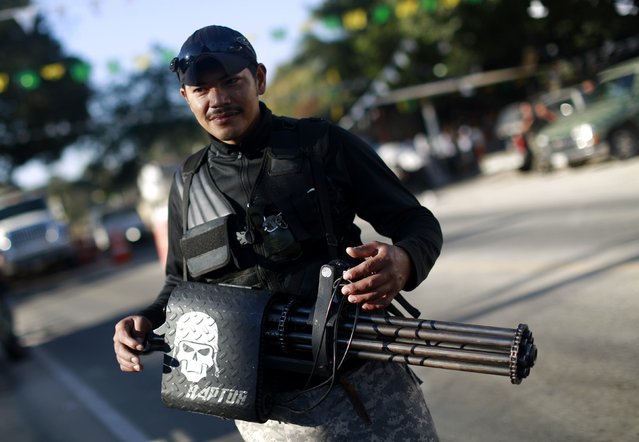
A member of the Community Police of the FUSDEG (United Front for the Security and Development of the State of Guerrero) poses with a weapon during events to mark the first anniversary of the force's operations in Ocotito, January 23, 2015. (Photo by Jorge Dan Lopez/Reuters)

A member of the Community Police of the FUSDEG (United Front for the Security and Development of the State of Guerrero) poses with a weapon during events to mark the first anniversary of the force's operations in Ocotito, January 23, 2015. Based on the traditional indigenous justice system, the Community Police is made up of volunteers from different communities of Guerrero, and was created in response to the spate of violence in several locations in the state. (Photo by Jorge Dan Lopez/Reuters)
Details
25 Jan 2015 09:19:00