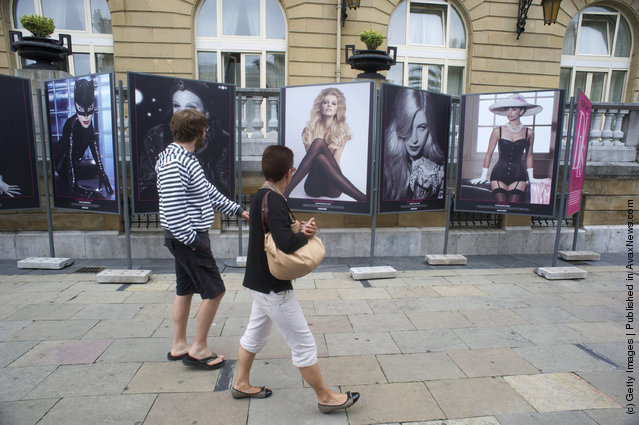
General view of “Marie Claire” Magazine Film Exhibition at Oquendo street during 59th San Sebastian Film Festival on September 22, 2011 in San Sebastian, Spain. (Photo by Carlos Alvarez/Getty Images)
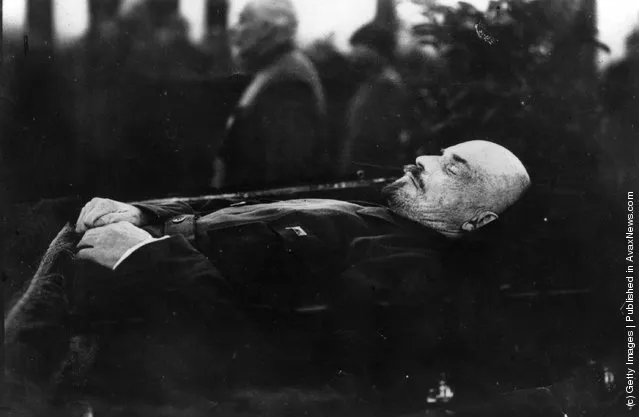
Photo: Vladimir Ilyich Lenin (1870 – 1924) lying in state in the Kremlin. (Photo by Hulton Archive/Getty Images). 1924
Important! For the same article in Russian language click here.
Something quite intriguing is happening within Russian-speaking internet during the last few – should you type a fully academic inquiry (at least, according to Russian academic requirements) in national search engines for "Lenin's mausoleum" – the first thing you get (even in top 10 searches) is website pages talking about black magic and occult. Website authors view this construction differently, but unconditionally agree on one thing: the mausoleum of the "leader of the world proletariat” – the essence of a magical artifact, a sort of “energy vampire”. It was built with a certain purpose: to drain the energy out of miserable Soviet citizens on one hand; and to poison the anthroposphere of one-sixth part of the earth with its vibes (the exact territory that was occupied by the former Soviet Union), depriving the Russian people of will to resist on the other hand. Complete nonsense? No doubt. Nevertheless, an intriguing one. Well, probably because some oddities do exist in mausoleum's history. These oddities are the thing we are going to discuss this time. First, let me refresh you memory on the subject.
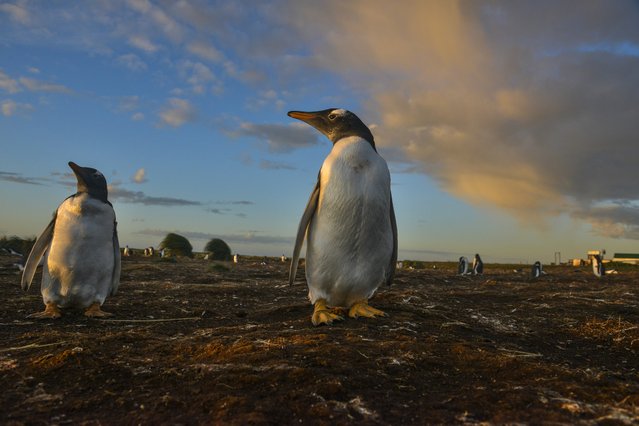
As the sun rises, Gentoo penguins start their day on Wednesday, February 17, 2016, on Sea Lion Island, Falkland Islands. Sea Lion Island, which lies about 10 miles to the south of mainland East Falkland, is the southern most human-inhabited island of the more than 750 islands and islets of the Falkland Islands. (Photo by Jahi Chikwendiu/The Washington Post)
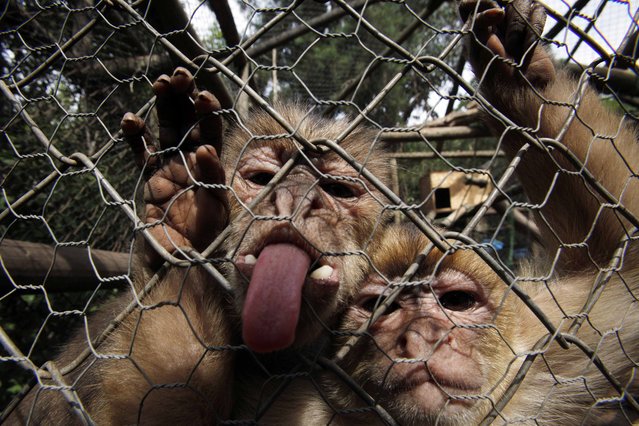
A couple of monkeys look from inside their cage at a rescue and rehabilitation center in Santiago, Chile, Saturday, November 22, 2014. Elba Munoz who runs the center, says that one of the goals of the Center for the Rescue and Rehabilitation of Primates is to stop the trafficking of the animals. (Photo by Luis Hidalgo/AP Photo)
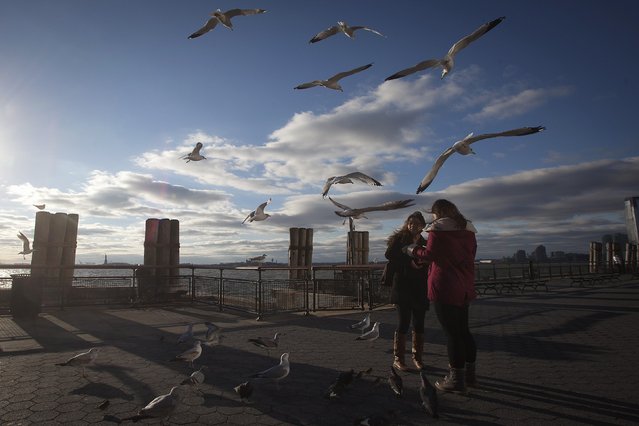
People feed the birds in Battery Park in the Manhattan borough of New York, December 18, 2014. Hart has been feeding the birds three times a week for the last three years. (Photo by Carlo Allegri/Reuters)
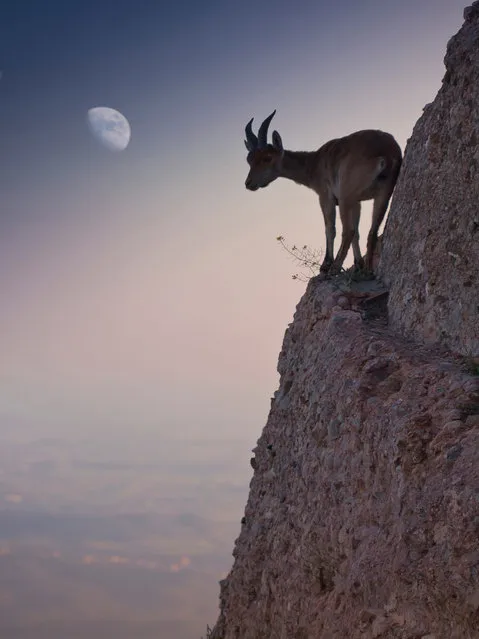
“For a bouquet of flowers”. Photographs made in the last hours of the day. A goat is directed by a dangerous way to eat a small bouquet of flowers. Location: España, Barcelona, Montserrat. (Photo and caption by Renato Lopez Baldo/National Geographic Traveler Photo Contest)
ATTENTION! All pictures are presented in high resolution. To see Hi-Res images – just TWICE click on any picture. In other words, click small picture – opens the BIG picture. Click BIG picture – opens VERY BIG picture.
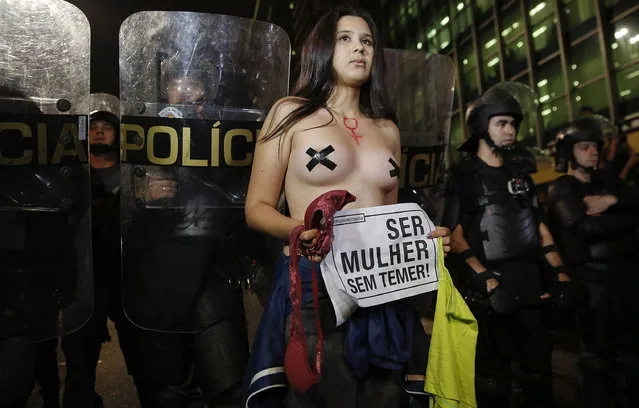
A woman with a sign that reads in Portuguese “Being woman without Temer”, stands next to a police barricade during a protest against the gang rape of a 16-year-old girl in Sao Paulo, Brazil, Wednesday, June 1, 2016. In response to the assault, Brazil's interim President Michel Temer said that the country will set up a specialized group to fight violence against women. (Photo by Andre Penner/AP Photo)
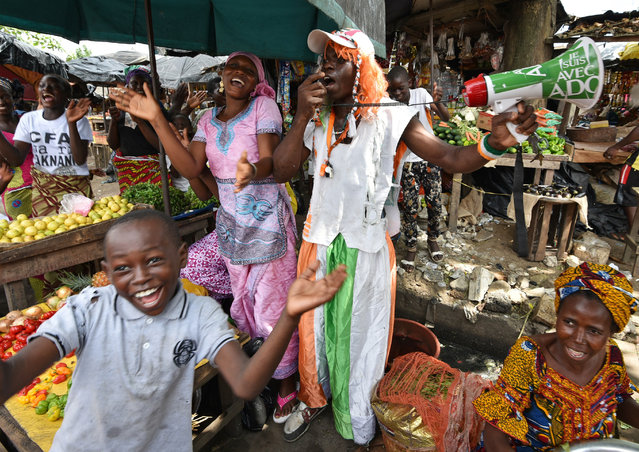
A period of relative stability has put the Iranian capital No1 on the list of world cities that have achieved biggest improvements in liveability over the past five years, as calculated by the Economist Intelligence Unit. The “most improved” top 10 contains some unexpected names. So, eg, the fourth place: Abidjan, Ivory Coast. Latest ranking: 128; Ranking five years ago: 131; Five-year index movement: 3.8%. Here: A supporter of Ivory Coast president Alassane Ouattara campaigns in a market in the city’s Koumassi quarter. (Photo by Sia Kambou/AFP Photo)