Loading...
Done
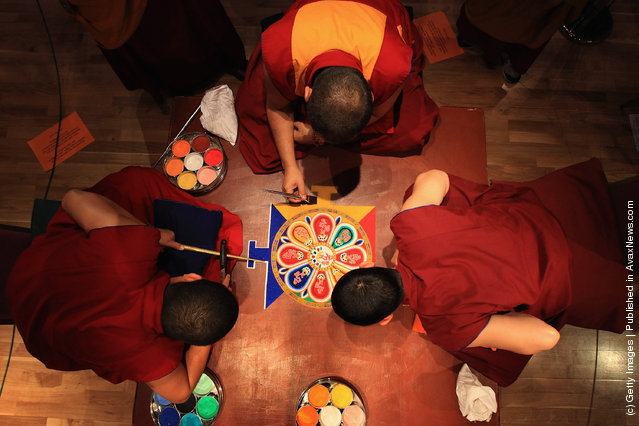
Tibetan Monks From The Panchen Lama's Monastery Create A Sand Mandala Artwork

Tibetan monks create an intricate picture made from coloured sand at St. Mungo Museum of Religious Life and Art on November 23, 2011 in Glasgow, Scotland. The monks, from the Panchen Lama's Monastery, are creating a Sand Mandala as part of a Tantric Buddhist ritual, invoking the presence of the Buddha in a design representing the palace of the deities. (Photo by Jeff J Mitchell/Getty Images)
Details
27 Nov 2011 13:54:00
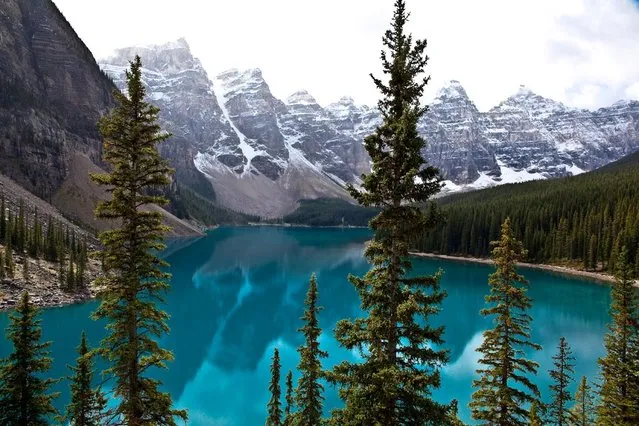
Moraine Lake Canada

Moraine Lake is a glacially-fed lake in Banff National Park, 14 kilometres (8.7 mi) outside the Village of Lake Louise, Alberta, Canada. It is situated in the Valley of the Ten Peaks, at an elevation of approximately 6,183 feet (1,885 m). The lake has a surface area of .5 square kilometres (0.19 sq mi). The lake, being glacially fed, does not reach its crest until mid to late June. When it is full, it reflects a distinct shade of blue. The colour is due to the refraction of light off the rock flour deposited in the lake on a continual basis.
Details
15 Oct 2013 11:56:00
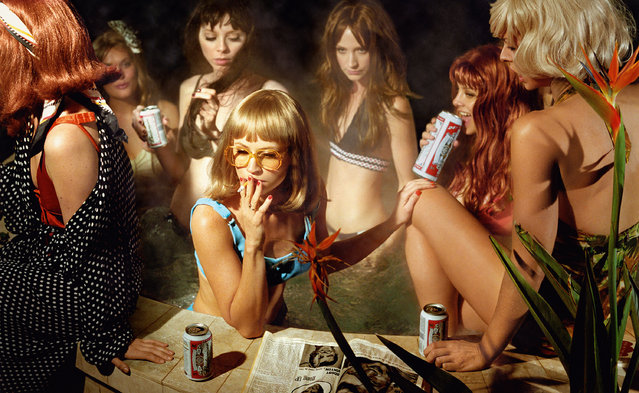
The American artist’s work encompasses fashion, photography and film with characteristically vivid colour and unsettling theatricality. Here: The Big Valley, Susie and Friends, 2008. (Photo by Alex Prager Studio/Lehmann Maupin Gallery)

Alex Prager is an American art photographer and filmmaker based in Los Angeles. Her photographs primarily use staged actors, models and extras to create “meticulously designed mise en scène”, often described as film-like and hyperreal. “Alex Prager: Silver Lake Drive” is at the Photographers’ Gallery, London, 15 June – 14 October 2018. Here: The Big Valley, Susie and Friends, 2008. (Photo by Alex Prager Studio/Lehmann Maupin Gallery)
Details
15 Jun 2018 00:01:00
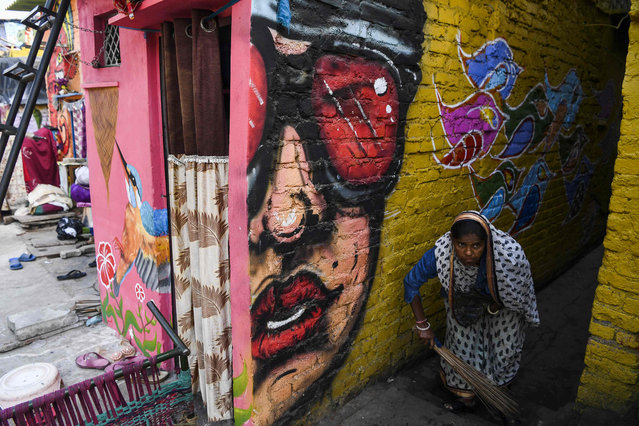
A woman sweeps an alleyway adorned with murals painted by artists from “Delhi Street Art” group at the Raghubir Nagar slum in New Delhi on December 2, 2019. (Photo by Sajjad Hussain/AFP Photo)

A woman sweeps an alleyway adorned with murals painted by artists from “Delhi Street Art” group at the Raghubir Nagar slum in New Delhi on December 2, 2019. A New Delhi slum has been given a colourful makeover thanks to a street artist collective, drawing art lovers and selfie-snappers to a rundown area that they would never normally visit. (Photo by Sajjad Hussain/AFP Photo)
Details
02 Jan 2020 00:05:00
Photographers: Joel Robison Part3

“Hi! I'm Joel, I live in a valley in British Columbia's Rocky Mountains, as close to the forest as I could possibly be! I love to run, bike, jump, eat and create and I hope that you enjoy my work as much as I enjoy creating it!” – Joel Robison. (Photo by: Joel Robison; Source: Flickr)


See Also:Photographers: Joel Robison Part1
Details
02 Nov 2013 09:03:00
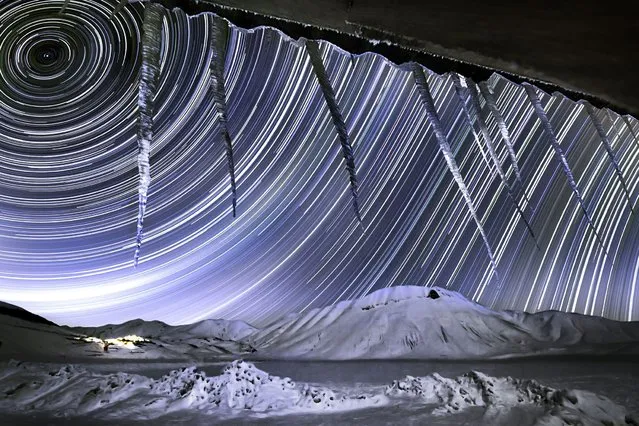
Rainbow of stars

Photographer Maurizio Pignotti, 46, spends all night in freezing temperatures painstakingly shooting the breathtaking crystal-clear stars. He uses a technique where he merges together anywhere between 80 and 450 shots to create what he describes as a “rainbow of stars”. Space-lover Maurizio, captures the star trails on the borders of the Adriatic Sea – including the Sibillini Mountains National Park, the Conero National Park, and the Gargano National Park. (Photo by Maurizio Pignotti/Caters News)
Details
31 Dec 2013 11:51:00
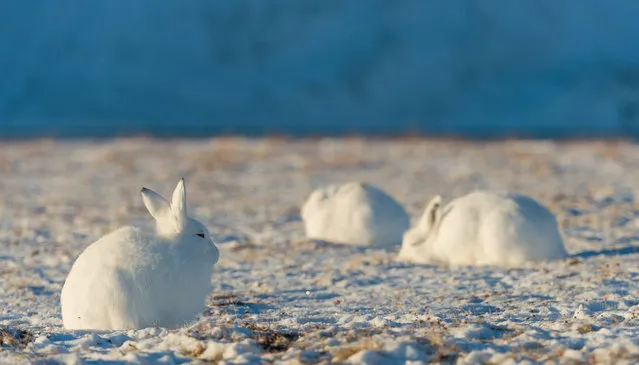
Arctic Hare

The arctic hare, or polar rabbit, is a species of hare which is adapted largely to polar and mountainous habitats. The arctic hare survives with a thick coat of fur and usually digs holes in the ground or under snow to keep warm and sleep. Arctic hares look like rabbits but have shorter ears, are taller when standing, and, unlike rabbits, can thrive in cold climates. They can travel together with many other hares, sometimes huddling with dozens or more, but are usually found alone, taking, in some cases, more than one partner. The arctic hare can run up to 60 kilometres per hour (40 mph). Its predators include the arctic wolf, arctic fox, and ermine.
Details
17 Mar 2014 13:56:00


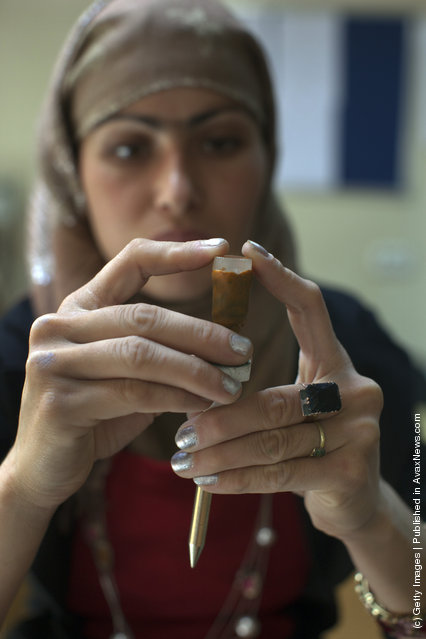
Student, Shoukria positions a stone for cutting at the Turquoise Mountain Gem cutting class on May 18, 2011, in Kabul, Afghanistan. The mineral resources of Afghanistan are relatively unexplored even with Afghanistan's mineral wealth of coal, copper, gold and iron ore, with precious and semiprecious stones, including high-quality emerald, lapis lazuli, red garnet and ruby. Given the country's remote and rugged terrain, on-going instability plus an inadequate infrastructure and transportation means that mining is still difficult. While many are trying to bring positive changes, Afghanistan's mining industry uses unregulated, primitive methods and outdated equipment. (Photo by Paula Bronstein/Getty Images)
Details
22 May 2011 09:11:00