Loading...
Done
Newborn giant panda triplets, which were born to giant panda Juxiao (not pictured), are seen inside an incubator at the Chimelong Safari Park in Guangzhou, Guangdong province August 9, 2014. (Photo by Reuters/China Daily)

Newborn giant panda triplets, which were born to giant panda Juxiao (not pictured), are seen inside an incubator at the Chimelong Safari Park in Guangzhou, Guangdong province August 9, 2014. According to local media, this is the fourth set of giant panda triplets born with the help of artificial insemination procedures in China, and the birth is seen as a miracle due to the low reproduction rate of giant pandas. (Photo by Reuters/China Daily)
Details
13 Aug 2014 09:57:00
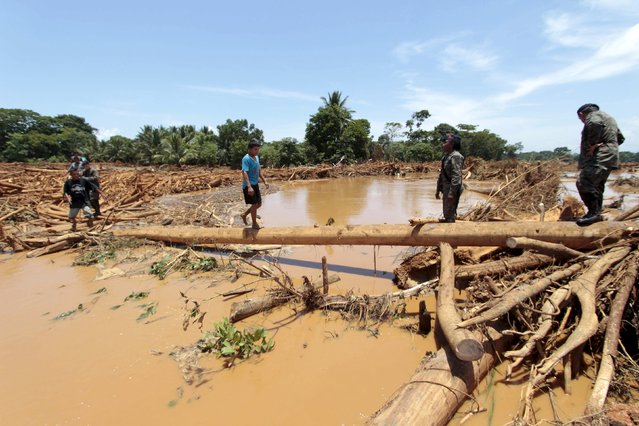
Villagers walk over a tree felled by rain in the village of Punta Caimanes, a place affected by heavy rains in the Izabal region, near Guatemala City, August 8, 2015. (Photo by Josue Decavele/Reuters)

Villagers walk over a tree felled by rain in the village of Punta Caimanes, a place affected by heavy rains in the Izabal region, near Guatemala City, August 8, 2015. Heavy rains have affected eight communities in the municipality of El Estor and five in Livingston, both located in the region of Izabal, with five deaths due to floods, according to local media. (Photo by Josue Decavele/Reuters)
Details
09 Aug 2015 10:50:00
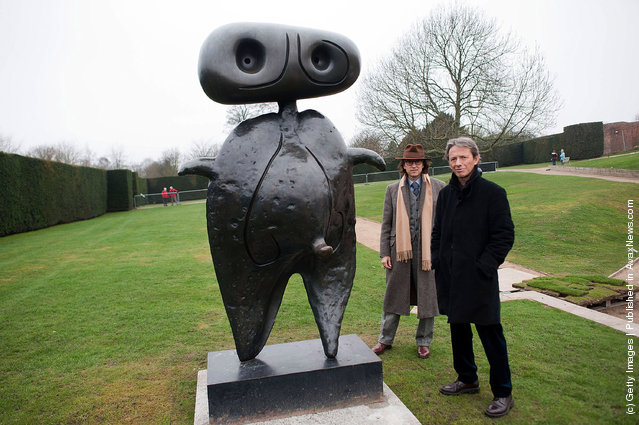
Joan Miro's, grandsons, Emilio Fernandez Miro and Joan Punyet Miro pose beside Personnage (1970) in the Yorkshire Sculpture park

“Joan Miro i Ferra (April 20, 1893 – December 25, 1983) was a Spanish Catalan painter, sculptor, and ceramicist born in Barcelona. Earning international acclaim, his work has been interpreted as Surrealism, a sandbox for the subconscious mind, a re-creation of the childlike, and a manifestation of Catalan pride. In numerous interviews dating from the 1930s onwards, Miro expressed contempt for conventional painting methods as a way of supporting bourgeois society, and famously declared an “assassination of painting” in favour of upsetting the visual elements of established painting”. – Wikipedia

Photo: Joan Miro's, grandsons, Emilio Fernandez Miro and Joan Punyet Miro pose beside Personnage (1970) in the Yorkshire Sculpture park on March 14, 2012 in Wakefield, England. Yorkshire Sculpture Park stages the first major UK survey of sculpture by Spanish artist Joan Miro. (Photo by Bethany Clarke/Getty Images)
Details
15 Mar 2012 13:47:00


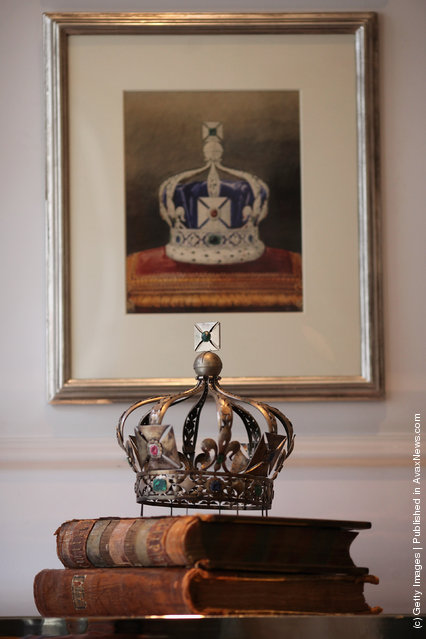
A preparatory model of the Imperial State Crown of India worn in 1911 by King George V stands next to original ledgers dating from 1735 in Garrard's flagship store in Mayfair on April 6, 2011 in London, England. Garrard is the world's oldest jewellers having been founded by George Wickes in 1735 and soon after appointed as goldsmith to the Prince of Wales. For over 160 years Garrard held the title of Crown Jeweller, bestowed by Queen Victoria in 1843, Garrard have served six successive monarchs. They have produced several royal crowns as well as the engagement ring presented to Kate Middleton by Prince William and formerly Princess Diana's engagement ring. (Photo by Oli Scarff/Getty Images)
Details
17 Apr 2011 10:22:00


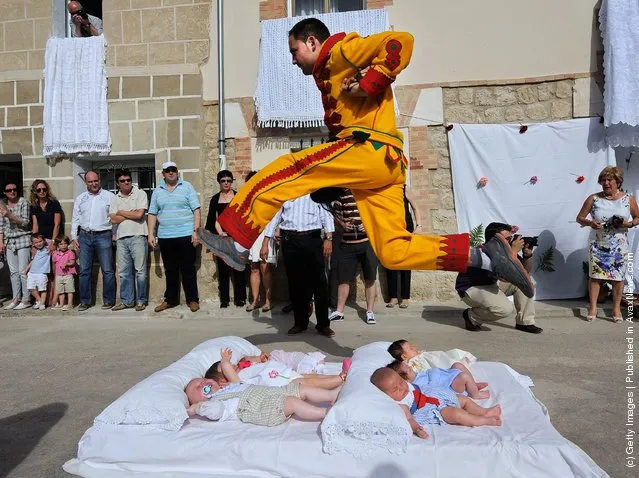
“Baby jumping (El Colacho) is a traditional Spanish practice dating back to 1620 that takes place annually to celebrate the Catholic feast of Corpus Christi in the village of Castrillo de Murcia near Burgos. During the act – known as El Salto del Colacho (the devil's jump) or simply El Colacho – men dressed as the Devil (known as the Colacho) jump over babies born during the previous twelve months of the year who lie on mattresses in the street. ... The festival has been rated as one of the most dangerous in the world”. – Wikipedia

Photo: A man representing the devil leaps over babies during the festival of El Colacho on June 26, 2011 in Castrillo de Murcia near Burgos, Spain. The festival, held on the first Sunday after Corpus Cristi, represents the devil taking away original sin from the newly born babies by leaping over them. (Photo by Denis Doyle/Getty Images)
Details
27 Jun 2011 09:20:00
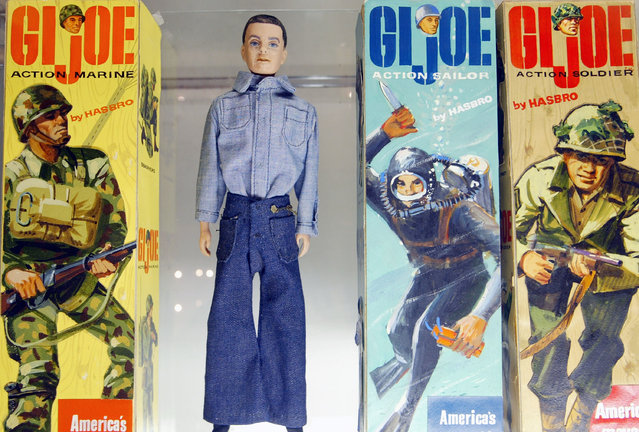
Vintage G.I. Joe figurers are on display at the 2003 Hasbro International G.I. Joe Collectors' Convention June 27, 2003 in Burlingame, California. Hundreds of G.I. Joe fans from around the country are attending the convention to buy, sell and trade G.I. Joe and military action figures. (Photo by Justin Sullivan/Getty Images)

“G.I. Joe is a line of action figures produced by the toy company Hasbro. The term G.I. stands, in popular usage, for Government Issued and after the First World War became a generic term for U.S. soldiers. The origin of the term dates to World War I, when much of the equipment issued to U.S. soldiers was stamped “G.I.”, meaning that it was made from galvanized iron. The development of G.I. Joe led to the coining of the term “action figure”. G.I. Joe's appeal to children has made it an American icon among toys”. – Wikipedia. Photo: Vintage G.I. Joe figurers are on display at the 2003 Hasbro International G.I. Joe Collectors' Convention June 27, 2003 in Burlingame, California. (Photo by Justin Sullivan/Getty Images)
Details
27 Mar 2014 07:46:00
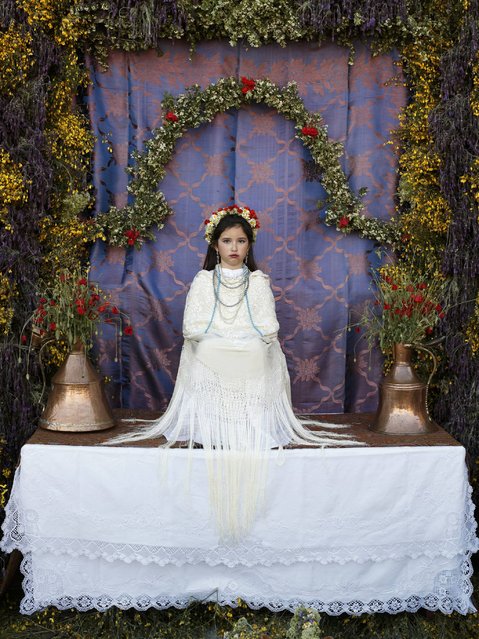
A “Maya” girl sits in an altar during the traditional celebration of “Las Mayas” on the streets in Colmenar Viejo, near Madrid, Spain, Friday, May 2, 2014. (Photo by Daniel Ochoa de Olza/AP Photo)

A “Maya” girl sits in an altar during the traditional celebration of “Las Mayas” on the streets in Colmenar Viejo, near Madrid, Spain, Friday, May 2, 2014. The festivity of the Maya comes from pagan rites and dates from the medieval age, appearing in ancient documents, it takes place every year in the beginning of May and celebrates the beginning off the spring. A girl between 7 and 11years is chosen as “Maya” and should sit still, serious, and quiet for a couple of hours in an altar on the street decorated with flowers and plants, afterwards they walk to the church with their family where they attend a ceremony. (Photo by Daniel Ochoa de Olza/AP Photo)
Details
13 May 2014 10:17:00
Roma Community In Romania

“Inspired by the French authorities' solution to move Romas from point A to point B, Romanian authorities planned and started forced evictions of Roma informal settlements in cities like Cluj-Napoca and Baia Mare. Some of these settlements date back to the early 1990’s. These communities were tolerated by the authorities who verbally encouraged Romas to build in the area, meanwhile, reassuring them nothing bad would ever happen to them. However, the the reality today is that during political campaigns, authorities are planning forced evictions without reasons other than ethnic cleansing of the cities. My home documents the every day life of Roma communities in Romania, 2011”. – Mugur Varzariu. (Photo by Mugur Varzariu, 2011 FotoVisura Grant Finalist)
Details
20 Apr 2012 13:22:00