Loading...
Done
Crime Tatoo  Part 2

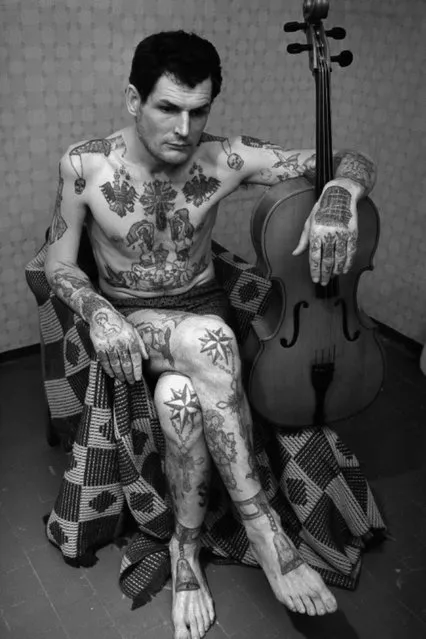
Tattoos are commonly used among criminals to show gang membership and record the wearer's personal history—such as his or her skills, specialties, accomplishments and convictions. They are also used as a means of personal expression. Certain designs have developed recognized coded meanings. The code systems can be quite complex and because of the nature of what they encode, the tattoo designs are not widely recognized.
Details
24 Apr 2013 09:49:00
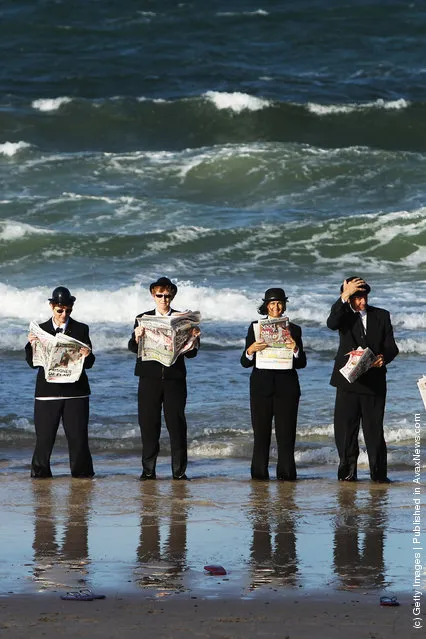
Human Sculpture Created At Henley Beach by Andrew Baines

Volunteers stand and read the morning newspaper while “waiting for the bus” at Henley Beach on January 8, 2012 in Adelaide, Australia. Surrealist artist, Andrew Baines recruited 100 volunteers for this human installation, meant to illustrate corporate workers enjoying nature rather than waiting in a long queue for a trip to work. (Photo by Morne de Klerk/Getty Images)
Details
08 Jan 2012 11:15:00
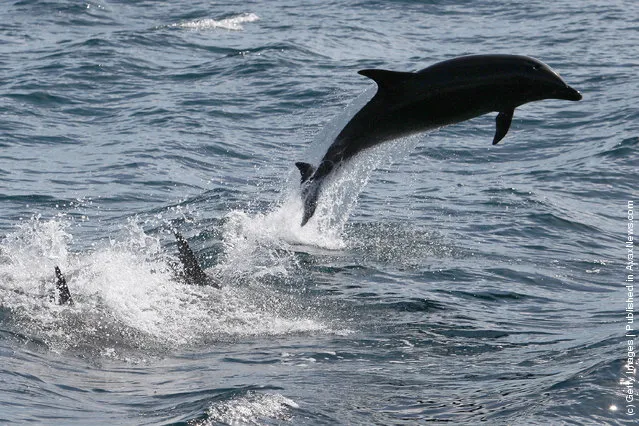
Bottlenose dolphins

Bottlenose dolphins leap off the Southern California coast on January 30, 2012 near Dana Point, California. A coalition that includes Native American tribes, Earthjustice and the Natural Resources Defense Council is on the National Marine Fisheries Service for more protection for dolphins, whales, and other migrating marine animals from the use of sonar in training by the US Navy on the West Coast. (Photo by David McNew/Getty Images)
Details
31 Jan 2012 10:23:00


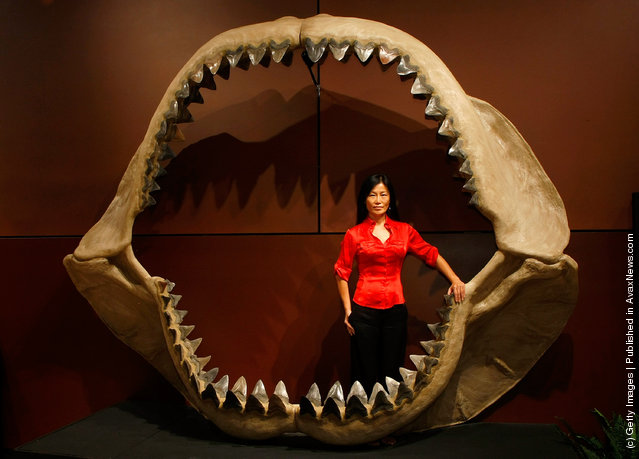
Enya Kim from the Natural History department at auctioneers Bonhams & Butterfields stands in front of one of the world's largest set of shark jaws comprised of about 180 fossil teeth from the prehistoric species, Carcharocles megalodon, which grew to the size of a school bus, at the Venetian Resort Hotel Casino September 30, 2009 in Las Vegas, Nevada. (Photo by Ethan Miller/Getty Images)
Details
19 Apr 2011 10:05:00
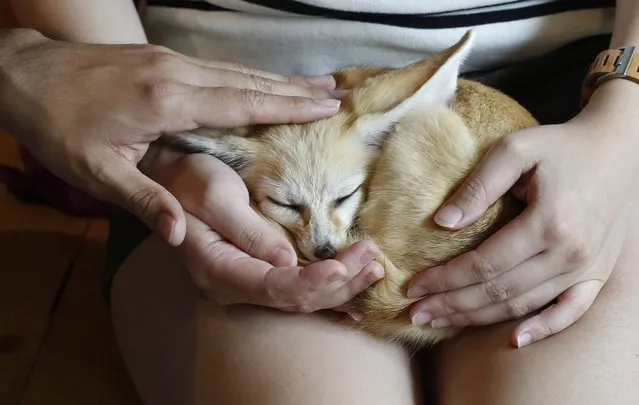
A picture made available on 07 March 2016 shows visitors petting and holding a Fennec fox, native to the Sahara, in the petting room at the Little Zoo Cafe, a business built to capitalize on Thais' love for exotic animals, and food, on the outskirts of Bangkok, Thailand, 05 March 2016. (Photo by Barbara Walton/EPA)

A picture made available on 07 March 2016 shows visitors petting and holding a Fennec fox, native to the Sahara, in the petting room at the Little Zoo Cafe, a business built to capitalize on Thais' love for exotic animals, and food, on the outskirts of Bangkok, Thailand, 05 March 2016. The cafe boasts Fennec foxes, Meerkat, native to parts of Africa, Silver Fox, Raccoon and Chinchillas, along with a menu of Thai food and Cheesecake, among other sweet deserts. Nature is a faraway fantasy in the bustling exhaust-filled cement city of Bangkok, fuelling a demand to own and be close to exotic pets. The trend to be near to a species that was once wild, in a city environment, far from the natural setting, has drawn criticism but continues to grow. (Photo by Barbara Walton/EPA)
Details
13 Mar 2016 09:38:00
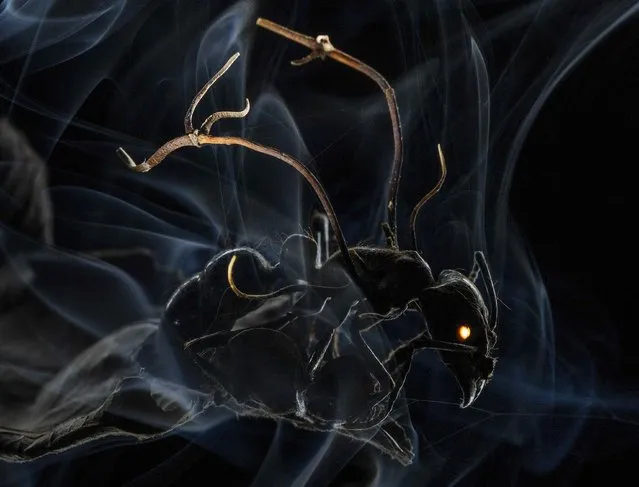
Anand Varma, a U.S. photographer working for the National Geographic, won the First Prize in the Nature Category, Stories, of the 2015 World Press Photo contest with his series of pictures, which includes this one of spores of a fungus landing on an ant, penetrating its exoskeleton and entering its brain, compelling the host to leave its normal habitat on the forest floor and scale a nearby tree, in this picture taken January 22, 2014 and released by the World Press Photo on February 12, 2015. (Photo by Anand Varma/Reuters/National Geographic/World Press Photo)

Anand Varma, a U.S. photographer working for the National Geographic, won the First Prize in the Nature Category, Stories, of the 2015 World Press Photo contest with his series of pictures, which includes this one of spores of a fungus landing on an ant, penetrating its exoskeleton and entering its brain, compelling the host to leave its normal habitat on the forest floor and scale a nearby tree, in this picture taken January 22, 2014 and released by the World Press Photo on February 12, 2015. (Photo by Anand Varma/Reuters/National Geographic/World Press Photo)
Details
15 Feb 2015 15:21:00
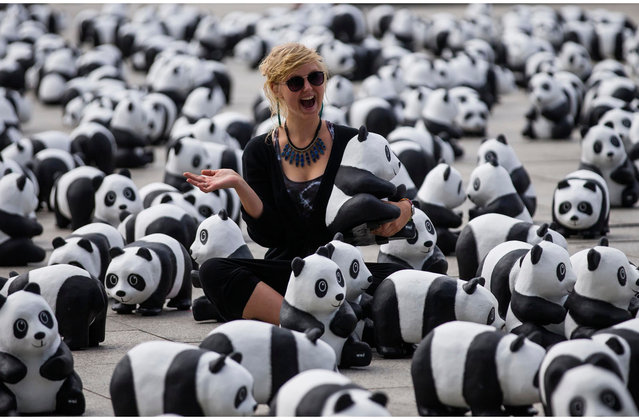
A woman poses as she has her picture taken amid 1600 panda bear sculptures in Berlin August 5, 2013. Marking the 50th anniversary of its existence, on Monday the German branch of the World Wide Fund for Nature  (WWF) environmental conservation organisation placed 1600 panda bear sculptures on front of Berlin's main train station to draw attention to the plight of the endangered species that serves as the NGO's mascot. There are currently 1600 panda bears alive in the wild, the organisation said in a press release. (Photo by Thomas Peter/Reuters)

A woman poses as she has her picture taken amid 1600 panda bear sculptures in Berlin August 5, 2013. Marking the 50th anniversary of its existence, on Monday the German branch of the World Wide Fund for Nature (WWF) environmental conservation organisation placed 1600 panda bear sculptures on front of Berlin's main train station to draw attention to the plight of the endangered species that serves as the NGO's mascot. There are currently 1600 panda bears alive in the wild, the organisation said in a press release. (Photo by Thomas Peter/Reuters)
Details
06 Aug 2013 08:28:00
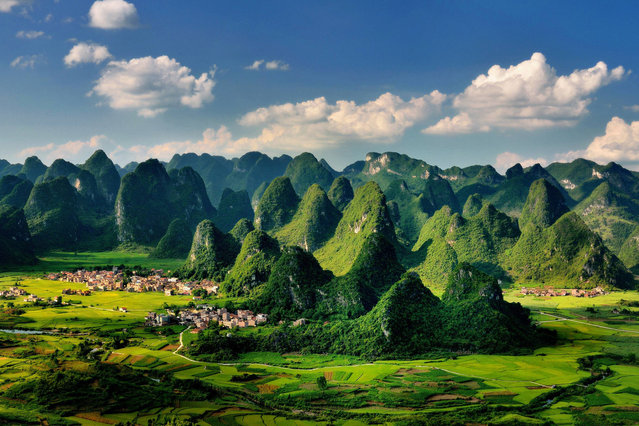
File photo taken on July 24, 2011 shows the scenery of karst landform in Dacai Township under Maonan Autonomous County of Huaijiang, south China's Guangxi Zhuang Autonomous Region. The World Heritage Committee on Monday inscribed an extension of South China Karst, a natural World Heritage Site since 2007, into the UNESCO's World Heritage List. (Photo by Wang Xiufa/Xinhua)

File photo taken on July 24, 2011 shows the scenery of karst landform in Dacai Township under Maonan Autonomous County of Huaijiang, south China's Guangxi Zhuang Autonomous Region. The World Heritage Committee on Monday inscribed an extension of South China Karst, a natural World Heritage Site since 2007, into the UNESCO's World Heritage List. (Photo by Wang Xiufa/Xinhua)
Details
07 Aug 2014 10:19:00