Loading...
Done
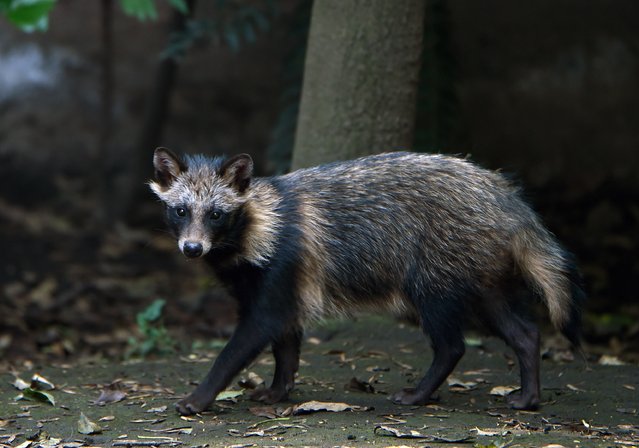
View of a raccoon dog or Tanuki (Nyctereutes procyonoides) at the Chapultpec Zoo in Mexico City on August 06, 2015. (Photo by Alfredo Estrella/AFP Photo)

View of a raccoon dog or Tanuki (Nyctereutes procyonoides) at the Chapultpec Zoo in Mexico City on August 06, 2015. This species is native from Japan and China. (Photo by Alfredo Estrella/AFP Photo)
Details
05 Mar 2016 11:37:00
Revellers attend the 25th edition of the Sziget Festival on August 9, 2017 in Budapest, Hungary. (Photo by Laszlo Mudra/Rockstar Photographers)

Revellers attend the 25th edition of the Sziget Festival on August 9, 2017 in Budapest, Hungary. The Sziget Festival, one of the largest music and cultural festivals in Europe, celebrates its 25th anniversary in 2017, taking place from August 9-16 on the Hajogyari Sziget in Budapest. (Photo by Laszlo Mudra/Rockstar Photographers)
Details
11 Aug 2017 07:41:00
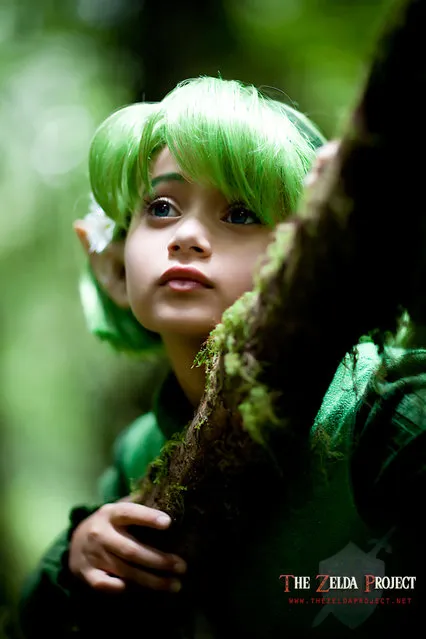
The Zelda Project

The Zelda Project is a Los Angeles, CA based group of friends who seek to bring to life the characters, settings, and overall feel of Ocarina of Time through photography and film. Our ultimate goal is to create the characters as they would appear in reality to the best of our abilities, placing them in beautiful sceneries true to their Hyrulean counterparts, and creating elaborate photosets utilizing art ranging from costuming to 3D CGI.
Details
16 Mar 2014 14:09:00
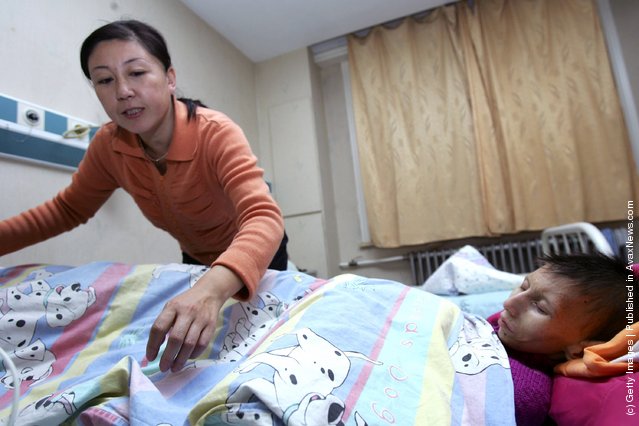
12-year-old Chinese girl Sun Yangyang suffering from Cockayne syndrome

“Cockayne syndrome (also called Weber-Cockayne syndrome, or Neill-Dingwall Syndrome) is a rare autosomal recessive congenital disorder characterized by growth failure, impaired development of the nervous system, abnormal sensitivity to sunlight (photosensitivity), and premature aging. Hearing loss and eye abnormalities (pigmentary retinopathy) are other common features, but problems with any or all of the internal organs are possible. It is associated with a group of disorders called leukodystrophies. The underlying disorder is a defect in a DNA repair mechanism. It is named after English physician Edward Alfred Cockayne (1880–1956)”. – Wikipedia

Photo: Mother of 12-year-old Chinese girl Sun Yangyang suffering from Cockayne syndrome, tends her at the First Affiliated Hospital of Jilin University on November 11, 2006 in Changchun of Jilin Province, China. The disease results in the senile appearance of Yangyang and also causes eyesight, hearing weakness and other problems. Doctors failed to cure the girl... (Photo by China Photos/Getty Images)
Details
08 Aug 2011 11:17:00
Ugly Girl

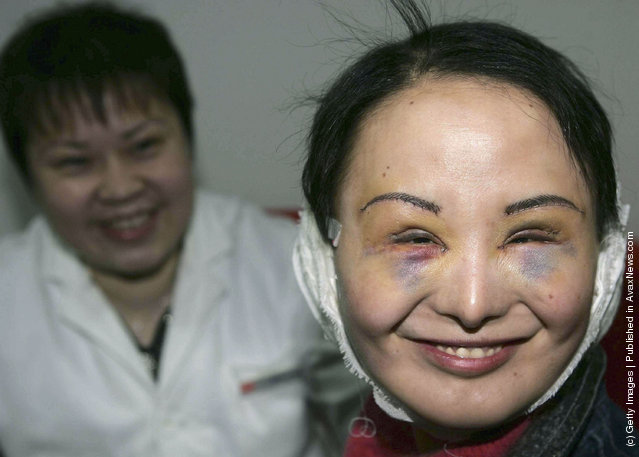
Chinese woman Zhang Jing, known as the “Ugly Girl” smiles after doctors removed the stitches from her fourth session of cosmetic surgery at a hospital on March 23, 2005 in Shanghai, China. Zhang Jing, 26 years old, from Tianjin Municipality, was forced to leave school because her classmates sneered at her appearance during her teenage years. After leaving junior high school, Zhang found herself still unacceptable by society, she struggled to look for a job, but was turned down by one thousand job applications in ten years. Zhang's story was widely reported by the media in 2003, this helped her find a job and get three chances of free plastic surgery. (Photo by China Photos/Getty Images)
Details
31 Aug 2011 10:11:00
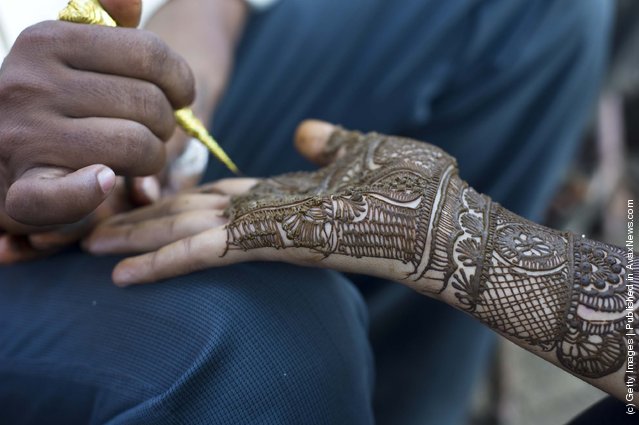
Application of henna or “Mehndi”  to a girls hand in a market in Jaipur, India

“Mehndi or menhdi is the application of henna as a temporary form of skin decoration in India, as well as by expatriate communities from the country. The word mehndi is derived from the Sanskrit word mendhikā. The use of mehndi and turmeric is described in the earliest Vedic ritual books. Haldi (Staining oneself with turmeric paste) as well as mehndi are important Vedic customs as a symbolic representation of the Outer and the Inner Sun. Vedic customs are meant to awaken the “inner light” and so the gold of the inner Sun has an important symbolic function”. – Wikipedia

Photo: Application of henna or “Mehndi” to a girls hand in a market on October 18, 2010 in Jaipur, India. (Photo by Simon de Trey-White/Getty Images)
Details
23 Nov 2011 13:33:00
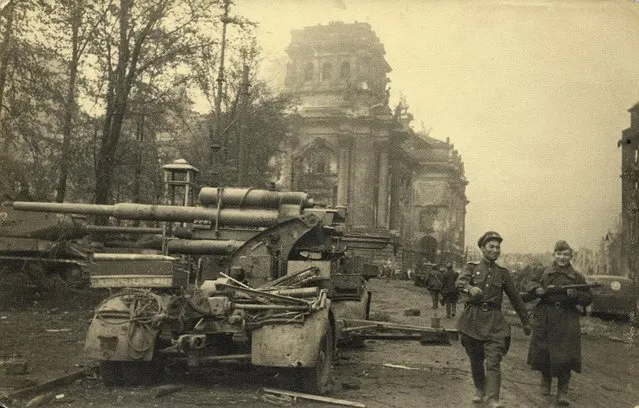
Russian soldiers are pictured next to the Reichstag building in this undated photo taken May 1945 in Berlin. Some 70 years on from the Battle for Berlin, instrumental in the end of World War II, Reuters photographer Fabrizio Bensch unearthed pictures by Red Army photographer Georgiy Samsonov, showing his portrayal of a city laid siege. (Photo by Georgiy Samsonov/Reuters/MHM)

Russian soldiers are pictured next to the Reichstag building in this undated photo taken May 1945 in Berlin. Some 70 years on from the Battle for Berlin, instrumental in the end of World War II, Reuters photographer Fabrizio Bensch unearthed pictures by Red Army photographer Georgiy Samsonov, showing his portrayal of a city laid siege. Bensch bought an exactly equivalent FED camera, a Soviet copy of the German-made Leica II, choosing to use black and white film to capture images of the self-same locations he detected his way to in modern-day Berlin. (Photo by Georgiy Samsonov/Reuters/MHM)
Details
07 May 2015 12:01:00
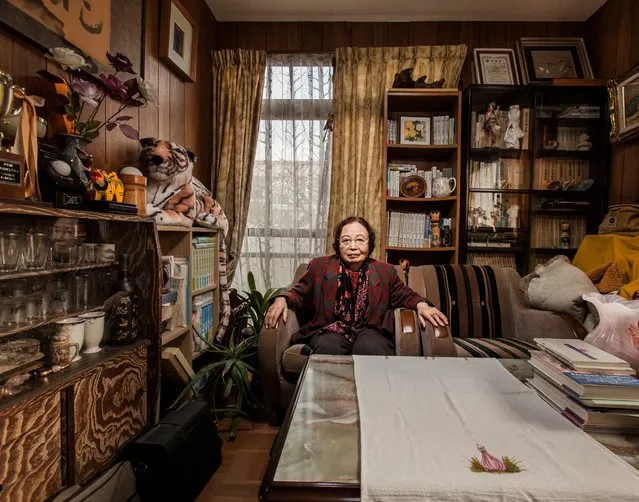
Takeoka Chisaka, Hiroshima, Japan. “One morning in August 1945, I was walking home from the night shift at a factory in Hiroshima. As I reached my door, there was a huge explosion. When I came to, my head was bleeding and I had been blasted 30m away”. (Photo and caption by Sasha Maslov)

Takeoka Chisaka, Hiroshima, Japan. “One morning in August 1945, I was walking home from the night shift at a factory in Hiroshima. As I reached my door, there was a huge explosion. When I came to, my head was bleeding and I had been blasted 30m away. The atomic bomb had detonated. When I found my mother, her eyes were badly burned. A doctor said they had to come out, but he didn’t have the proper tools so used a knife instead. It was hellish. I became a peace-worker after the war. In the 1960s, at a meeting at the UN, I met one of the people who created the atomic bomb. He apologised”. (Photo and caption by Sasha Maslov)
Details
11 May 2015 11:56:00