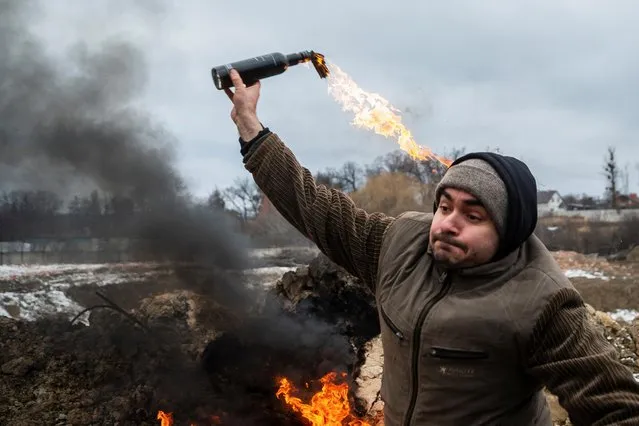
A civilian trains to throw Molotov cocktails to defend the city, as Russia's invasion of Ukraine continues, in Zhytomyr, Ukraine March 1, 2022. (Photo by Viacheslav Ratynskyi/Reuters)
A police officer escorts a civilian away from the scene of a shooting, Sunday, July 22, 2018, in Toronto, Canada. A gunman opened fire in central Toronto on Sunday night, injuring 13 people including a child. Two dead including gunman, police reported. (Photo by Frank Gunn/The Canadian Press via AP Photo)
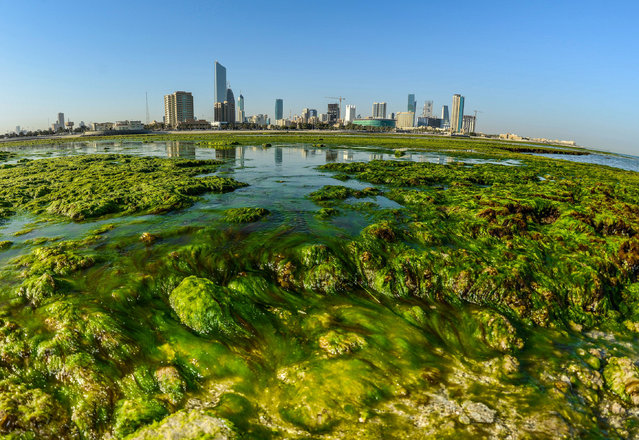
Green algae sits on a beach in Kuwait City, Kuwait, 28 February 2017. The formation of green algae is a normal phenomenon that occurs every year at the shores of Kuwait. (Photo by Raed Qutena/EPA)
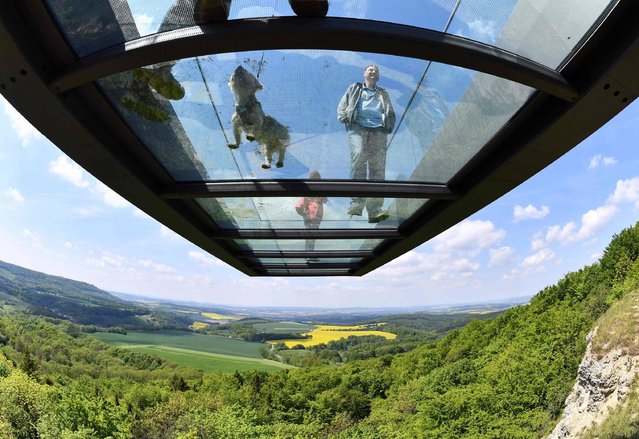
Visitors and a dog stand on the new “Skywalk” viewing platform on the Sonnenstein mountain in the Eichsfeld region near Bad Lauterberg im Harz, central Germany, on May 22, 2017. (Photo by Martin Schutt/AFP Photo/DPA)
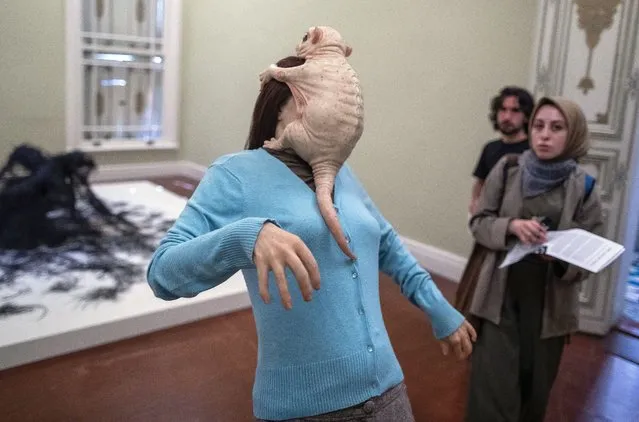
Visitors view Patricia Piccinini's “The Embrace” artwork during the “You Know Who” exhibition at the Abdulmecit Efendi mansion in Istanbul, Turkey, 27 September 2022. The exhibition, which by the organizers is described as questioning “the representation of the unknown in contemporary art, based on the symbolic world of the supernatural and unknown in the Byzantine period”, is shown from 20 September until 11 December 2022. (Photo by Erdem Sahin/EPA/EFE/Rex Features/Shutterstock)
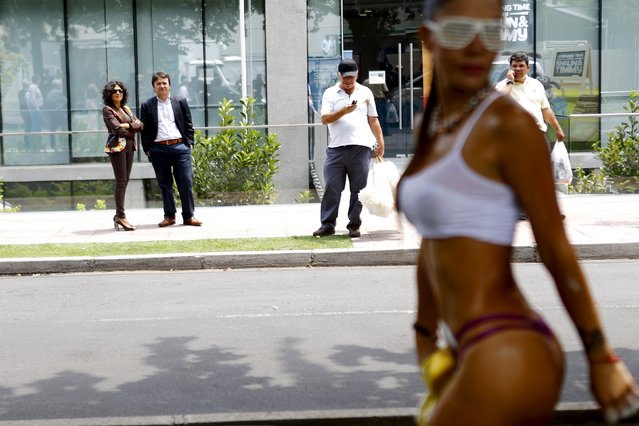
An exotic dancer performs in a street during an “Urban intervention” publicity event for an adult club in Santiago, Chile, January 26, 2016. (Photo by Ivan Alvarado/Reuters)
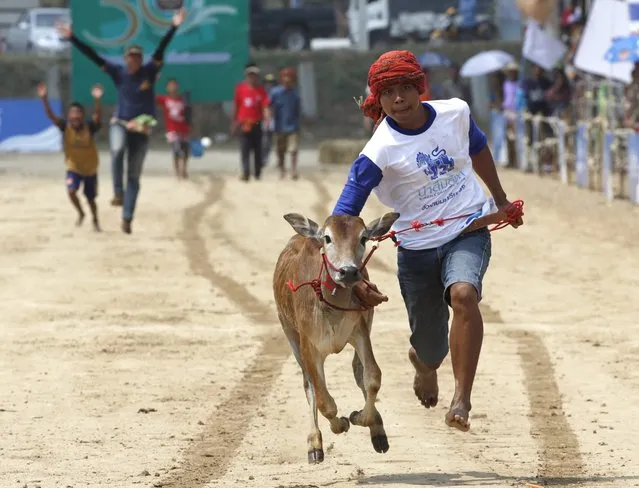
A Thai villager runs with a bullock during a catching a bullock competition as part of the annual bullock cart racing festival in Phetchaburi province, Thailand, 21 February 2016. The annual bullock cart race festival held to celebrate the end of the harvest season. (Photo by Rungroj Yongrit/EPA)
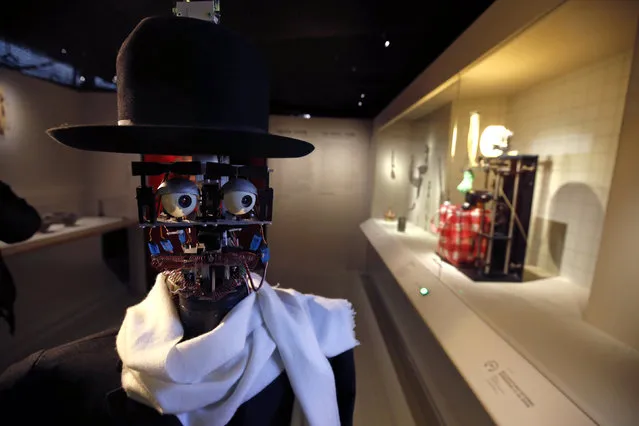
The Berenson robot strolls among visitors during the exhibition “Persona : Oddly Human” at the Quai Branly museum in Paris, France, February 23, 2016. The Berenson robot, developed in France in 2011, is the brainchild of anthropologist Denis Vidal and robotics engineer Philippe Gaussier. Its programming allows it to record reactions of museum visitors to certain pieces of art and then use the data to develop its own unique taste, which allows “Berenson” to judge whether or not it likes a certain work of art within an exhibition. (Photo by Philippe Wojazer/Reuters)