Loading...
Done
Yak near Yamdrok lake, Tibet. It is a long-haired bovinae found throughout the Himalayan region of south Central Asia, the Tibetan Plateau and as far north as Mongolia and Russia. The Tibetan economy is dominated by subsistence agriculture. Due to limited arable land, the primary occupation of the Tibetan Plateau is raising livestock, such as sheep, cattle, goats, camels, yaks, dzo, and horses. The Tibetan yak is an integral part of Tibetan life. (Photo by Dennis Jarvis)

Yak near Yamdrok lake, Tibet. It is a long-haired bovinae found throughout the Himalayan region of south Central Asia, the Tibetan Plateau and as far north as Mongolia and Russia. The Tibetan economy is dominated by subsistence agriculture. Due to limited arable land, the primary occupation of the Tibetan Plateau is raising livestock, such as sheep, cattle, goats, camels, yaks, dzo, and horses. The Tibetan yak is an integral part of Tibetan life. (Photo by Dennis Jarvis)
Details
10 Jun 2015 10:48:00
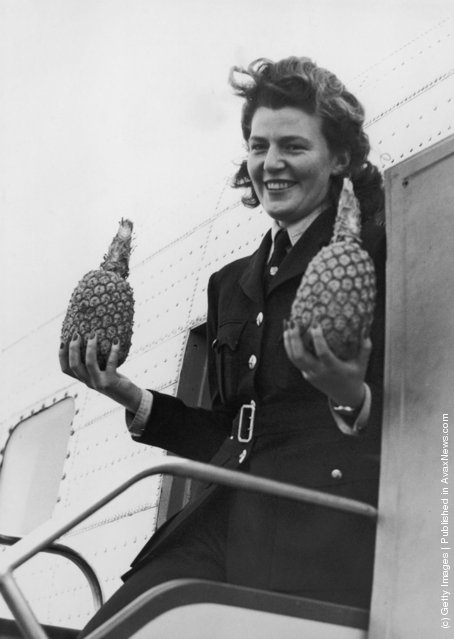
Airways hostess

British South American Airways hostess Mary Guthrie with a pair of pineapples, on the return of the Lancastrian airliner 'Star Dust' to Heathrow Airport after a test-flight to Buenos Aires, 15th January 1946
.
Details
10 Apr 2011 11:57:00


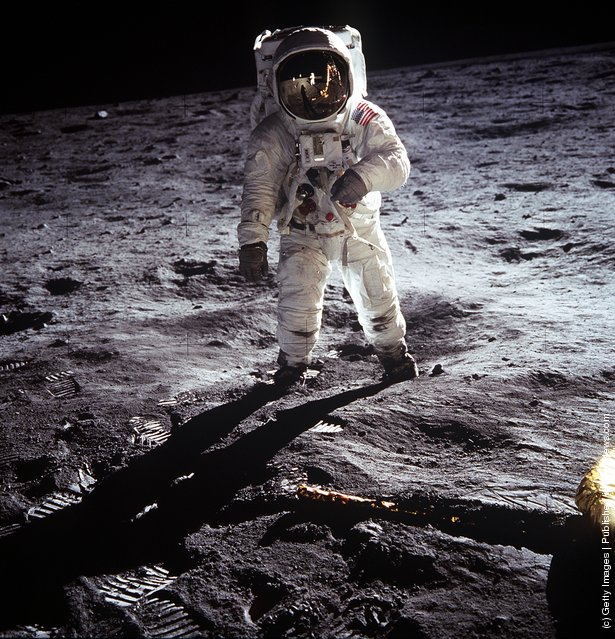
Astronaut Edwin E. Aldrin Jr. walks near the Lunar Module during the Apollo 11 extravehicular activity July 20, 1969 on the Moon. (Photo by NASA/Newsmakers)
Details
28 May 2011 11:04:00
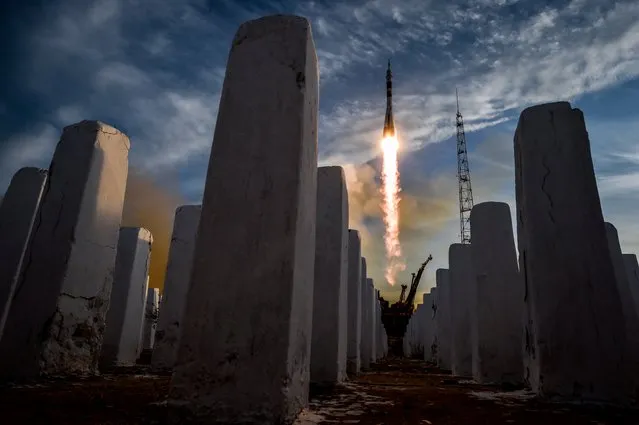
A Soyuz MS-11 rocket carrying Russian, American and Canadian astronauts takes off from the Baikonur Cosmodrome on December 3, 2018 before reached orbit later, the first manned mission since a failed launch in October. (Photo by Kirill Kudryavtsev/AFP Photo)

A Soyuz MS-11 rocket carrying Russian, American and Canadian astronauts takes off from the Baikonur Cosmodrome on December 3, 2018 before reached orbit later, the first manned mission since a failed launch in October. (Photo by Kirill Kudryavtsev/AFP Photo)
Details
05 Dec 2018 00:07:00
The Mil Mi-28 N military helicopter is seen at the MAKS 2019 air show in Zhukovsky, outside Moscow, Russia, August 27, 2019. (Photo by Maxim Shemetov/Reuters)

The Mil Mi-28 N military helicopter is seen at the MAKS 2019 air show in Zhukovsky, outside Moscow, Russia, August 27, 2019. (Photo by Maxim Shemetov/Reuters)
Details
30 Aug 2019 00:03:00
A view of the platform of the Leviathan natural gas field in the Mediterranean Sea is pictured from the Israeli northern coastal beach of Nasholim, on August 29, 2022. (Photo by Jack Guez/AFP Photo)

A view of the platform of the Leviathan natural gas field in the Mediterranean Sea is pictured from the Israeli northern coastal beach of Nasholim, on August 29, 2022. (Photo by Jack Guez/AFP Photo)
Details
21 Nov 2022 06:22:00
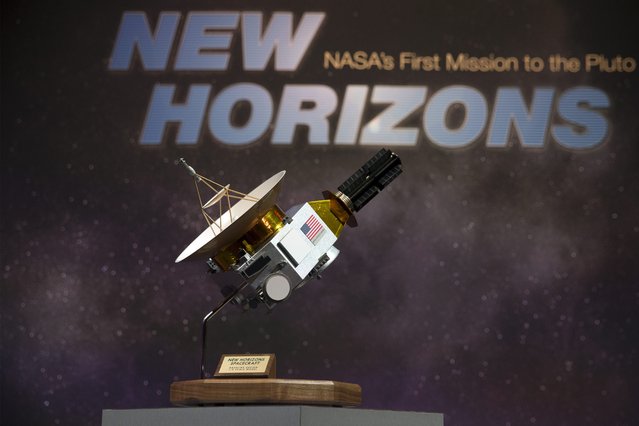
A model of the New Horizons spacecraft is seen at a live television program on NASA television celebrating the spacecraft's closest proximity to Pluto, at Johns Hopkins University Applied Physics Laboratory, site of the mission operations center, in Laurel, Maryland, USA, 14 July 2015. (Photo by Michael Reynolds/EPA)

A model of the New Horizons spacecraft is seen at a live television program on NASA television celebrating the spacecraft's closest proximity to Pluto, at Johns Hopkins University Applied Physics Laboratory, site of the mission operations center, in Laurel, Maryland, USA, 14 July 2015. At approximately 7:49 am ET (11:49 am GMT), 14 July, New Horizons was scheduled to be as close to Pluto as the spacecraft will get; about 7,800 miles (12,500 kilometers) above the surface, following a journey of more than nine years and three billion miles. This is the first mission to the Pluto System and the Kuiper Belt. (Photo by Michael Reynolds/EPA)
Details
15 Jul 2015 10:08:00
An artist's impression of a growing supermassive black hole located in the early Universe is seen in this NASA handout illustration released on June 15, 2011. Using the deepest X-ray image ever taken, astronomers found the first direct evidence that massive black holes were common in the early universe. This discovery from NASA's Chandra X-Ray Observatory shows that very young black holes grew more aggressively than previously thought, in tandem with the growth of their host galaxies. (Photo by Reuters/NASA/Chandra X-Ray Observatory/A.Hobart)

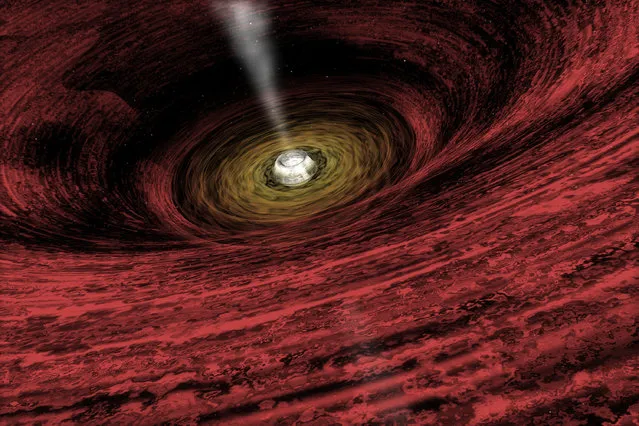
An artist's impression of a growing supermassive black hole located in the early Universe is seen in this NASA handout illustration released on June 15, 2011. Using the deepest X-ray image ever taken, astronomers found the first direct evidence that massive black holes were common in the early universe. This discovery from NASA's Chandra X-Ray Observatory shows that very young black holes grew more aggressively than previously thought, in tandem with the growth of their host galaxies. (Photo by Reuters/NASA/Chandra X-Ray Observatory/A.Hobart)
Details
11 Feb 2016 12:57:00