Loading...
Done
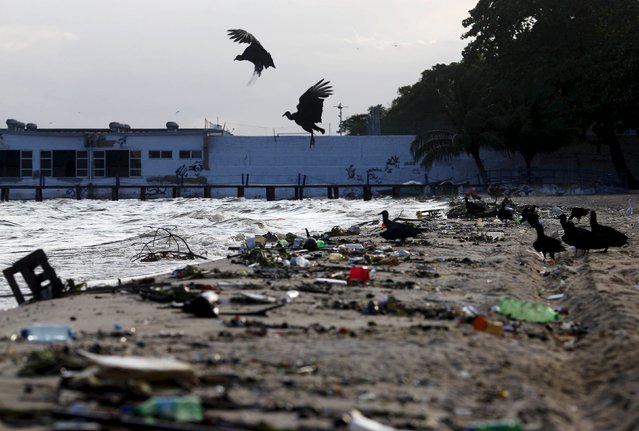
Vultures gather to eat waste in Bica beach, on the banks of the Guanabara Bay, with the Sugar Loaf mountain in background, 500 days ahead the Rio 2016 Olympic Games in Rio de Janeiro March 24, 2015. (Photo by Ricardo Moraes/Reuters)

Vultures gather to eat waste in Bica beach, on the banks of the Guanabara Bay, with the Sugar Loaf mountain in background, 500 days ahead the Rio 2016 Olympic Games in Rio de Janeiro March 24, 2015. As part of its Olympic bid, Rio promised to clean up 80 percent of the bay for the games. But local government officials have already admitted that a cleanup by 2016 is not achievable. Despite millions of dollars of investment over the years, the bay still stinks of sewage. Sailors who visited the city for test events complained of a floating sofa and a dead dog in the water. (Photo by Ricardo Moraes/Reuters)
Details
26 Mar 2015 12:16:00
Participants dressed in historical clothing ride high-wheel bicycles during a bicycle ballet event at Schloss Karlsruhe palace during the 2017 International Veteran Cycle Association (IVCA) rally to celebrate the 200th anniversary of the bicycle on May 27, 2017 in Karlsruhe, Germany. (Photo by Alexander Scheuber/Getty Images)

Participants dressed in historical clothing ride high-wheel bicycles during a bicycle ballet event at Schloss Karlsruhe palace during the 2017 International Veteran Cycle Association (IVCA) rally to celebrate the 200th anniversary of the bicycle on May 27, 2017 in Karlsruhe, Germany. Karl Drais, a German inventor, built and tested the first bicycle, called the Draisine, that ran without pedals in 1817. (Photo by Alexander Scheuber/Getty Images)
Details
01 Jun 2017 10:04:00
GIF Art By James Kerr

James Kerr started his project “Scorpion Dagger” without any real direction, except for the intention to make one GIF everyday(ish) for one year. He had been making collages for some time and “Scorpion Dagger” started out to be a test of discipline and a way for him to learn how to animate. Making GIFs was a logical evolution to him. The project represents many different things to him, the works from which he draws upon are so powerful and inspirational to him, that he is now nearly obsessed with repurposing them to share his vision of the world, and perhaps inspire people to look at art differently. The project is tremendously personal to him, it’s a lot more than the humor that’s at its surface and he is still trying to work out what “Scorpion Dagger” really is.


Details
19 Dec 2013 10:31:00
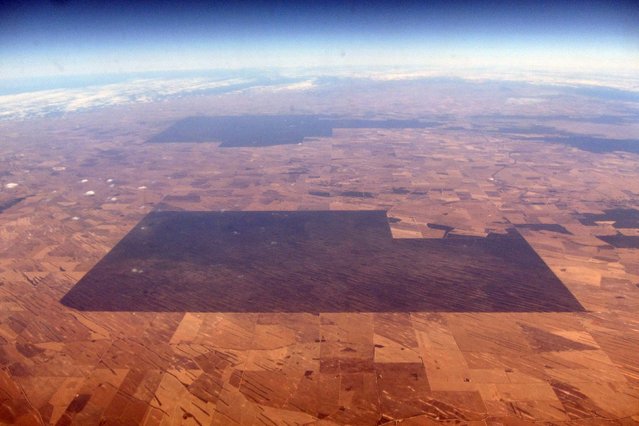
An area of vegetation can be seen amongst drought effected farmland in South Australia, November 12, 2015. (Photo by David Gray/Reuters)

An area of vegetation can be seen amongst drought effected farmland in South Australia, November 12, 2015. A pioneering Australian scheme to improve the management of water in the world's driest inhabited continent is facing its first real test as an intensifying El Nino threatens crops and builds tensions between farmers and environmentalists. An El Nino, a warming of sea-surface temperatures in the Pacific, is already causing drought and other extreme weather, affecting millions of people across parts of the world, and experts warn that the intensifying weather pattern could emerge as one of the strongest on record. (Photo by David Gray/Reuters)
Details
15 Nov 2015 08:01:00
Brian Tomlinsons ink artwork. (Photo by Brian Tomlinsons/Caters News Agency)

These ink-redible, explosive masterpieces are like say-what-you see inkblots tests only in water. The vibrant colors burst from Brian Tomlinsons works, appearing as though they may be coloured ash clouds from an erupting volcano, rather than simply everyday substances. By doing so, Brian challenges viewers to identify what images can be imagined when mixing one fluid with another. In order to shoot the series, entitled Liquid Ink Art, Brain, 40, drops different coloured inks into a fish tank full of water before capturing high-speed shots with a flash. Here: Brian Tomlinsons ink artwork. (Photo by Brian Tomlinsons/Caters News Agency)
Details
15 Jun 2017 08:32:00
People take pictures as an Airbus Beluga XL transport plane lands during its first flight event in Colomiers near Toulouse, France, July 19, 2018. Airbus employees were asked to vote on possible designs for the craft, which ended up being painted to resemble a cartoon cetacean. “The six designs we proposed for consideration by employees respected our brand identity while running from the conventional to the unconventional, even adding a touch of fun”, said Tim Orr, head of branding at Airbus. (Photo by Regis Duvignau/Reuters)

People take pictures as an Airbus Beluga XL transport plane lands during its first flight event in Colomiers near Toulouse, France, July 19, 2018. The Beluga XL, the new cargo plane of the Airbus family has taken off from Blagnac, in the south of France, for its first test flight. The launch of the aircraft triggered thunderous applause in an audience of more than 10,000 people, mostly employees and subcontractors of the European aircraft manufacturer. (Photo by Regis Duvignau/Reuters)
Details
20 Jul 2018 07:30:00
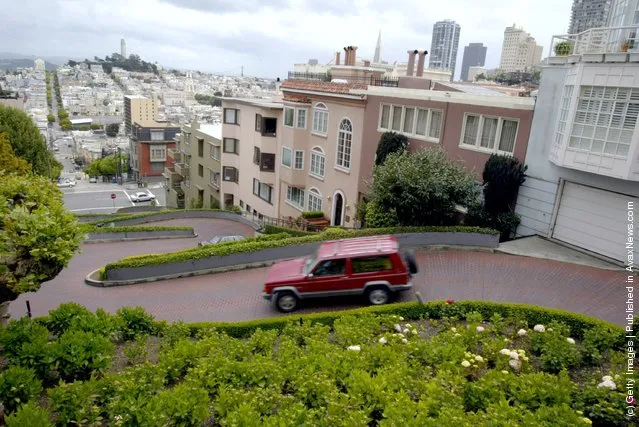
Lombard Street: The Crookedest Street In The World

“Lombard Street is an east-west street in San Francisco, California. Lombard Street is best known for the one-way section on Russian Hill between Hyde and Leavenworth Streets, in which the roadway has eight sharp turns (or switchbacks) that have earned the street the distinction of being the crookedest street in the world”. – Wikipedia

Photo: A single car drives down a typically crowded Lombard Street, San Francisco's crooked street, April 29, 2003 in San Francisco. (Photo by Justin Sullivan/Getty Images)
Details
07 Oct 2011 09:58:00
A worker distributes electronic waste at a government managed recycling centre at the township of Guiyu in China's southern Guangdong province June 10, 2015. (Photo by Tyrone Siu/Reuters)

A worker distributes electronic waste at a government managed recycling centre at the township of Guiyu in China's southern Guangdong province June 10, 2015. The town of Guiyu in the economic powerhouse of Guangdong province in China has long been known as one of the world’s largest electronic waste dump sites. At its peak, some 5,000 workshops in the village recycle 15,000 tonnes of waste daily including hard drives, mobile phones, computer screens and computers shipped in from across the world. (Photo by Tyrone Siu/Reuters)
Details
04 Jul 2015 10:28:00