Loading...
Done
A ring-tailed lemur sunbakes at Melbourne Zoo in Melbourne, Victoria, Australia on December 21 2016. (Photo by Julian Smith/EPA)

A ring-tailed lemur sunbakes at Melbourne Zoo in Melbourne, Victoria, Australia on December 21 2016. (Photo by Julian Smith/EPA)
Details
01 Jan 2017 09:12:00
Roof-topping enthusiast Daniel Lau takes a selfie with high-rise buildings down below as he stands on the top of a skyscraper in Hong Kong, China on August 15, 2017. Welcome to “roof-topping”, where daredevils take pictures of themselves standing on the tops of tall buildings, or in some cases even dangling from them, without any safety equipment. A craze that began in Russia has now taken hold in Hong Kong, one of the world's most vertical cities, with dramatic results. “I'm an explorer”, said Daniel Lau, one of the three who climbed to the top of The Center. A student, he said roof-topping was “a getaway from my structured life”. “Before doing this, I lived like an ordinary person, having a boring life”, he said. “I wanted to do something special, something memorable. I want to let people see Hong Kong, the place they are living, from a new perspective”. Mr Lau said he had been inspired by Russian climbers and that he was unafraid of the vertiginous heights he scales. (Photo by ImagineChina/Rex Features/Shutterstock)

Roof-topping enthusiast Daniel Lau takes a selfie with high-rise buildings down below as he stands on the top of a skyscraper in Hong Kong, China on August 15, 2017. A craze that began in Russia has now taken hold in Hong Kong, one of the world's most vertical cities. Mr Lau said he had been inspired by Russian climbers and that he was unafraid of the vertiginous heights he scales. (Photo by ImagineChina/Rex Features/Shutterstock)
Details
16 Aug 2017 07:23:00
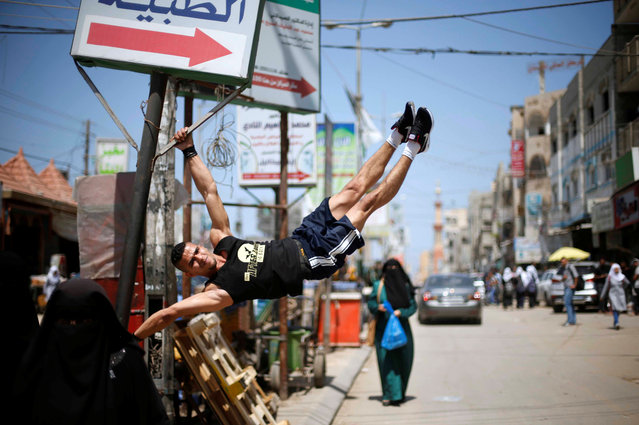
Palestinian man Mohammed al-Hoor, 23, demonstrates his street workout skills in Nuseirat refugee camp, in the central Gaza Strip on May 2, 2017. (Photo by Mohammed Salem/Reuters)

Palestinian man Mohammed al-Hoor, 23, demonstrates his street workout skills in Nuseirat refugee camp, in the central Gaza Strip on May 2, 2017. (Photo by Mohammed Salem/Reuters)
Details
31 Oct 2017 09:03:00
Two women kiss each other during a flashmob on the ocassion of the International Day Against Homophobia, Transphobia and Biphobia in Pamplona, Navarra, Spain, 17 May 2017. The International Day Against Homophobia, Transphobia and Biphobia is held every year on 17 May. (Photo by Villar Lopez/EPA/EFE)

Two women kiss each other during a flashmob on the ocassion of the International Day Against Homophobia, Transphobia and Biphobia in Pamplona, Navarra, Spain, 17 May 2017. The International Day Against Homophobia, Transphobia and Biphobia is held every year on 17 May. (Photo by Villar Lopez/EPA/EFE)
Details
31 Dec 2017 06:52:00
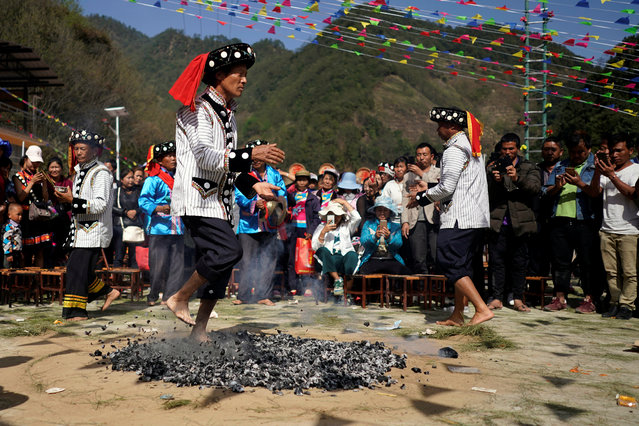
An ethnic Lisu man dances barefoot on hot charcoal embers to celebrate the annual Knife Pole Festival in Luzhang township of Nujiang Lisu Autonomous Prefecture in Yunnan province, China, March 29, 2018. (Photo by Aly Song/Reuters)

An ethnic Lisu man dances barefoot on hot charcoal embers to celebrate the annual Knife Pole Festival in Luzhang township of Nujiang Lisu Autonomous Prefecture in Yunnan province, China, March 29, 2018. (Photo by Aly Song/Reuters)
Details
05 Apr 2018 00:05:00
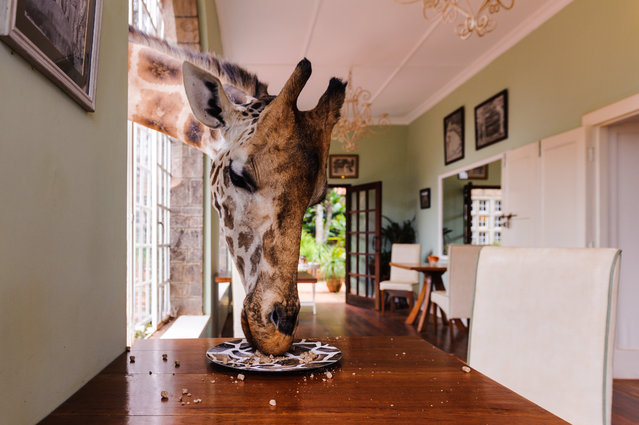
“Don't Leave Any Food On Your Plate”. The giraffes at Nairobi's Giraffe Manor are totally at home with humans. They will eat out of your hand, or even off your plate. Photo location: Giraffe Manor, Nairobi, Kenya. (Photo and caption by Gavin Werbeloff/National Geographic Photo Contest)

“Don't Leave Any Food On Your Plate”. The giraffes at Nairobi's Giraffe Manor are totally at home with humans. They will eat out of your hand, or even off your plate. Photo location: Giraffe Manor, Nairobi, Kenya. (Photo and caption by Gavin Werbeloff/National Geographic Photo Contest)
Details
20 Jun 2014 10:23:00
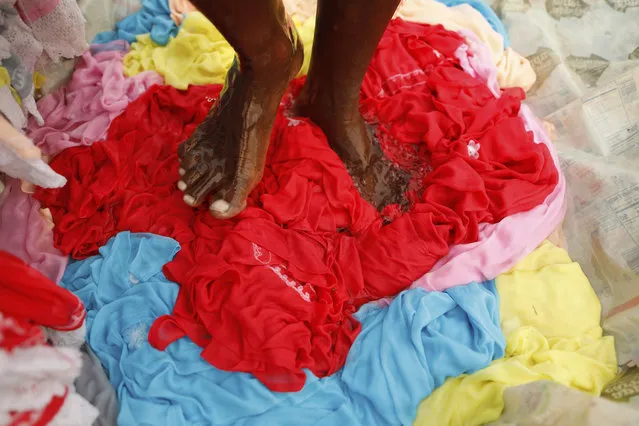
A dhobi, or a washerman washes cloths on the banks of the River Gomti in Lucknow, India, Saturday, September 12, 2020. Dhobis are traditional laundry workers who wash clothes by hand and dry them in the sun, an occupation which has been in existence for generations. Most cities in India have a Dhobi Ghat, or washermen's area, where the city's pile of clothes is laundered. This practice is still popular in India, despite of modern technology. Around 1,000 families work in Lucknow's Dhobi Ghat. However, in light of the novel coronavirus, their wages have decreased drastically. With each family earning around US$100-200 per month. (Photo by Rajesh Kumar Singh/AP Photo)


A dhobi, or a washerman washes cloths on the banks of the River Gomti in Lucknow, India, Saturday, September 12, 2020. Dhobis are traditional laundry workers who wash clothes by hand and dry them in the sun, an occupation which has been in existence for generations. Most cities in India have a Dhobi Ghat, or washermen's area, where the city's pile of clothes is laundered. This practice is still popular in India, despite of modern technology. Around 1,000 families work in Lucknow's Dhobi Ghat. However, in light of the novel coronavirus, their wages have decreased drastically. With each family earning around US$100-200 per month. (Photo by Rajesh Kumar Singh/AP Photo)

Details
25 Sep 2020 00:03:00
This picture taken on October 10, 2020 and released from North Korea's official Korean Central News Agency (KCNA) on October 11, 2020 shows the military parade during a ceremony to mark the 75th anniversary of the Workers' Party of Korea at Kim Il-sung Square of Pyongyang. (Photo by KCNA via KNS/AFP Photo)

This picture taken on October 10, 2020 and released from North Korea's official Korean Central News Agency (KCNA) on October 11, 2020 shows the military parade during a ceremony to mark the 75th anniversary of the Workers' Party of Korea at Kim Il-sung Square of Pyongyang. (Photo by KCNA via KNS/AFP Photo)
Details
12 Oct 2020 00:05:00