Loading...
Done
We Build Tomorrow – Sagrada Familia 2026 ( VIDEO )

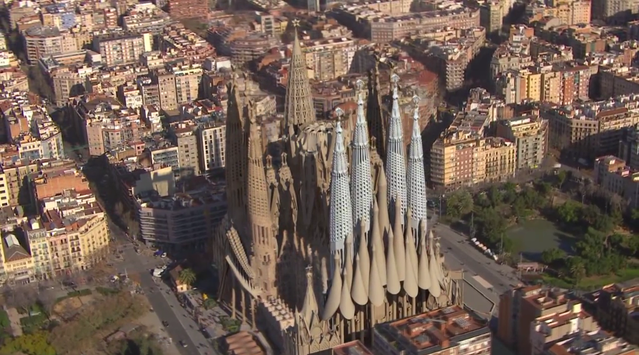
For more than a century, the Barcelona skyline has been graced (or marred, depending on who’s talking) by the spectacle of the Basilica designed by Anton Gaudi, first started in 1882. If you want to know what it’ll look like when finished, don’t fret — 2026 is right around the corner. Or you can watch this video, released last week on YouTube by Basílica de la Sagrada Família and titled simply “2026 We Build Tomorrow,” a 3-D artists’ rendering of the building stages through completion.
(If 144 years sounds like a long time to finish a cathedral, keep in mind that there were decades that they didn’t work on it — and that Notre Dame de Paris took 182 years, although the 13th century Parisians didn’t have diesel-powered industrial cranes.) Now, if only the video could show us what the admission and hours will be in 2026 (and how to avoid the inevitable long lines).
Details
11 Jan 2014 10:59:00
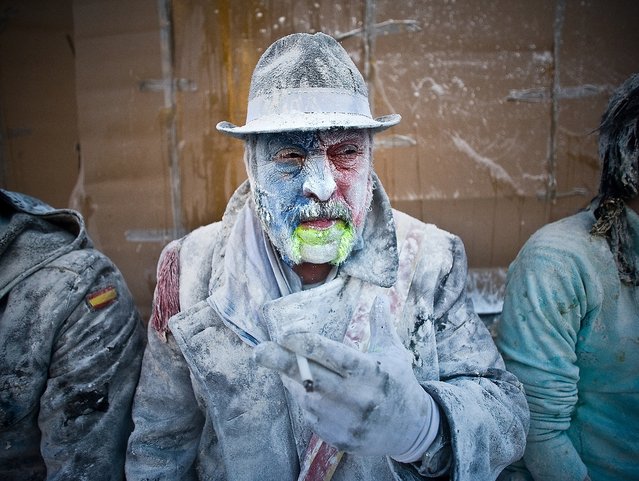
A Reveller smokes during the battle of “Enfarinats”, a flour fight in celebration of the Els Enfarinats festival. (Photo by David Ramos)

It’s a classic tale of dictatorship gone wrong and the fight for freedom. Like in any good battle, there’s fire, albeit from firecrackers, but the ammunition in this one is – flour. It takes place in a Hemingway-esque Spanish village. The battle of “Enfarinats” in celebration of the Els Enfarinats festival, rages on on December 28, 2012 in Ibi, Spain. Citizens of Ibi annually celebrate the festival with a fight using flour, eggs and firecrackers. The battle takes place between two groups, a group of married men called “Els Enfarinats” who take the control of the village for one day pronouncing a number of ridiculous laws and fining the citizens that infringe them and a group called “La Oposicio” who try to restore order. At the end of the day the money collected from the fines is donated to charitable causes in the village. The festival has been celebrated since 1981 after the town of Ibi recovered the tradition but the origins remain unknown.

Photo: A Reveller smokes during the battle of “Enfarinats”, a flour fight in celebration of the Els Enfarinats festival. (Photo by David Ramos)
Details
30 Dec 2012 10:28:00
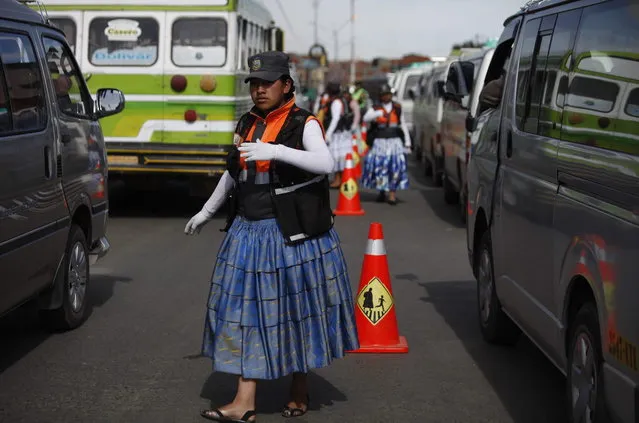
In this December 3, 2013 photo, an Aymara woman cops directs traffic on the streets of El Alto, Bolivia. The women wear the bright petticoats and shawls of indigenous women in the Andes, called cholitas in Bolivian slang, the main difference being that instead of bowler hats they wear khaki green police-style caps. Some don fluorescent traffic vests. (Photo by Juan Karita/AP Photo)

“This city in Bolivia's highlands has hired Aymara women dressed in traditional multilayered Andean skirts and brightly embroidered vests to work as traffic cops and bring order to its road chaos. About 20 of the “traffic cholitas” have been trained to direct cars and buses in El Alto, a teeming, impoverished sister city of La Paz in Bolivia's Andes mountains”. – El Alto via Associated Press. Photo: In this December 3, 2013 photo, an Aymara woman cops directs traffic on the streets of El Alto, Bolivia. The women wear the bright petticoats and shawls of indigenous women in the Andes, called cholitas in Bolivian slang, the main difference being that instead of bowler hats they wear khaki green police-style caps. Some don fluorescent traffic vests. (Photo by Juan Karita/AP Photo)
Details
25 Dec 2013 10:48:00
An exotic dancer performs in a street during an “Urban intervention” publicity event for an adult club in Santiago, Chile, January 26, 2016. (Photo by Ivan Alvarado/Reuters)

An exotic dancer performs in a street during an “Urban intervention” publicity event for an adult club in Santiago, Chile, January 26, 2016. (Photo by Ivan Alvarado/Reuters)
Details
27 Jan 2016 14:00:00
This picture taken on September 11, 2023 shows Moon Jellyfish (with rings) and Sting Jellyfish (yellow-orange inside) among a smack of a several thousand swimming off Seglvik, in northern Norway. (Photo by Olivier Morin/AFP Photo)

This picture taken on September 11, 2023 shows Moon Jellyfish (with rings) and Sting Jellyfish (yellow-orange inside) among a smack of a several thousand swimming off Seglvik, in northern Norway. (Photo by Olivier Morin/AFP Photo)
Details
07 Mar 2024 06:09:00
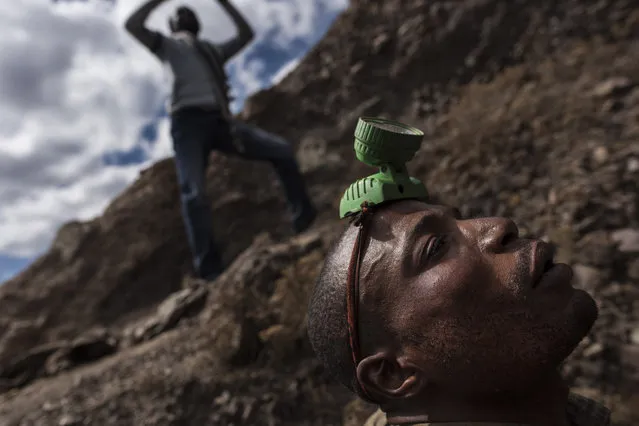
A “creuseur”, or digger, a plastic lantern on his head, readies to enter a copper and cobalt mine in Kawama, Democratic Republic of Congo on June 8, 2016. Cobalt is used in the batteries for electric cars and mobile phones. Working conditions are dangerous, often with no safety equipment or structural support for the tunnels. The diggers say they are paid on average US$2-3/day. (Photo by Michael Robinson Chavez/The Washington Post)

A “creuseur”, or digger, a plastic lantern on his head, readies to enter a copper and cobalt mine in Kawama, Democratic Republic of Congo on June 8, 2016. Cobalt is used in the batteries for electric cars and mobile phones. Working conditions are dangerous, often with no safety equipment or structural support for the tunnels. The diggers say they are paid on average US$2-3/day. (Photo by Michael Robinson Chavez/The Washington Post)
Details
30 Dec 2016 10:29:00
Prince Charles, Prince of Wales (R) and Camilla, Duchess of Cornwall (L) visit Seppeltsfield Winery in Barossa Valley, Australia, 10 November 2015. The royal couple are on a 12-day tour visiting seven regions in New Zealand and three states and one territory in Australia. (Photo by Daniel Kalisz/EPA)

Prince Charles, Prince of Wales (R) and Camilla, Duchess of Cornwall (L) visit Seppeltsfield Winery in Barossa Valley, Australia, 10 November 2015. The royal couple are on a 12-day tour visiting seven regions in New Zealand and three states and one territory in Australia. (Photo by Daniel Kalisz/EPA)
Details
12 Nov 2015 08:07:00
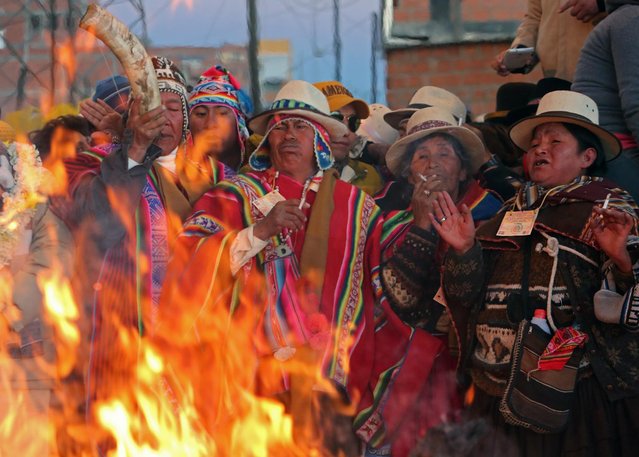
Local priests celebrate the “Aimara New Year”, an Andean Bolivian traditional festival that marks the winter solstice in El Alto, Bolivia, 21 June 2016. Aimara or Aymara means the Return of the Sun. (Photo by Martin Alipaz/EPA)

Local priests celebrate the “Aimara New Year”, an Andean Bolivian traditional festival that marks the winter solstice in El Alto, Bolivia, 21 June 2016. Aimara or Aymara means the Return of the Sun. (Photo by Martin Alipaz/EPA)
Details
22 Jun 2016 12:57:00