Loading...
Done
Inger Utke, left, takes a selfie with Edwin Galarza, dressed as a “Star Wars” themed dinosaur, during Preview Night at Comic-Con International held at the San Diego Convention Center, Wednesday, July 20, 2016, in San Diego. (Photo by Denis Poroy/Invision/AP Photo)

Inger Utke, left, takes a selfie with Edwin Galarza, dressed as a “Star Wars” themed dinosaur, during Preview Night at Comic-Con International held at the San Diego Convention Center, Wednesday, July 20, 2016, in San Diego. (Photo by Denis Poroy/Invision/AP Photo)
Details
06 Aug 2016 13:36:00
Baby giraffe of Niger (Giraffa Camelopardalis) “Kenai” (R), born on August 25, 2016, kisses his mother “Dioni” on August 31, 2016 at the zoo of La Fleche, northwestern France. (Photo by Jean-Francois Monier/AFP Photo)

Baby giraffe of Niger (Giraffa Camelopardalis) “Kenai” (R), born on August 25, 2016, kisses his mother “Dioni” on August 31, 2016 at the zoo of La Fleche, northwestern France. (Photo by Jean-Francois Monier/AFP Photo)
Details
04 Sep 2016 09:14:00
A climber walks on the ridge beneath the eastern peak of the Gamsberg (2385 meters above sea level) near Grabs, Switzerland, Friday, October 3, 2014. (Photo by Gian Ehrenzeller/AP Photo/Keystone)

A climber walks on the ridge beneath the eastern peak of the Gamsberg (2385 meters above sea level) near Grabs, Switzerland, Friday, October 3, 2014. (Photo by Gian Ehrenzeller/AP Photo/Keystone)
Details
28 Jan 2015 12:38:00
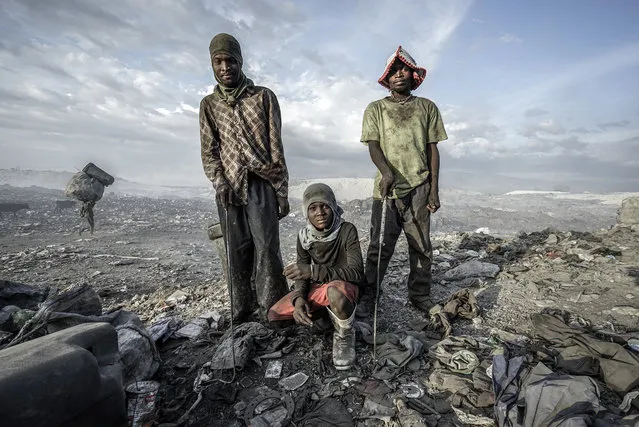
In a 200-acre-plus dump 5 kilometers north of Haiti’s capital, Port-au-Prince, hundreds of men, women and children scavenge day and night through the burning wasteland. They earn $12 to $15 a day – on a good day – for recycling plastics as well as clothing, household items and aluminum (for smelting). Some 5,000 tons of waste is created each day in the Port-au-Prince area. (Photo and caption by Giles Clarke/Getty Images Reportage)

In a 200-acre-plus dump 5 kilometers north of Haiti’s capital, Port-au-Prince, hundreds of men, women and children scavenge day and night through the burning wasteland. They earn $12 to $15 a day – on a good day – for recycling plastics as well as clothing, household items and aluminum (for smelting). Some 5,000 tons of waste is created each day in the Port-au-Prince area. (Photo and caption by Giles Clarke/Getty Images Reportage)
Details
02 Feb 2015 11:21:00
This image taken from video provided by TVBS shows a commercial airplane clipping an elevated roadway just before it careened into a river in Taipei, Taiwan, Wednesday, February 4, 2015. (Photo by AP Photo/TVBS)

This image taken from video provided by TVBS shows a commercial airplane clipping an elevated roadway just before it careened into a river in Taipei, Taiwan, Wednesday, February 4, 2015. The ATR-72 prop-jet aircraft had 58 people aboard. (Photo by AP Photo/TVBS)
Details
05 Feb 2015 12:12:00
A professional bull rider participates in a bull riding exhibition at the premiere of “The Longest Ride” at the TCL Chinese Theatre on Monday, April 6, 2015, in Los Angeles. (Photo by Chris Pizzello/Invision/AP Photo)

A professional bull rider participates in a bull riding exhibition at the premiere of “The Longest Ride” at the TCL Chinese Theatre on Monday, April 6, 2015, in Los Angeles. (Photo by Chris Pizzello/Invision/AP Photo)
Details
08 Apr 2015 11:17:00
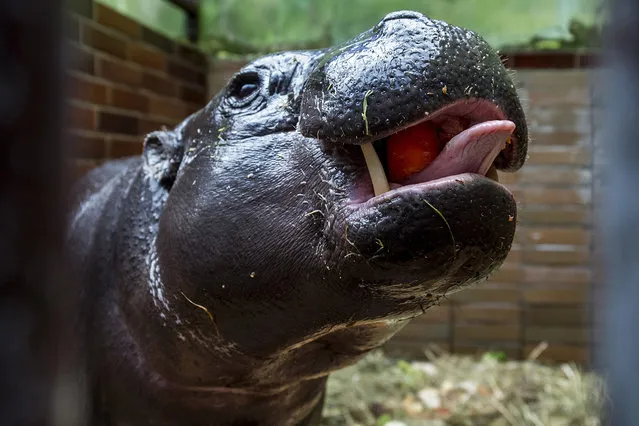
Female of pygmy hippopotamus called Malaya from Netherlands in zoo in Dvur Kralove nad Labem, Czech Republic, February 22, 2016. (Photo by David Tanecek/CTK via ZUMA Press)

Female of pygmy hippopotamus called Malaya from Netherlands in zoo in Dvur Kralove nad Labem, Czech Republic, February 22, 2016. (Photo by David Tanecek/CTK via ZUMA Press)
Details
28 Feb 2016 10:44:00
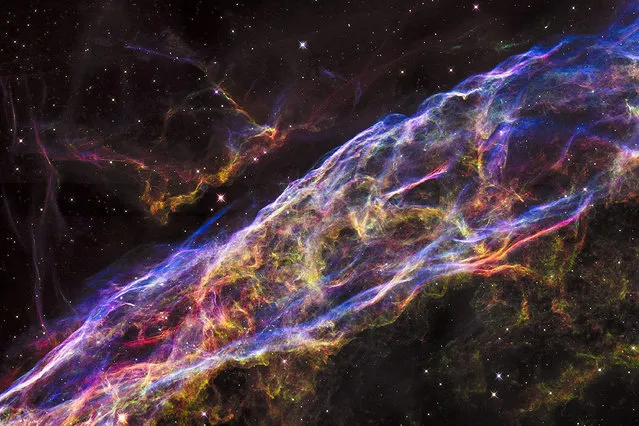
A small section of the expanding remains of the Veil Nebula, a massive star that exploded about 8,000 years ago. The entire nebula is 110 light-years across, covering six full moons on the sky as seen from Earth, and resides about 2,100 light-years away in the constellation Cygnus, the Swan. (Photo by Reuters/NASA/ESA/Hubble)

A small section of the expanding remains of the Veil Nebula, a massive star that exploded about 8,000 years ago. The entire nebula is 110 light-years across, covering six full moons on the sky as seen from Earth, and resides about 2,100 light-years away in the constellation Cygnus, the Swan. (Photo by Reuters/NASA/ESA/Hubble)
Details
29 Feb 2016 11:30:00