Loading...
Done
Palestinian barber Ramadan Odwan styles and straightens the hair of a customer with fire at his salon in Rafah, in the southern Gaza Strip February 2, 2017. In Ramadan Odwan's barbershop in Gaza, hair isn't just blow-dried, it's blowtorch-dried. “People have gone crazy about it, many people are curious to go through the experience and they are not afraid”, he told Reuters. “People here love adventures”. Odwan, 37, is not the first stylist in the world to use flame to straighten hair, but his craft is unique in the Gaza Strip. In his salon in the southern Gaza town of Rafah, Odwan applied what he described as a protective liquid coating to a customer's hair – he declined to disclose its contents – before aiming for the head and pressing the button on a small blowtorch. “I control how long I apply fire, I keep it on and off for 10 seconds or 15 seconds. It is completely safe and I have not encountered any accident since I started it two months ago”, Odwan added. Odwan charges 20 shekels ($5.20) for a haircut and fire-straightening. A barber for the past 18 years, he said part of the reason he uses the technique is to show that Palestinian barbers are as “professional as those out there around the world”. (Photo by Ibraheem Abu Mustafa/Reuters)

Palestinian barber Ramadan Odwan styles and straightens the hair of a customer with fire at his salon in Rafah, in the southern Gaza Strip February 2, 2017. In Ramadan Odwan's barbershop in Gaza, hair isn't just blow-dried, it's blowtorch-dried. “People have gone crazy about it, many people are curious to go through the experience and they are not afraid”, he told Reuters. “People here love adventures”. (Photo by Ibraheem Abu Mustafa/Reuters)
Details
11 Feb 2017 00:05:00
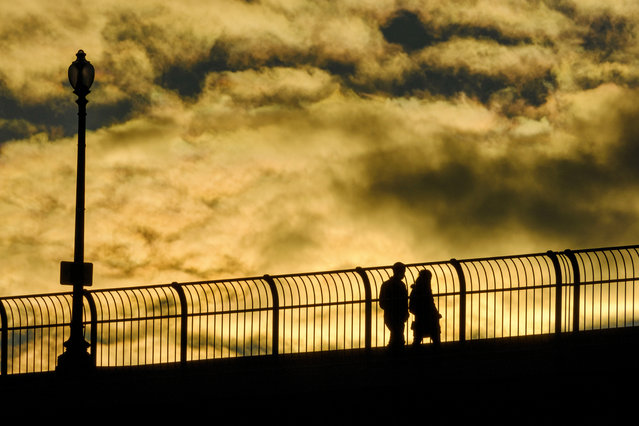
A couple walks across the Francis Scott Key Bridge as the setting sun lights up the clouds in Washington, Friday, October 30, 2020. (Photo by J. David Ake/AP Photo)

A couple walks across the Francis Scott Key Bridge as the setting sun lights up the clouds in Washington, Friday, October 30, 2020. (Photo by J. David Ake/AP Photo)
Details
19 Nov 2020 00:03:00
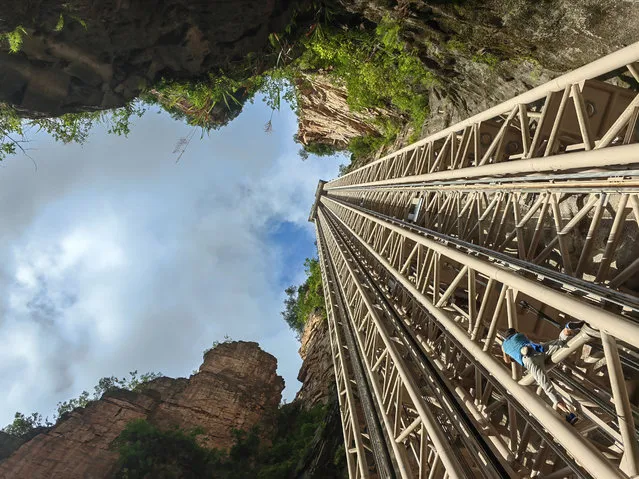
A French rock climber named Jean Michel Casanova scales the 172-meter-high steel derrick of the Bailong Elevator, also known as Bailong Sky Ladder, with his bare hands at the Wulingyuan Scenic Area on June 28, 2023 in Zhangjiajie, Hunan Province of China. (Photo by Deng Daoli/VCG via Getty Images)

A French rock climber named Jean Michel Casanova scales the 172-meter-high steel derrick of the Bailong Elevator, also known as Bailong Sky Ladder, with his bare hands at the Wulingyuan Scenic Area on June 28, 2023 in Zhangjiajie, Hunan Province of China. (Photo by Deng Daoli/VCG via Getty Images)
Details
11 Jul 2023 03:15:00
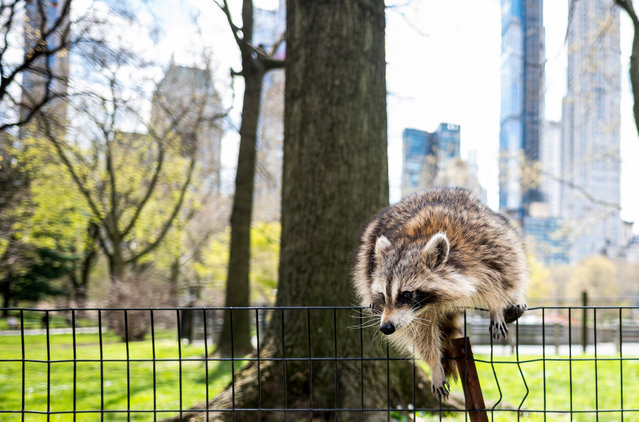
A racoon jumps over a fence in almost deserted Central Park in Manhattan on April 16, 2020 in New York City. Gone are the softball games, horse-drawn carriages and hordes of tourists. In their place, pronounced birdsong, solitary walks and renewed appreciation for Central Park's beauty during New York's coronavirus lockdown. The 843-acre (341-hectare) park – arguably the world's most famous urban green space – normally bustles with human activity as winter turns to spring, but this year due to Covid-19 it's the wildlife that is coming out to play. (Photo by Johannes Eisele/AFP Photo)

A racoon jumps over a fence in almost deserted Central Park in Manhattan on April 16, 2020 in New York City. Gone are the softball games, horse-drawn carriages and hordes of tourists. In their place, pronounced birdsong, solitary walks and renewed appreciation for Central Park's beauty during New York's coronavirus lockdown. The 843-acre (341-hectare) park – arguably the world's most famous urban green space – normally bustles with human activity as winter turns to spring, but this year due to Covid-19 it's the wildlife that is coming out to play. (Photo by Johannes Eisele/AFP Photo)
Details
14 Dec 2025 07:04:00
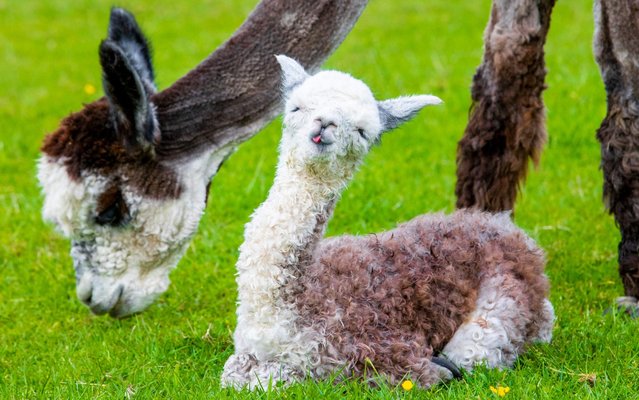
Staff at a Scottish farm say they are “absolutely delighted” to have welcomed a baby alpaca into the world this morning, June 6, 2019. Mum, Nunavut, gave birth to the baby boy huacaya alpaca, which has not yet been named, weighing 9.6kg. Stuart Ramsay, the owner of Velvet Hall Alpacas, in Innerleithen, Scottish Borders said he was surprised when the baby was born an “unusual rose grey colour”. (Photo by South West News Service)

Staff at a Scottish farm say they are “absolutely delighted” to have welcomed a baby alpaca into the world this morning, June 6, 2019. Mum, Nunavut, gave birth to the baby boy huacaya alpaca, which has not yet been named, weighing 9.6kg. Stuart Ramsay, the owner of Velvet Hall Alpacas, in Innerleithen, Scottish Borders said he was surprised when the baby was born an “unusual rose grey colour”. (Photo by South West News Service)
Details
09 Jun 2019 00:03:00
Tearful Turkey captain Hakan Calhanoglu after the UEFA EURO 2024 Quarter-Final football match between Netherlands and Turkiye at Olympiastadion in Berlin, Germany on July 06, 2024. (Photo by Thilo Schmuelgen/Reuters)

Tearful Turkey captain Hakan Calhanoglu after the UEFA EURO 2024 Quarter-Final football match between Netherlands and Turkiye at Olympiastadion in Berlin, Germany on July 06, 2024. (Photo by Thilo Schmuelgen/Reuters)
Details
12 Jul 2024 04:44:00
A farmer arranges vegetable at a greenhouse on January 29, 2021 in Hukou County, Jiangxi Province of China. (Photo by Zhang Yu/VCG via Getty Images)

A farmer arranges vegetable at a greenhouse on January 29, 2021 in Hukou County, Jiangxi Province of China. (Photo by Zhang Yu/VCG via Getty Images)
Details
08 Feb 2021 09:21:00
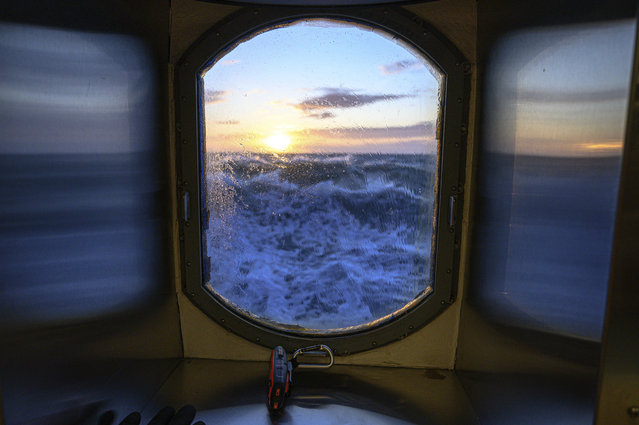
This November 8, 2019, photo provided by John Guillote shows a view from the main lab of the Sikuliaq in the Chukchi Sea. University of Washington scientists onboard the research vessel are studying the changes and how less sea ice will affect coastlines, which already are vulnerable to erosion because increased waves delivered by storms. More erosion would increase the chance of winter flooding in villages and danger to hunters in small boats. (Photo by John Guillote via AP Photo)

This November 8, 2019, photo provided by John Guillote shows a view from the main lab of the Sikuliaq in the Chukchi Sea. University of Washington scientists onboard the research vessel are studying the changes and how less sea ice will affect coastlines, which already are vulnerable to erosion because increased waves delivered by storms. More erosion would increase the chance of winter flooding in villages and danger to hunters in small boats. (Photo by John Guillote via AP Photo)
Details
26 Aug 2021 08:22:00