Loading...
Done


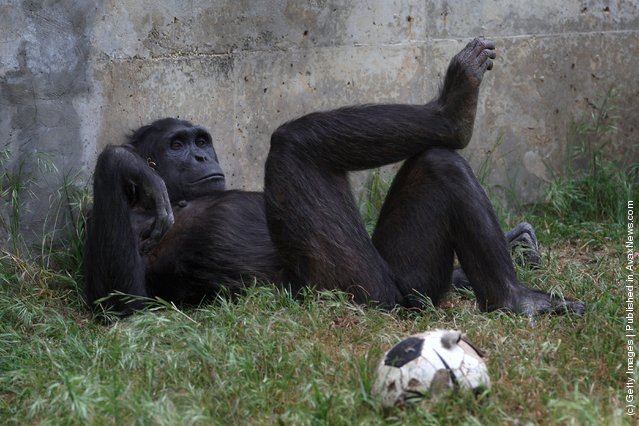
A chimpanzee relaxes in the shade at the Safari Park as the popular attraction prepares for the upcoming Jewish festival of Pesach (Passover) on April 14, 2008 in Ramat Gan near Tel Aviv, Israel. (Photo by David Silverman/Getty Images)
Details
25 May 2011 08:22:00
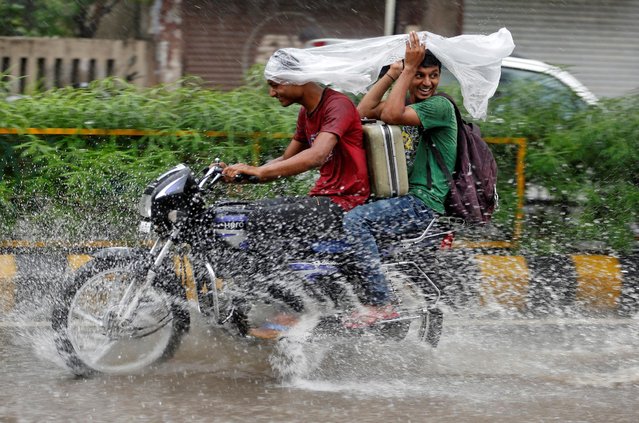
Commuters use a plastic sheet to take shelter from rain as they ride through a waterlogged road in Ahmedabad, India, July 27, 2016. (Photo by Amit Dave/Reuters)

Commuters use a plastic sheet to take shelter from rain as they ride through a waterlogged road in Ahmedabad, India, July 27, 2016. (Photo by Amit Dave/Reuters)
Details
30 Jul 2016 10:45:00
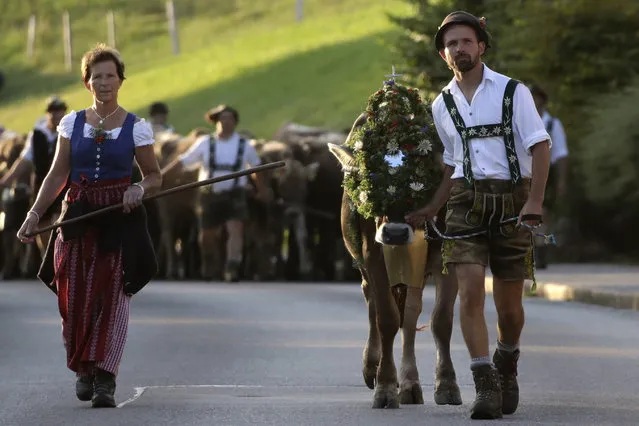
Bavarian herdsmen and a herdswoman in traditional dresses drive their beasts on a road during the return of the cattle from the summer pastures in the mountains near Oberstaufen, Germany, Friday, September 9, 2016. (Photo by Matthias Schrader/AP Photo)

Bavarian herdsmen and a herdswoman in traditional dresses drive their beasts on a road during the return of the cattle from the summer pastures in the mountains near Oberstaufen, Germany, Friday, September 9, 2016. (Photo by Matthias Schrader/AP Photo)
Details
11 Sep 2016 09:55:00
Vendors selling vegetables wait for customers under a flyover in the early morning in Ahmedabad, February 1, 2017. (Photo by Amit Dave/Reuters)

Vendors selling vegetables wait for customers under a flyover in the early morning in Ahmedabad, India on February 1, 2017. (Photo by Amit Dave/Reuters)
Details
25 Mar 2017 08:11:00
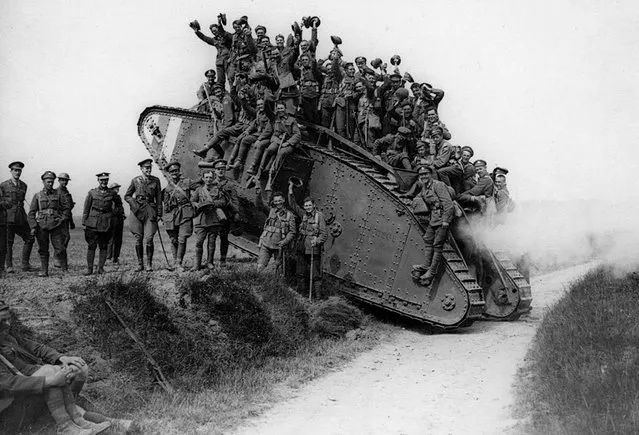
These black-and-white photos are taken from the new book “Armoured Warfare in the First World War 1916 – 1918” by Anthony Tucker-Jones and published by Pen & Sword Military. “Interestingly the British, French and Germans took completely different approaches with varying results”. The British military produced “Little Willie” in Autumn 1915 weighing 18 tonnes, which had a crew of two plus four gunners. “Inspired by a tracked artillery tractor “Little Willie” was referred to as a water tank – hence the name tank – to ensure secrecy”, said Anthony. “This led to the strange looking Mark I with its peculiar rhomboid shape, designed to cross trenches with guns in sponsons on either side. The Germans saw the tank as unchivalrous and were slow to grasp its utility. They favoured the Stormtrooper (specialist soldiers used to infiltrate enemy trenches) and artillery, not the tank”, said Anthony. “However, they didn’t hesitate to make use of captured British tanks. Although the tank helped secure victory and German soldiers dubbed it “Germany’s Downfall” the country was ultimately brought to its knees by the Allies blockade”. Here: British troops hitch a ride on a Mark IV after the massed tank fleet spearheading attack at Cambrai on November 20, 1917. (Photo by Anthony Tucker-Jones/Mediadrumworld.com)

These black-and-white photos are taken from the new book “Armoured Warfare in the First World War 1916 – 1918” by Anthony Tucker-Jones and published by Pen & Sword Military. Here: British troops hitch a ride on a Mark IV after the massed tank fleet spearheading attack at Cambrai on November 20, 1917. (Photo by Anthony Tucker-Jones/Mediadrumworld.com)
Details
23 Feb 2017 00:02:00
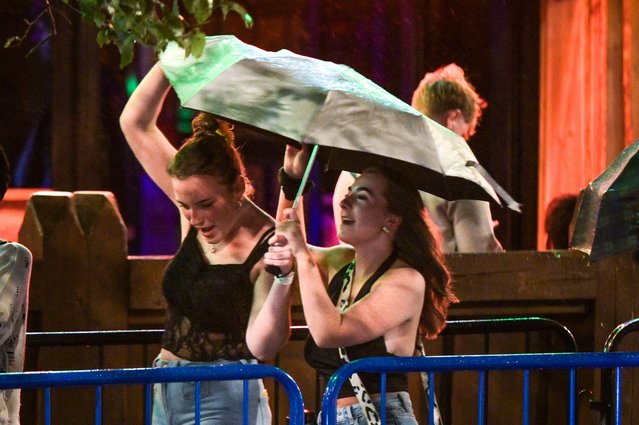
Revellers battled against 40mph winds and driving rain to get to nightclubs in Birmingham city centre on September 21, 2025. The Met Office released a yellow weather warning for strong wind and heavy rain overnight across much of England and Wales. The partygoers used their coats and umbrellas to shelter from the barmy conditions. (Photo by British News and Media/Alamy Live News)

Revellers battled against 40mph winds and driving rain to get to nightclubs in Birmingham city centre on September 21, 2025. The Met Office released a yellow weather warning for strong wind and heavy rain overnight across much of England and Wales. The partygoers used their coats and umbrellas to shelter from the barmy conditions. (Photo by British News and Media/Alamy Live News)
Details
22 Nov 2025 06:03:00
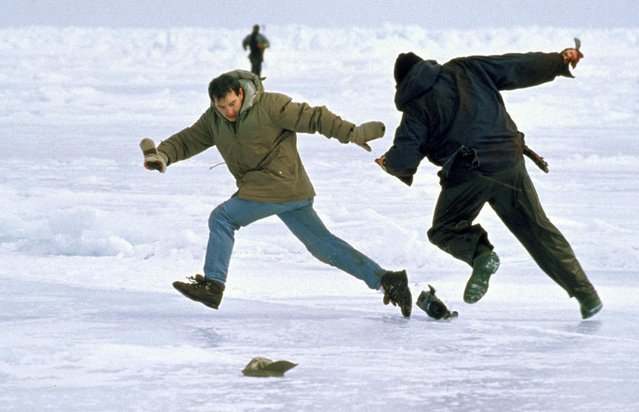
In this 1997 photo released by the International Fund for Animal Welfare, a seal hunter, right, threatens a cameraman with a knife during the filming of a seal hunt in the Gulf of St. Lawrence, Canada. “Huntwatch”, a documentary by the organization about the fight to end commercial seal hunts, premieres in September 2016 on Discovery. The producers say it includes grainy but powerful archive footage that had languished in the basement of the group’s headquarters on Cape Cod for nearly five decades. (Photo by Richard Sobol/IFAW via AP Photo)

In this 1997 photo released by the International Fund for Animal Welfare, a seal hunter, right, threatens a cameraman with a knife during the filming of a seal hunt in the Gulf of St. Lawrence, Canada. “Huntwatch”, a documentary by the organization about the fight to end commercial seal hunts, premieres in September 2016 on Discovery. The producers say it includes grainy but powerful archive footage that had languished in the basement of the group’s headquarters on Cape Cod for nearly five decades. (Photo by Richard Sobol/IFAW via AP Photo)
Details
17 Sep 2016 10:41:00
Skeletons are arranged in a bar scene as part of a competition to create Day of the Dead altars on pedestrian Regina Street in central Mexico City, Tuesday, November 1, 2016. The holiday honors the dead as friends and families gather in cemeteries to decorate their loved ones' graves and hold vigil through the night on Nov. 1 and 2. (Photo by Rebecca Blackwell/AP Photo)

Skeletons are arranged in a bar scene as part of a competition to create Day of the Dead altars on pedestrian Regina Street in central Mexico City, Tuesday, November 1, 2016. The holiday honors the dead as friends and families gather in cemeteries to decorate their loved ones' graves and hold vigil through the night on Nov. 1 and 2. (Photo by Rebecca Blackwell/AP Photo)
Details
03 Nov 2016 12:57:00