Loading...
Done
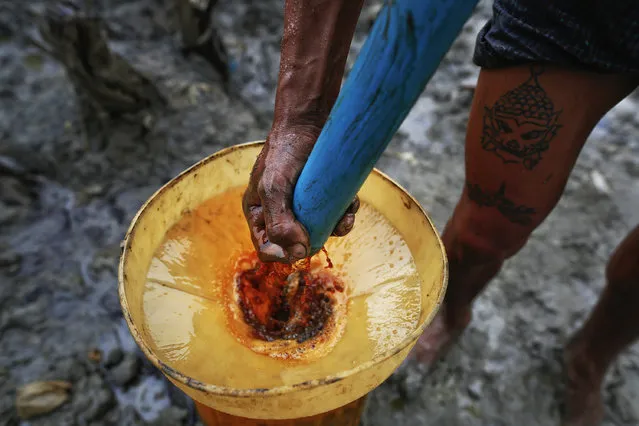
Ko Min, 26, manually extracts oil from one of three 300 feet deep wells he works on in the Minhla township of the Magwe district October 27, 2013. Everyday, Ko Min makes around $30 extracting crude oil from three small wells after he bought rights to use them for close to $1000 from a farmer who owns the land. (Photo by Damir Sagolj/Reuters)

Ko Min, 26, manually extracts oil from one of three 300 feet deep wells he works on in the Minhla township of the Magwe district October 27, 2013. Everyday, Ko Min makes around $30 extracting crude oil from three small wells after he bought rights to use them for close to $1000 from a farmer who owns the land. In Myanmar, an impoverished country rich with natural resources, people from poor communities find ways to supplement their income by exploiting such resources, such as the Minhla township, traditionally rich with oil, often using primitive and dangerous methods. (Photo by Damir Sagolj/Reuters)
Details
21 Apr 2014 10:06:00
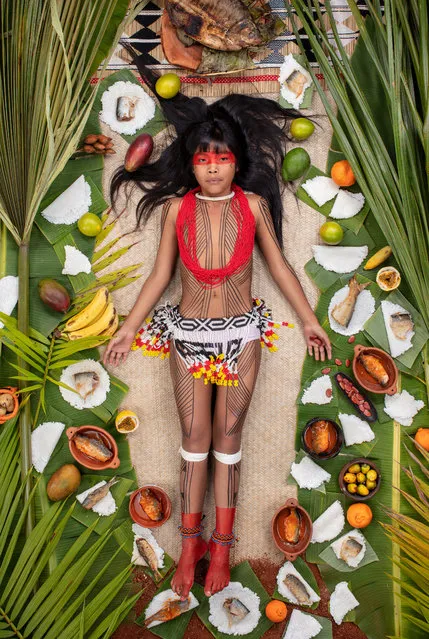
Kawakanih Yawalapiti, 9, Upper Xingu region of Mato Grosso, Brazil, 2018: Kawakanih lives with her tribe, the Yawalapiti, in Xingu national park, a preserve in the Amazon basin of Brazil. The Yawalapiti collect seeds to preserve species unique to their ecosystem, which lies between the rain forest and savannah. Kawakanih’s diet is simple, consisting mainly of fish, cassava, porridge, fruit and nuts. “It takes five minutes to catch dinner”, says Kawakanih. “When you’re hungry, you just go to the river with your net”. (Photo by Gregg Segal/The Guardian)

Photographer Gregg Segal travelled the world to document children and the food they eat in a week. Partly inspired by the increasing problems of childhood obesity, he tracked traditional regional diets as yet unaffected by globalisation, and ironically, found that the healthiest diets were often eaten by the least well off. (Photo by Gregg Segal/The Guardian)
Details
03 Jul 2019 00:03:00
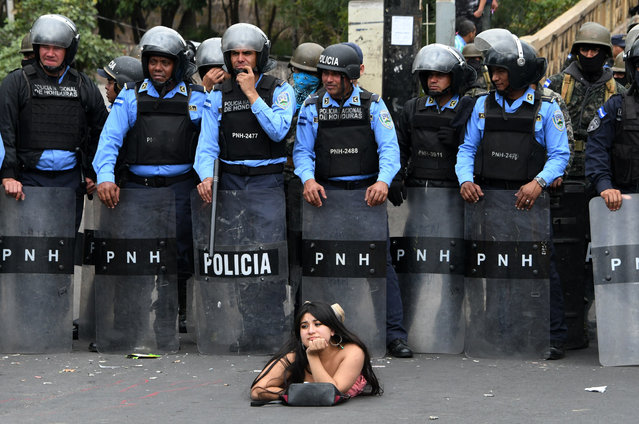
A supporter of the presidential candidate for the Honduran Opposition Alliance Against the Dictatorship for the past election, Salvador Nasralla, lies on the street in front of police officers during a demonstration against the contested re-election of President Juan Orlando Hernandez, in Tegucigalpa, Honduras on January 21, 2018. The opposition called for a “national strike” on Saturday to focus on blocking the country's main roads ahead of the start of the president's new term in office on January 27. Dozens of people have been killed and hundreds jailed since Hernandez was declared the winner of the November 26 run-off election – but only after a three week stretch of often-interrupted ballot counting that stoked tensions and sparked accusations of fraud in the Central American country. (Photo by Orlando Sierra/AFP Photo)

A supporter of the presidential candidate for the Honduran Opposition Alliance Against the Dictatorship for the past election, Salvador Nasralla, lies on the street in front of police officers during a demonstration against the contested re-election of President Juan Orlando Hernandez, in Tegucigalpa, Honduras on January 21, 2018. (Photo by Orlando Sierra/AFP Photo)
Details
23 Jan 2018 08:32:00
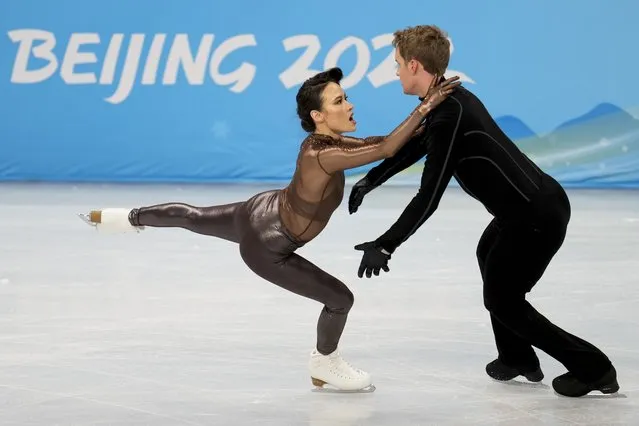
Figure skating couple Madison Chock and Evan Bates, of the USA, practice their dance routine during a training session at the 2022 Winter Olympics, Thursday, February 3, 2022, in Beijing. At the Beijing Winter Games, opening Friday, it’s a homecoming of sorts for one of the world’s most sprawling diasporas – often sweet and sometimes complicated, but always a reflection of where they are, where they come from and the Olympic spirit itself. “Every time I’m on the bus, I’m just looking out and studying the city and just imagining my roots are here, my ancestors are here”, says Chock, whose father is Chinese-Hawaiian, with family ties to rural China. (Photo by Natacha Pisarenko/AP Photo)

Figure skating couple Madison Chock and Evan Bates, of the USA, practice their dance routine during a training session at the 2022 Winter Olympics, Thursday, February 3, 2022, in Beijing. (Photo by Natacha Pisarenko/AP Photo)
Details
06 Feb 2022 06:25:00
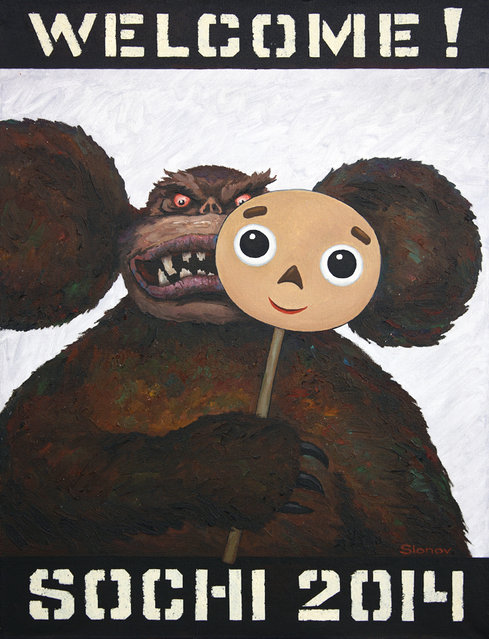
The Dark Side of Sochi Olympics by Vasily Slonov

“Exactly one year before the long awaited Sochi Olympics, Vladimir Putin went to Sochi personally to see how the construction is going. After receiving a report saying the ski jumps that were supposed to be ready in 2011, are not completed still, while their price has sky-rocketed from 1.2 billion to 8 billion roubles, he commented, “Good for you. Good job”, and then fired the vice president of the Olympic committee. Russian artist Vasily Slonov painted his view of the upcoming games, giving a new interpretation to the adored Russian mascot Cheburashka, and combining officially endorsed stereotypes of Russia with grimmer and less accepted ones”. – Ruskie.info. (Photo by Vasily Slonov)
Details
07 Jun 2013 10:24:00
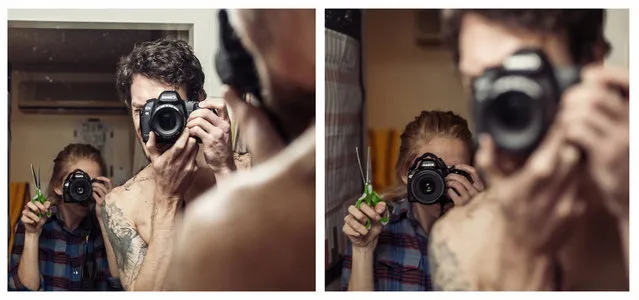
Globe-trotting photographer couple Peter Sedlacik and Zuzu Galova have found a fun way to document their travels around the world. Wherever they are, they face each other, frame up a great composition, and take a picture of each other… taking a picture of each other. Thus was born the photo series/project “Lens Between Us”. (Photo by Peter Sedlacik/Zuzu Galova)

Globe-trotting photographer couple Peter Sedlacik and Zuzu Galova have found a fun way to document their travels around the world. Wherever they are, they face each other, frame up a great composition, and take a picture of each other… taking a picture of each other. Thus was born the photo series/project “Lens Between Us”, which is quickly scooping up followers on Tumblr, Facebook and Instagram alike. The resulting diptychs are creative, well-composed, and whimsical in the best way. A tribute to how their focus is always on each other, the images are part travel photography, part portraiture, and challenging to boot since each shot requires that they figure out not one, but two compositions. (Photo by Peter Sedlacik/Zuzu Galova)
Details
11 Aug 2014 11:30:00
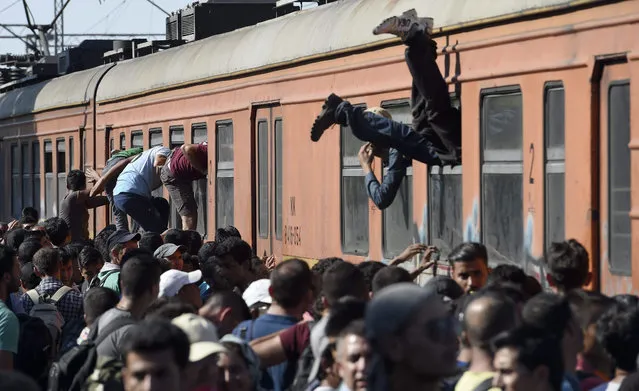
Migrants climb through the windows of a train bound for Serbia at the train station in Gevgelija, The Former Yugoslav Republic of Macedonia, 19 July 2015. Thousands of migrants who crossed Greece are on their way through Macedonia towards Serbia in order to access other European countries. (Photo by Georgi Licovski/EPA)

Migrants climb through the windows of a train bound for Serbia at the train station in Gevgelija, The Former Yugoslav Republic of Macedonia, 19 July 2015. Thousands of migrants who crossed Greece are on their way through Macedonia towards Serbia in order to access other European countries. Hungary in mid-July started to put up a fence on its border with Serbia, which makes the situation with the migrants in the transit countries even more complicated. The European countries on 20 July will discuss the quota of how many migrants each country should accept. (Photo by Georgi Licovski/EPA)
Details
20 Jul 2015 09:52:00
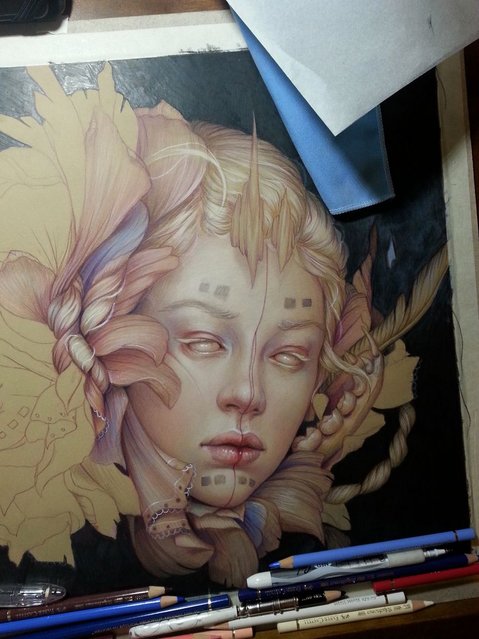
Drawings By Jennifer Healy

“I was born in the United States in 1985. As early as I can remember I’ve been a “doodler”. From even the early days I’ve always loved strange, offbeat, beautiful, and slightly melancholy things. Something about the mixed grabbed me. My love for sketching carried on throughout my high school days. Which is when I took a small class on watercolor. Watercolor is what birthed my passion for mixing colors and how a color can tell a story. In year 2009 I discovered digital painting and my new found passion for the medium. It’s been the favored medium for the past years since. I’ve used online tutorials and videos to help me learn along the way and then in late 2011 I took a workshop called Becoming a Better Artist. The beginning of 2013 I won a class from The Art Department which will start this spring.”
Jennifer Healy
Details
05 Dec 2013 12:04:00