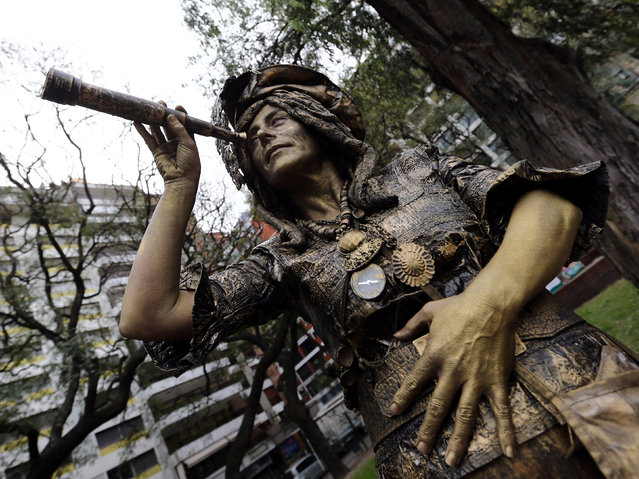
Maria Ines Banegas portraying “La Pirata” (The Pirate) takes part in a human living statues contest in Buenos Aires, Argentina, September 24, 2016. (Photo by Enrique Marcarian/Reuters)
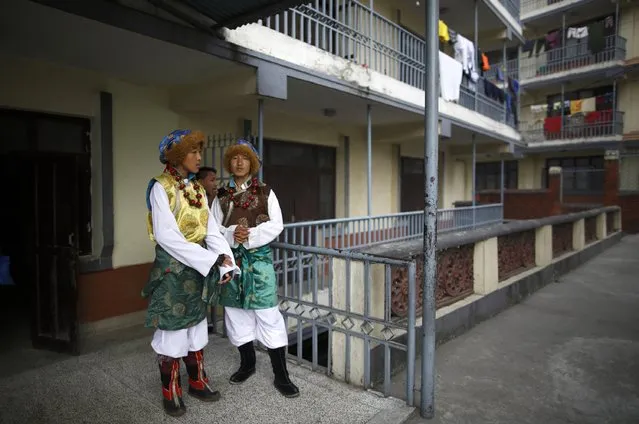
Tibetan boys dressed in traditional attire take part during a function organised by the Tibetan Refugee Community in Nepal,commemorating the 25th Anniversary of the Nobel Peace Prize conferment to exiled Tibetan spiritual leader Dalai Lama and the 66th International Human Rights Day in Kathmandu December 10, 2014. Nepal ceased issuing refugee papers to Tibetans in 1989 and recognizes Tibet to be a part of China. (Photo by Navesh Chitrakar/Reuters)
Martin Joe Laurello, originally Martin Emmerling, was born in Germany around 1886. He was a sideshow performer who could turn his head a full 180 degrees. He performed with groups such as Ripley's Believe it or Not, Ringling Brothers, and Barnum & Bailey. He moved to America in 1921. He also trained dogs to do things such as acrobatics.
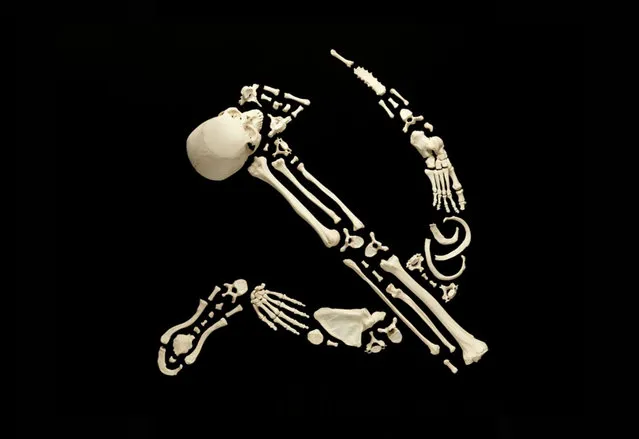
Francois Robert bought a skeleton from a school in the mid-90s, and started to creat this series of art works named "Stop the Violence" since 2007 after conceived a long time.
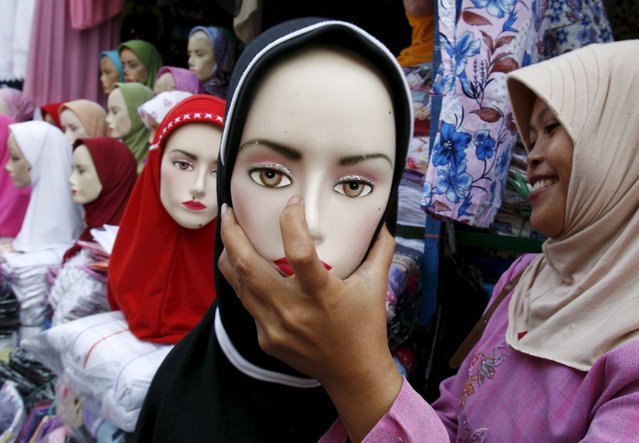
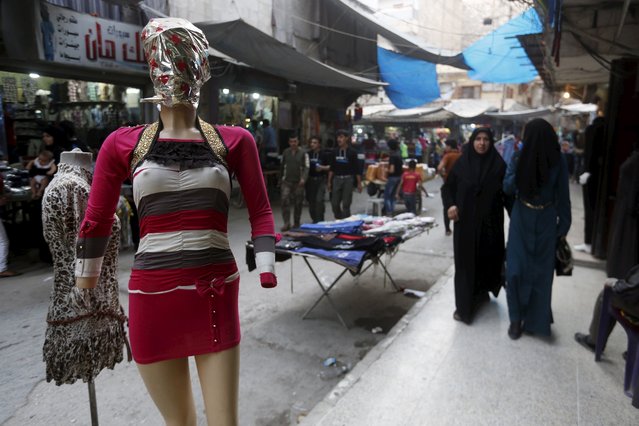
Women walk past a mannequin with a covered face as they shop ahead of the Muslim festival of Eid-al-Adha in Aleppo, Syria September 23, 2015. (Photo by Hamid Khatib/Reuters)
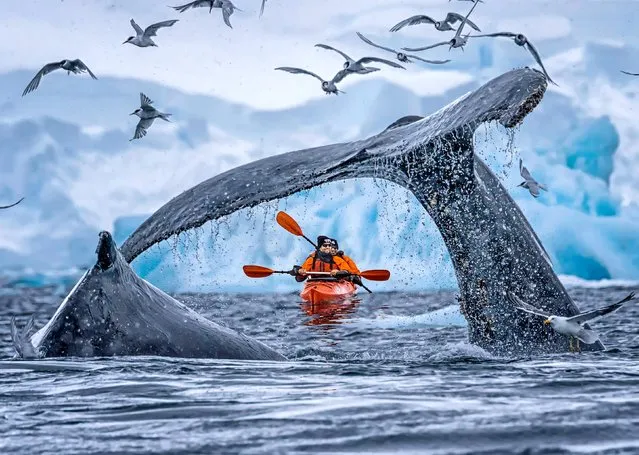
Canoeists are framed by the tail of a breaching whale in Antarctica in April 2023. The photographer, from California, writes: “It was probably a once-in-a-lifetime moment”. (Photo by Jiahong Zeng/Solent News)
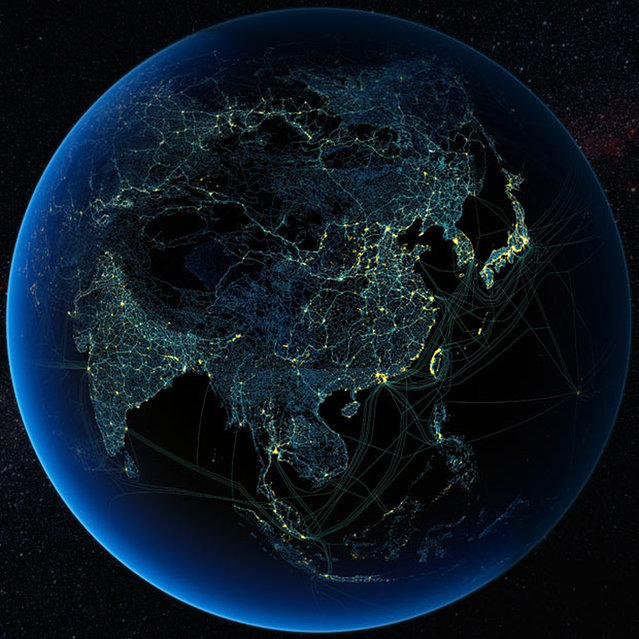
Defined according to wikipedia it is “a recent and informal geologic chronological term that serves to mark the evidence and extent of human activities that have had a significant global impact on the Earth’s ecosystems. The term was coined by ecologist Eugene Stoermer but has been widely popularized by the Nobel Prize-winning atmospheric chemist Paul Crutzen.”
The images here where created by Felix Pharand-Deschenes depicting how various human influences, from road and rail, to internet cables and airlines create significant patterns covering the Earth. What can we learn from these patterns in how they are influencing the environment