Loading...
Done
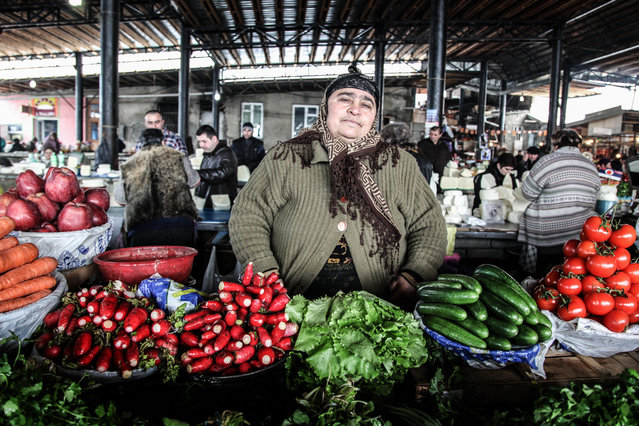
Telavi, Georgia. The photographer says his fascination with Slavic languages and culture took him onto a long journey through post-Soviet Europe, before he finally settled in Tbilisi, the capital of Georgia. (Photo by Gianluca Pardelli)

Gianluca Pardelli is something of an expert on markets. For the past two years, he’s travelled across eastern Europe, from Azerbaijan to Uzbekistan, Moldova to Georgia, photographing them. Here: Telavi, Georgia. (Photo by Gianluca Pardelli)
Details
16 Nov 2015 08:10:00
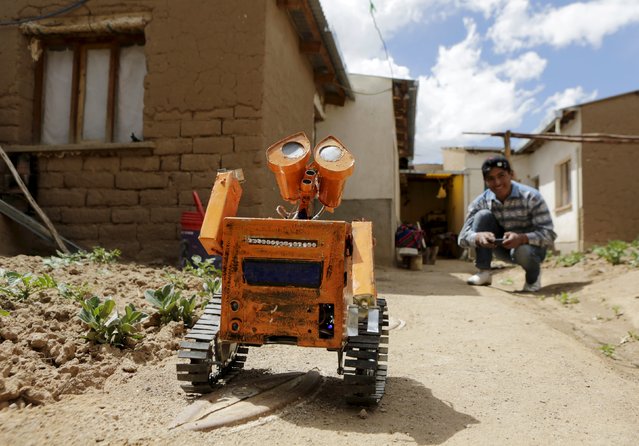
A replica of the Wall-E character is remotely controlled with a mobile phone by Bolivian student Esteban Quispe, 17, in Patacamaya, south of La Paz, December 10, 2015. (Photo by David Mercado/Reuters)

A replica of the Wall-E character is remotely controlled with a mobile phone by Bolivian student Esteban Quispe, 17, in Patacamaya, south of La Paz, December 10, 2015. Quispe built the Wall-E robot using materials he obtained from a rubbish dump in the town located in the Andean highland region. He hopes to mechanize agriculture in Patacamaya by making use of robots that operate on solar energy, Quispe told Reuters. (Photo by David Mercado/Reuters)
Details
13 Dec 2015 08:05:00
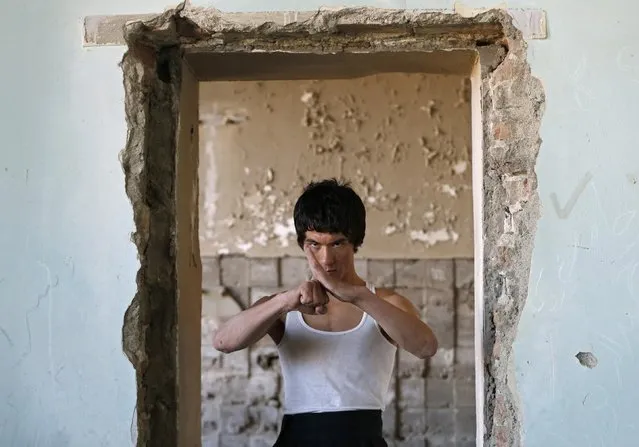
Abbas Alizada, who calls himself the Afghan Bruce Lee, poses during a media event in Kabul December 9, 2014. From the ruins of an iconic bombed-out palace above Kabul, the young Afghan man bearing a striking resemblance to kung fu legend Bruce Lee is high-kicking his way to Internet fame, aiming to show another side to his war-weary nation. (Photo by Mohammad Ismail/Reuters)

Abbas Alizada, who calls himself the Afghan Bruce Lee, poses during a media event in Kabul December 9, 2014. From the ruins of an iconic bombed-out palace above Kabul, the young Afghan man bearing a striking resemblance to kung fu legend Bruce Lee is high-kicking his way to Internet fame, aiming to show another side to his war-weary nation. (Photo by Mohammad Ismail/Reuters)
Details
10 Dec 2014 12:17:00
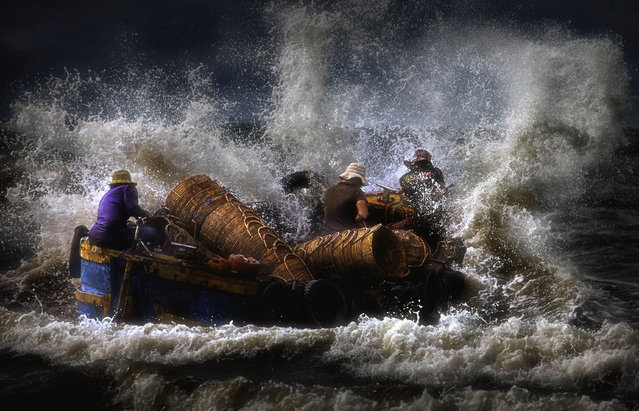
“Hard for Life”. (Photo by Theo Vu Xuan/Sony World Photography Awards/WENN.com)

“Hard for Life”. (Photo by Theo Vu Xuan/Sony World Photography Awards/WENN.com)
Details
19 Mar 2015 13:49:00
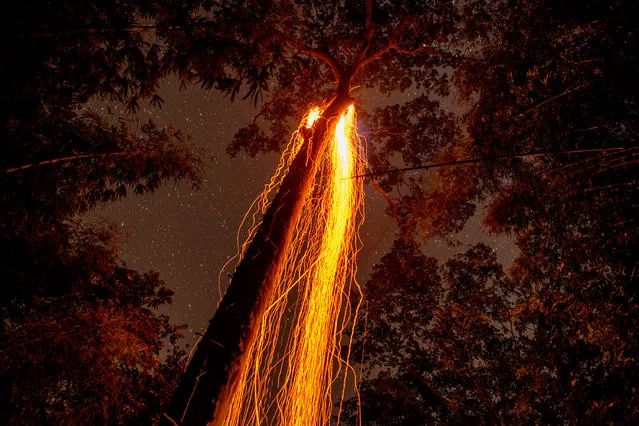
Bees are sensitive to light, which makes them follow the glowing embers down to the ground. (Photo by Hasnoor Hussain/The Guardian)

During the spring harvest season, a group of traditional Malaysian honey hunters travel to the rainforest near the Thai border to collect honeycombs from giant bees – and risk their lives climbing 200ft trees. Here: Bees are sensitive to light, which makes them follow the glowing embers down to the ground. (Photo by Hasnoor Hussain/The Guardian)
Details
22 Oct 2016 10:26:00
Fuzzbucket. “Not only did we keep our jobs, but because of the pictures, all the kittens were adopted within hours!”. (Photo by  Seth Casteel/Hachette Australia)

California-based photographer Seth Casteel made his name taking photographs of dogs underwater, but before that, he was snapping cats on land. In fact, they were his first animal subjects. Casteel’s new book, Pounce – a follow-up to his bestselling Underwater Dogs and Underwater Puppies – features more than 80 photographs of playful cats doing what they do best. Here: Fuzzbucket. (Photo by Seth Casteel/Hachette Australia)
Details
18 Nov 2016 11:21:00
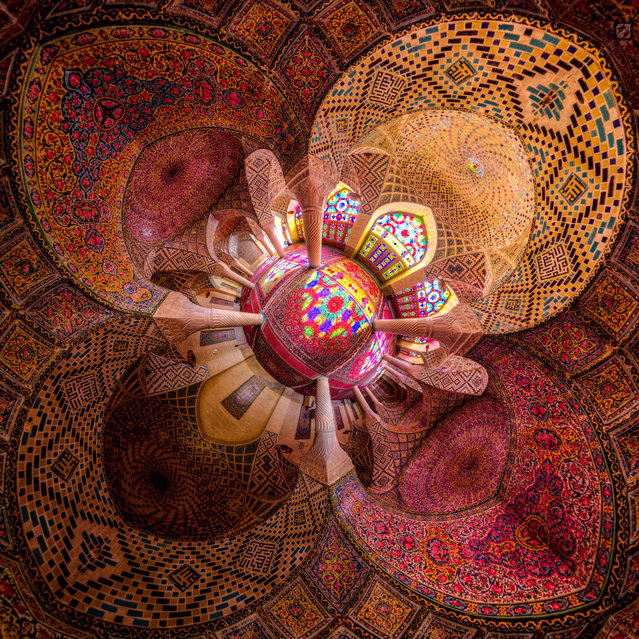
The Nasir al-mulk or “Pink” mosque in Shiraz, Iran. (Photo by Mohammad Reza Domiri Ganj)

Amateur Iranian photographer Mohammad Reza Domiri Ganji, 23 likes to learn as much as he can about a site before he photographs it. Then he utilizes a variety of wide-angle and fisheye lenses, as well as occasional panoramic techniques to create beautiful new, often mind-bending images. He usually shoots the architectural wonders of Iran, and hopes that the Iranian government will allow him to travel further from home in pursuit of other iconic architectural treasures. Photo: The Nasir al-mulk or “Pink” mosque in Shiraz, Iran. (Photo by Mohammad Reza Domiri Ganj)
Details
17 Aug 2014 08:58:00
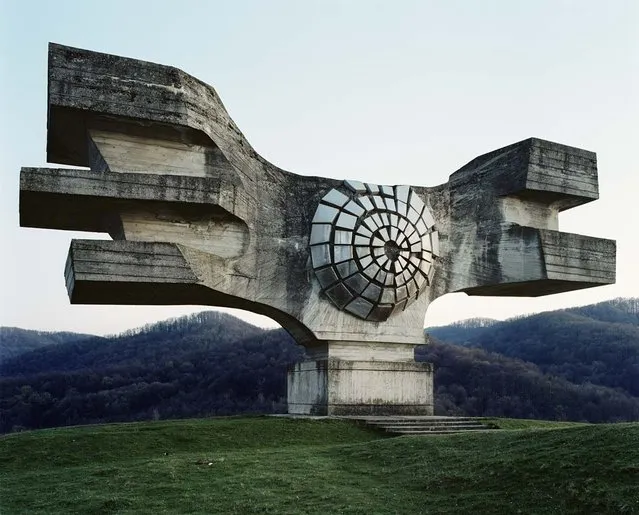
The monument of Ilirska Bistrica was designed by Janez Lenassi and built in 1965. It is dedicated to Slovenian soldiers that fell in World War II. (Photo by Jan Kempenaers)

The brutalist war memorials found throughout the former Yugoslavia were weird enough when they were built in the 1960s and 70s. Today, separated by the end of an architectural movement and the disintegration of the country, they seem almost alien. Belgian photographer Jan Kempenaers treats them purely as artistic objects in his book, “Spomenik”, named for the Serb-Croat word for monument. Known for photographing geographical oddities, Kempenaers was captivated by the spomenik after seeing them in an art encyclopedia. After hearing that many had been destroyed or abandoned, he set out to record what was left. (Photo by Jan Kempenaers)
Details
18 Aug 2014 09:07:00