Loading...
Done
Two styles of cleaned bird's nest, Yan Zhan (L) and Su Zhan (R) await repacking at a processing plant in Kuala Lumpur, February 17, 2015. Prized in China for is alleged health benefits for hundreds of years, nests made from swiftlets' saliva are being mixed into coffee and cereal as the Southeast Asian producers of the delicacy seek to broaden its appeal, and their profit margins. (Photo by Olivia Harris/Reuters)

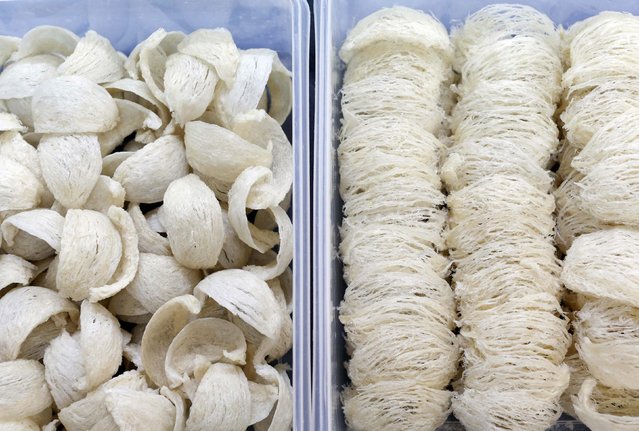
Two styles of cleaned bird's nest, Yan Zhan (L) and Su Zhan (R) await repacking at a processing plant in Kuala Lumpur, February 17, 2015. Prized in China for is alleged health benefits for hundreds of years, nests made from swiftlets' saliva are being mixed into coffee and cereal as the Southeast Asian producers of the delicacy seek to broaden its appeal, and their profit margins. The nests are among the world's most expensive foods, selling for up to $2,500 a kg and the swiftlets that weave them are indigenous to Indonesia, Malaysia, Thailand and Vietnam. (Photo by Olivia Harris/Reuters)
Details
24 Feb 2015 13:57:00
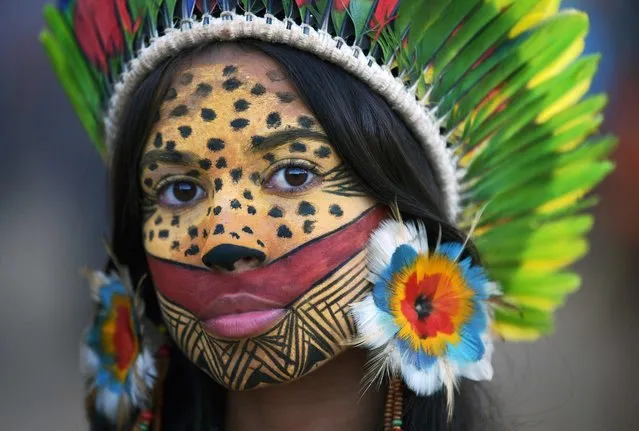
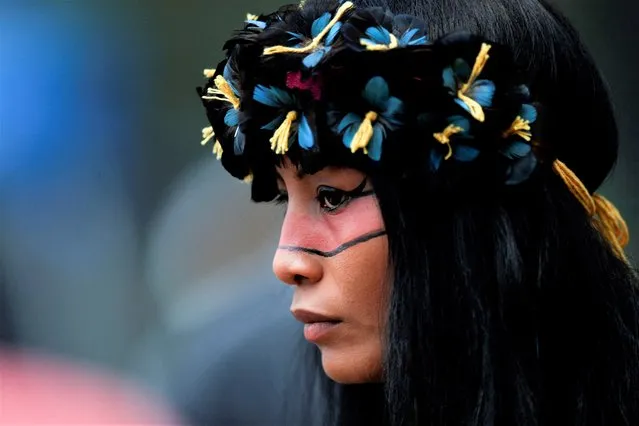
A woman from the Pataxo tribe poses for a photo at an indigenous protest camp on the fourth day of the Terra Livre Indigenous Camp in Brasilia on April 7, 2022. The 10-day annual protest is held by indigenous people from tribes that arrive from all over Brazil, and calls for greater protection of their land and rights. (Photo by Carl de Souza/AFP Photo)

A woman from the Pataxo tribe poses for a photo at an indigenous protest camp on the fourth day of the Terra Livre Indigenous Camp in Brasilia on April 7, 2022. The 10-day annual protest is held by indigenous people from tribes that arrive from all over Brazil, and calls for greater protection of their land and rights. (Photo by Carl de Souza/AFP Photo)
Details
24 Jun 2023 03:41:00
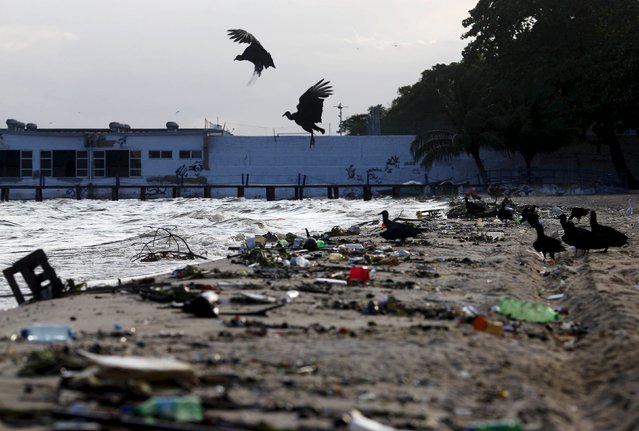
Vultures gather to eat waste in Bica beach, on the banks of the Guanabara Bay, with the Sugar Loaf mountain in background, 500 days ahead the Rio 2016 Olympic Games in Rio de Janeiro March 24, 2015. (Photo by Ricardo Moraes/Reuters)

Vultures gather to eat waste in Bica beach, on the banks of the Guanabara Bay, with the Sugar Loaf mountain in background, 500 days ahead the Rio 2016 Olympic Games in Rio de Janeiro March 24, 2015. As part of its Olympic bid, Rio promised to clean up 80 percent of the bay for the games. But local government officials have already admitted that a cleanup by 2016 is not achievable. Despite millions of dollars of investment over the years, the bay still stinks of sewage. Sailors who visited the city for test events complained of a floating sofa and a dead dog in the water. (Photo by Ricardo Moraes/Reuters)
Details
26 Mar 2015 12:16:00
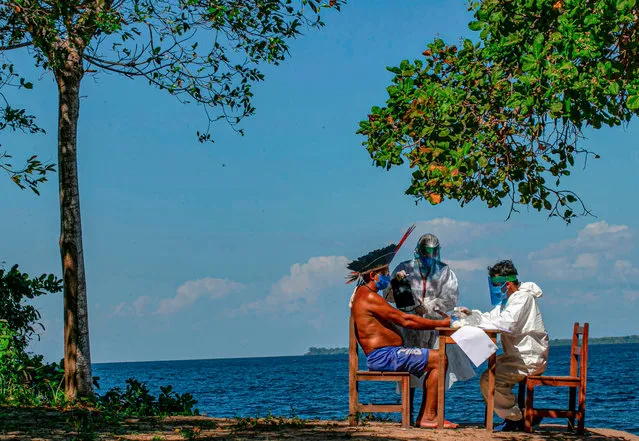
Indigenous nurses from the Special Secretariat for Indigenous Health (Sesai) of the Arapiuns ethnic group and Tapuia ethnic groups perform a rapid COVID-19 test on Chief Domingos from the Arapium tribe on the banks of the lower Tapajos River in the municipality of Santarem in western Para on July 19, 2020. (Photo by Tarso Sarraf/AFP Photo)

Indigenous nurses from the Special Secretariat for Indigenous Health (Sesai) of the Arapiuns ethnic group and Tapuia ethnic groups perform a rapid COVID-19 test on Chief Domingos from the Arapium tribe on the banks of the lower Tapajos River in the municipality of Santarem in western Para on July 19, 2020. (Photo by Tarso Sarraf/AFP Photo)
Details
22 Jul 2020 00:07:00
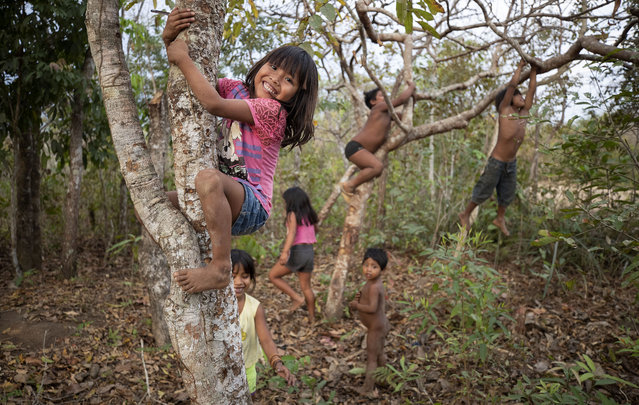
In this August 26, 2019 photo, children of the Nambikwara Sarare tribe climb trees as they play in their indigenous reserve in the southwestern Amazon, near Conquista D'Oeste, in the Brazilian state of Mato Grosso. About 98% of all Brazil’s indigenous lands lie within the Amazon. (Photo by Andre Penner/AP Photo)

In this August 26, 2019 photo, children of the Nambikwara Sarare tribe climb trees as they play in their indigenous reserve in the southwestern Amazon, near Conquista D'Oeste, in the Brazilian state of Mato Grosso. About 98% of all Brazil’s indigenous lands lie within the Amazon. (Photo by Andre Penner/AP Photo)
Details
31 Aug 2019 00:01:00
An indigenous woman looks on during the Terra Livre (Free Land) camp, a protest-camp to defend indigenous land and cultural rights that they say are threatened by the right-wing government of Brazil's President Jair Bolsonaro, in Brasilia, Brazil on April 4, 2022. (Photo by Adriano Machado/Reuters)

An indigenous woman looks on during the Terra Livre (Free Land) camp, a protest-camp to defend indigenous land and cultural rights that they say are threatened by the right-wing government of Brazil's President Jair Bolsonaro, in Brasilia, Brazil on April 4, 2022. (Photo by Adriano Machado/Reuters)
Details
24 Apr 2022 04:52:00
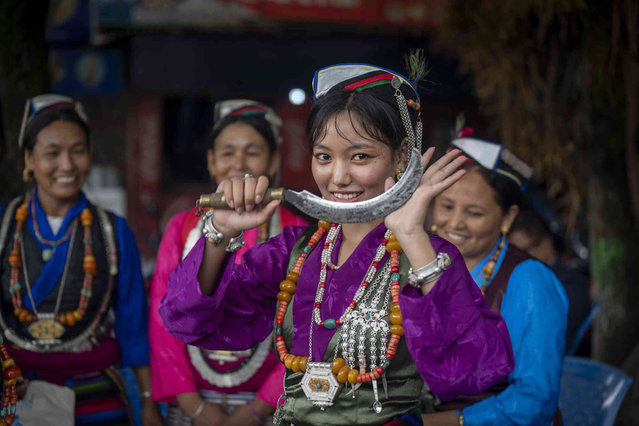
Nepal's indigenous women in traditional attire gather to participate in a rally to mark the International Day of the World's Indigenous People in Kathmandu, Nepal, Friday, August 9, 2024. (Photo by Niranjan Shrestha/AP Photo)

Nepal's indigenous women in traditional attire gather to participate in a rally to mark the International Day of the World's Indigenous People in Kathmandu, Nepal, Friday, August 9, 2024. (Photo by Niranjan Shrestha/AP Photo)
Details
24 Aug 2024 04:48:00
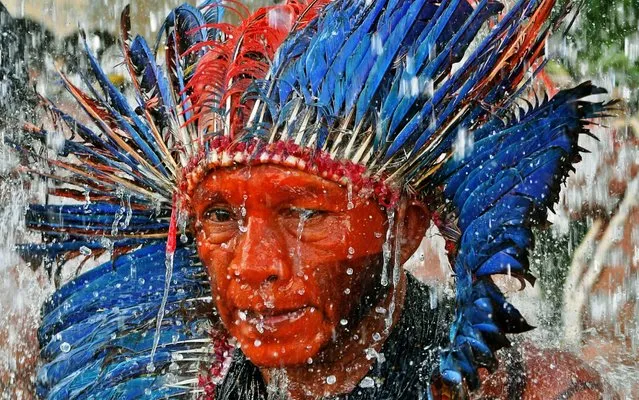
An Indigenous man stands under a water fountain outside a government building in Brasilia, on April 26, 2019, during the last day of a protest camp. Approximately 4,000 indigenous people from different tribes are taking part in protests during the Indigenous National Mobilization (MNI) week, a mobilization which seeks to tackle territorial rights' negotiations with the government. (Photo by Carl De Souza/AFP Photo)

An Indigenous man stands under a water fountain outside a government building in Brasilia, on April 26, 2019, during the last day of a protest camp. Approximately 4,000 indigenous people from different tribes are taking part in protests during the Indigenous National Mobilization (MNI) week, a mobilization which seeks to tackle territorial rights' negotiations with the government. (Photo by Carl De Souza/AFP Photo)
Details
29 Apr 2019 00:07:00