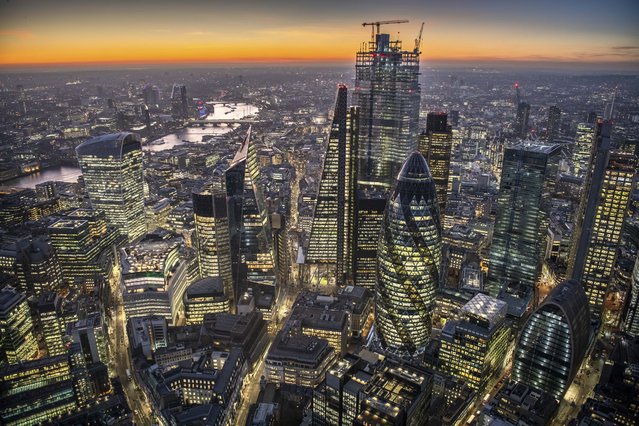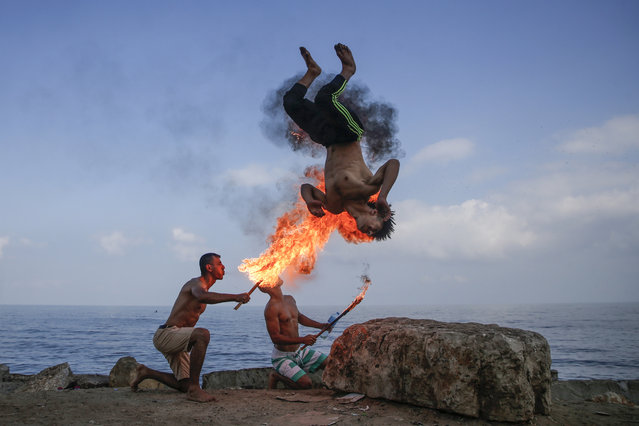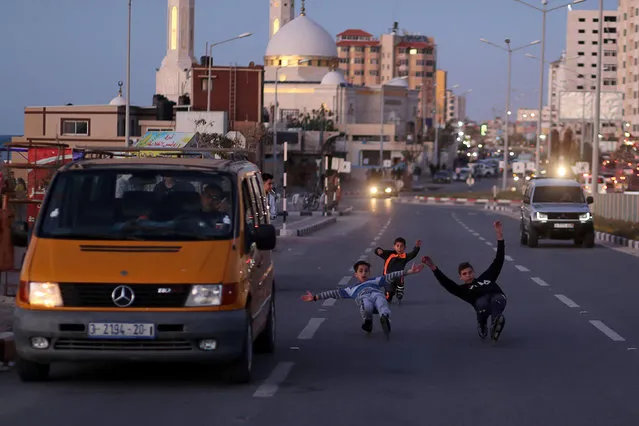
An aerial view of the Grand Mosque is seen on the second day of Eid al-Adha, during the annual haj pilgrimage in the holy city of Mecca September 25, 2015. (Photo by Ahmad Masood/Reuters)
A woman poses for pictures with skulls made of cardboard placed on an altar next to the San Francisco church in Mexico City during the celebration of All Souls Day on November 2, 2015. (Photo by Yuri Cortez/AFP Photo)
Young girls dress up in traditional costumes and pose for a selfie at the opening ceremony of the Leishan Miao new year festival in the city of Kaili, Guizhou province, China on November 23, 2015. (Photo by Imaginechina/Rex Shutterstock)
An Iraqi Muslim woman walks past Christmas decorations for sale in the Shiite holy city of Najaf on December 17, 2015. (Photo by Haidar Hamdani/AFP Photo)
A young Chinese girl dressed in Christmas costume, hugs a pedestrian on a street to celebrate Christmas in Nanjing city, east China's Jiangsu province, 23 December 2015. (Photo by Imaginechina/Splash News)
Stunning silhouettes under European cities reveal the size and splendor of the continent’s urban foundations. Photographer and content-manager Anna Arinova, 28, from Moscow, captured the awe-inspiring labyrinths in Russia and Germany. Here: Regenwurmlager, Poland. The Regenwurmlager is an extensive underground fortification area constructed by Germany in 1920s-1940s, now in western Poland, near the city of Międzyrzecz. (Photo by Anna Arinova/Caters News)
Tip turkey, dumpster chook, rubbish raptor – the Australian white ibis goes by many unflattering names. But it is a true urban success story, scavenging to survive in cities across Australia as wetlands have been lost. Wildlife photographer Rick Stevens captured them in Sydney. Here: Of all the species affected by river regulation in Australia, the ibis is one of the few that has changed its behaviour and moved to coastal cities. (Photo by Rick Stevens/The Guardian)