Loading...
Done
Camila Hormazabal, a 24-year-old sеx worker, meets with a virtual customer in Concepcion, Chile on April 7, 2020. Hormazabal now offers sеxual services online after the nightclub where she had worked was closed due to the outbreak. With no way to pay her bills, Hormazabal switched to video calls conducted from her high-rise apartment bedroom, and asked her regulars to meet her online. She is one of the thousands of sеx workers worldwide left in a precarious position after the very intimacy that defines their work was thwarted by social distancing measures. (Photo by Juan Gonzalez/Reuters)

Camila Hormazabal, a 24-year-old sеx worker, meets with a virtual customer in Concepcion, Chile on April 7, 2020. Hormazabal now offers sеxual services online after the nightclub where she had worked was closed due to the outbreak. With no way to pay her bills, Hormazabal switched to video calls conducted from her high-rise apartment bedroom, and asked her regulars to meet her online. She is one of the thousands of sеx workers worldwide left in a precarious position after the very intimacy that defines their work was thwarted by social distancing measures. (Photo by Juan Gonzalez/Reuters)
Details
08 May 2020 00:07:00
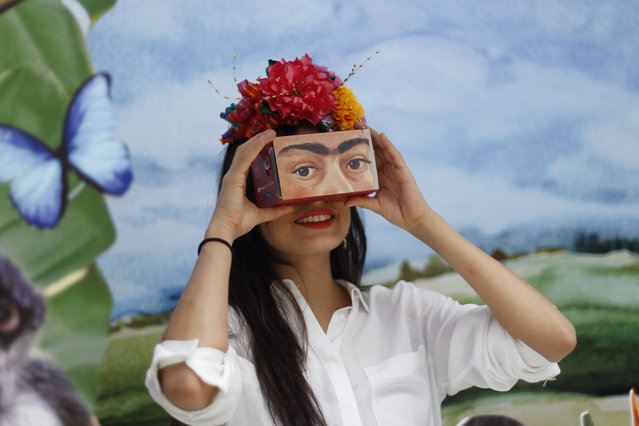
A woman uses a virtual reality (VR) headset to view images by Mexican painter Frida Kahlo in Mexico City, Mexico, 23 May 2018. The technological giant Google launched the “The Faces of Frida”, an interactive digital exhibition that treasures the heartrending work of the Mexican artist to tell her story from different points of view, with attention to the invisible details. (Photo by Sashenka Gutierrez/EPA/EFE)

A woman uses a virtual reality (VR) headset to view images by Mexican painter Frida Kahlo in Mexico City, Mexico, 23 May 2018. The technological giant Google launched the “The Faces of Frida”, an interactive digital exhibition that treasures the heartrending work of the Mexican artist to tell her story from different points of view, with attention to the invisible details. (Photo by Sashenka Gutierrez/EPA/EFE)
Details
27 May 2018 07:02:00
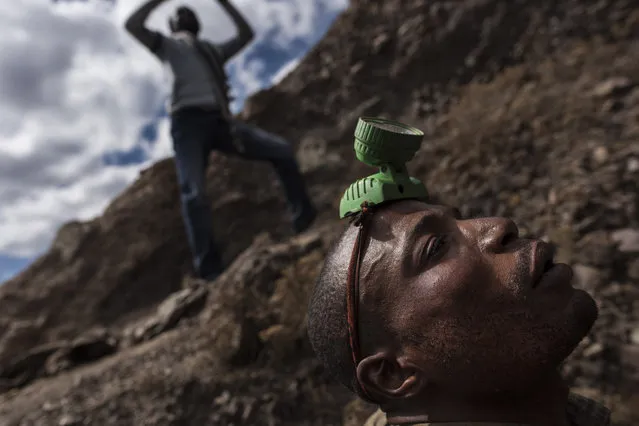
A “creuseur”, or digger, a plastic lantern on his head, readies to enter a copper and cobalt mine in Kawama, Democratic Republic of Congo on June 8, 2016. Cobalt is used in the batteries for electric cars and mobile phones. Working conditions are dangerous, often with no safety equipment or structural support for the tunnels. The diggers say they are paid on average US$2-3/day. (Photo by Michael Robinson Chavez/The Washington Post)

A “creuseur”, or digger, a plastic lantern on his head, readies to enter a copper and cobalt mine in Kawama, Democratic Republic of Congo on June 8, 2016. Cobalt is used in the batteries for electric cars and mobile phones. Working conditions are dangerous, often with no safety equipment or structural support for the tunnels. The diggers say they are paid on average US$2-3/day. (Photo by Michael Robinson Chavez/The Washington Post)
Details
30 Dec 2016 10:29:00
A ladyboy s*x worker wears a belt with a dollar sign on it while holding condoms and lube handed to her by Sisters, a transgendered outreach and community services organization in Pattaya, Thailand on August 25, 2016. Many of Thailand's ladyboys live in Pattaya, a large percentage of whom work in the s*x industry there. (Photo by Aaron Joel Santos/Getty Images/Aurora Creative)

A ladyboy sеx worker wears a belt with a dollar sign on it while holding condoms and lube handed to her by Sisters, a transgendered outreach and community services organization in Pattaya, Thailand on August 25, 2016. Many of Thailand's ladyboys live in Pattaya, a large percentage of whom work in the sеx industry there. (Photo by Aaron Joel Santos/Getty Images/Aurora Creative)
Details
26 Aug 2016 11:04:00
A policeman reacts during a clash with protestors during a protest against the proposed changes to France's working week and layoff practices, in Lyon, central France, Thursday, April 28, 2016. French protesters are back on the streets over proposed reforms to the country's labor rules and strikers have forced cancellations and delays at two airports serving Paris. (Photo by Laurent Cipriani/AP Photo)

A policeman reacts during a clash with protestors during a protest against the proposed changes to France's working week and layoff practices, in Lyon, central France, Thursday, April 28, 2016. French protesters are back on the streets over proposed reforms to the country's labor rules and strikers have forced cancellations and delays at two airports serving Paris. (Photo by Laurent Cipriani/AP Photo)
Details
29 Apr 2016 12:08:00
When he started using a camera there were very few documentary photographers working outside the government. Sutkus instead looked to writers and film-makers, and says he drew inspiration from the works of Franz Kafka, Jean-Paul Sartre, Ernest Hemingway and Vladimir Nabokov. Here: The first Lithuanian bikers, 1974. (Photo by Antanas Sutkus)

Rebelling against political propaganda, acclaimed photographer Antanas Sutkus embarked on a life-long journey to capture the everyday scenes around him. Antanas Sutkus, born in 1939, studied journalism at Vilnius University in the late 1950s before becoming disillusioned by the confines of the Soviet-controlled press. He began taking photographs instead, and soon co-founded the Lithuanian Association of Art Photographers. Here: The first Lithuanian bikers, 1974. (Photo by Antanas Sutkus)
Details
11 Apr 2016 10:54:00
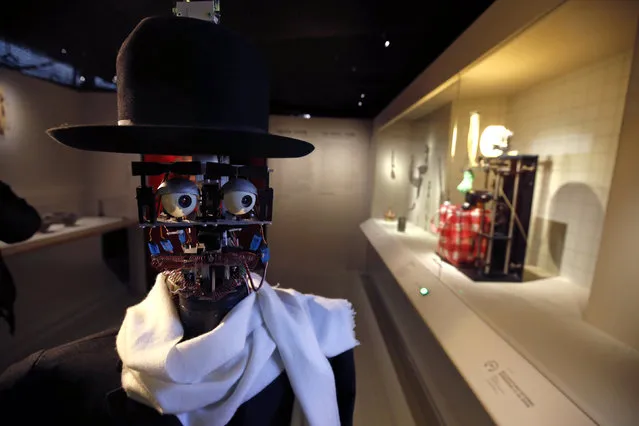
The Berenson robot strolls among visitors during the exhibition “Persona : Oddly Human” at the Quai Branly museum in Paris, France, February 23, 2016. The Berenson robot, developed in France in 2011, is the brainchild of anthropologist Denis Vidal and robotics engineer Philippe Gaussier. Its programming allows it to record reactions of museum visitors to certain pieces of art and then use the data to develop its own unique taste, which allows “Berenson” to judge whether or not it likes a certain work of art within an exhibition. (Photo by Philippe Wojazer/Reuters)

The Berenson robot strolls among visitors during the exhibition “Persona : Oddly Human” at the Quai Branly museum in Paris, France, February 23, 2016. The Berenson robot, developed in France in 2011, is the brainchild of anthropologist Denis Vidal and robotics engineer Philippe Gaussier. Its programming allows it to record reactions of museum visitors to certain pieces of art and then use the data to develop its own unique taste, which allows “Berenson” to judge whether or not it likes a certain work of art within an exhibition. (Photo by Philippe Wojazer/Reuters)
Details
25 Feb 2016 12:26:00
Marieke van der Meer from the Netherlands works on her sculpture “Flora” at the sand sculpture show in Binz on Ruegen island, Germany, 09 March 2016. With the motto “Fascination Nature”, 50 sand artists have created oversized sculptures. The sculptors use 16,000 tons of special sand that is pressed into big blocks first and then formed. The 7th sand sculpture show on 5,600 square meters of exhibition ground opens on 12 March 2016. (Photo by Ens Buettner/EPA)

Marieke van der Meer from the Netherlands works on her sculpture “Flora” at the sand sculpture show in Binz on Ruegen island, Germany, 09 March 2016. With the motto “Fascination Nature”, 50 sand artists have created oversized sculptures. The sculptors use 16,000 tons of special sand that is pressed into big blocks first and then formed. The 7th sand sculpture show on 5,600 square meters of exhibition ground opens on 12 March 2016. (Photo by Ens Buettner/EPA)
Details
10 Mar 2016 13:03:00