Loading...
Done
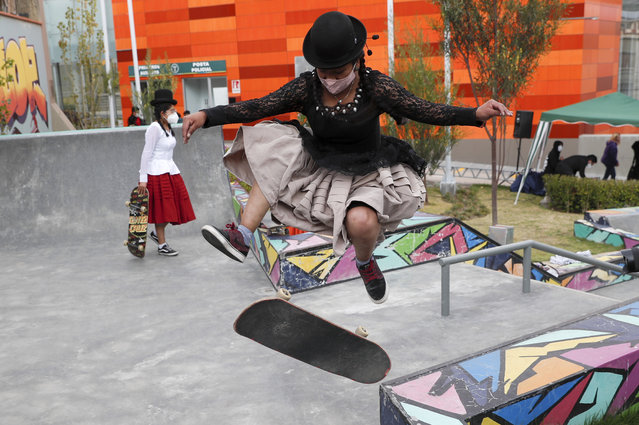
Aide Choque, wearing a mask amid the COVID-19 pandemic, jumps with her skateboard during a youth talent show in La Paz, Bolivia, Wednesday, September 30, 2020. Young women called “Skates Imillas”, using the Aymara word for girl Imilla, use traditional Indigenous clothing as a statement of pride of their Indigenous culture while playing riding their skateboards. (Photo by Juan Karita/AP Photo)

Aide Choque, wearing a mask amid the COVID-19 pandemic, jumps with her skateboard during a youth talent show in La Paz, Bolivia, Wednesday, September 30, 2020. Young women called “Skates Imillas”, using the Aymara word for girl Imilla, use traditional Indigenous clothing as a statement of pride of their Indigenous culture while playing riding their skateboards. (Photo by Juan Karita/AP Photo)
Details
10 Feb 2021 11:11:00
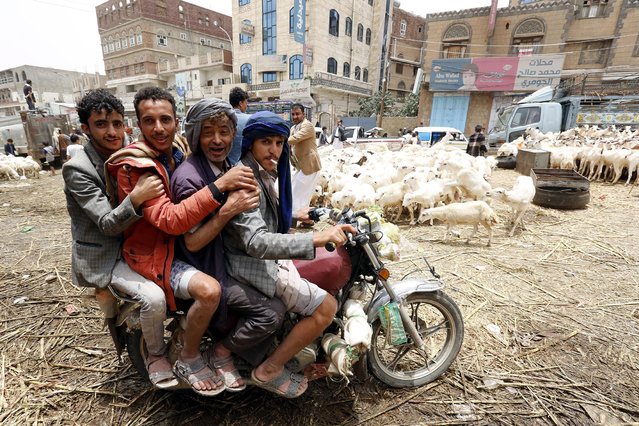
Four men ride a motorbike past sacrificial animals displayed for sale ahead of the Eid al-Adha festival at a livestock market in Sana'a, Yemen, 08 August 2019. Eid al-Adha is the holiest of the two Muslims holidays celebrated each year; it marks the yearly Muslim pilgrimage (Hajj) to visit Mecca, Islam's holiest place. Muslims slaughter a sacrificial animal and split the meat into three parts: one for family, one for friends and relatives, and one for the poor and needy. (Photo by Yahya Arhab/EPA/EFE)

Four men ride a motorbike past sacrificial animals displayed for sale ahead of the Eid al-Adha festival at a livestock market in Sana'a, Yemen, 08 August 2019. Eid al-Adha is the holiest of the two Muslims holidays celebrated each year; it marks the yearly Muslim pilgrimage (Hajj) to visit Mecca, Islam's holiest place. Muslims slaughter a sacrificial animal and split the meat into three parts: one for family, one for friends and relatives, and one for the poor and needy. (Photo by Yahya Arhab/EPA/EFE)
Details
29 Aug 2019 00:03:00
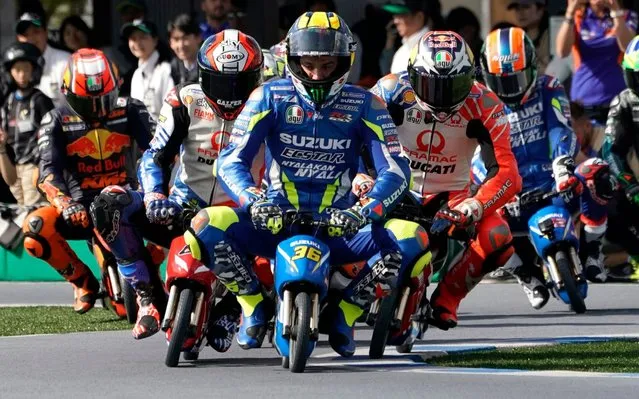
Spanish MotoGP rider Joan Mir (R) of Team Suzuki Ecstar and other MotoGP racers ride mini electric motorcycles at a fan event at Twin Ring Motegi in Motegi, Japan, 17 October 2019. The event was held ahead of the MotoGP race of Japan's Motorcycling Grand Prix scheduled for 20 October 2019. (Photo by Toru Hanai/EPA/EFE)

Spanish MotoGP rider Joan Mir (R) of Team Suzuki Ecstar and other MotoGP racers ride mini electric motorcycles at a fan event at Twin Ring Motegi in Motegi, Japan, 17 October 2019. The event was held ahead of the MotoGP race of Japan's Motorcycling Grand Prix scheduled for 20 October 2019. (Photo by Toru Hanai/EPA/EFE)
Details
21 Oct 2019 00:05:00
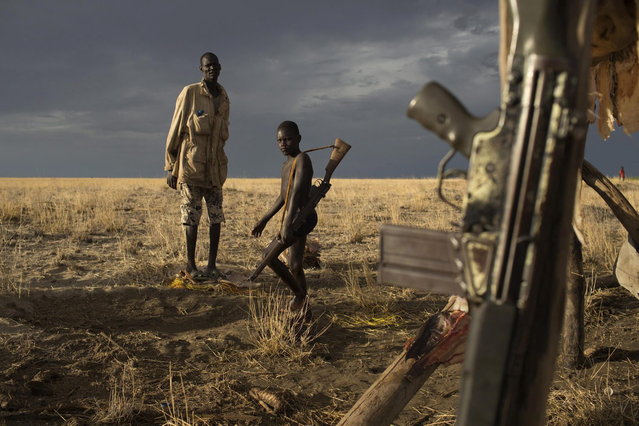
A Turkana man and a boy carrying a gun look on as a G3 battle rifle hangs from a structure used to dry fish at a fishing camp on the shores of Lake Turkana, some kilometres from Todonyang near the Kenya-Ethiopia border in northwestern Kenya October 12, 2013. (Photo by Siegfried Modola/Reuters)

A Turkana man and a boy carrying a gun look on as a G3 battle rifle hangs from a structure used to dry fish at a fishing camp on the shores of Lake Turkana, some kilometres from Todonyang near the Kenya-Ethiopia border in northwestern Kenya October 12, 2013The Turkana are traditionally nomadic pastoralists, but they have seen the pasture that they need to feed their herds suffer from recurring droughts and many have turned to fishing. However, Lake Turkana is overfished, and scarcity of food and pastureland is fuelling long-standing conflict with Ethiopian indigenous Dhaasanac, who have seen grazing grounds squeezed by large-scale government agricultural schemes in southern Ethiopia. The Dhaasanac now venture ever deeper into Kenyan territory in search of fish and grass, clashing with neighbours. Fighting between the communities has a long history, but the conflict has become ever more fatal as automatic weapons from other regional conflicts seep into the area. While the Turkana region is short of basics like grass and ground-water, it contains other resources including oil reserves and massive, newly discovered underground aquifers. (Photo by Siegfried Modola/Reuters)

Details
05 Dec 2013 12:08:00
A scene is played out during a scene run through of the 'How to Train Your Dragon Arena Spectacular' at Hisense Arena in Melbourne

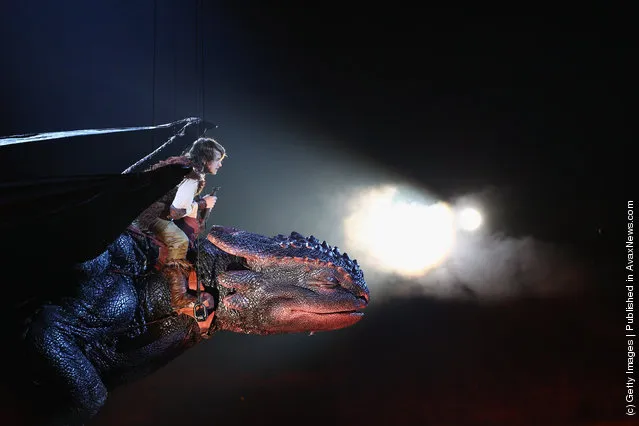
Actor Rarmian Newton who plays the character Hiccup rides Toothless during a scene run through of the “How to Train Your Dragon Arena Spectacular” at Hisense Arena on March 7, 2012 in Melbourne, Australia. (Photo by Robert Cianflone/Getty Images)
Details
07 Mar 2012 11:43:00
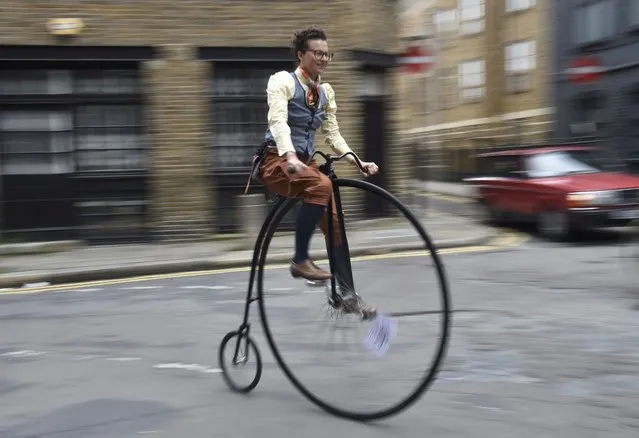
A participant sets off on a penny-farthing bicycle at the start of the The Tweed Run in central London, Britain, May 14, 2016. (Photo by Hannah McKay/Reuters)

A participant sets off on a penny-farthing bicycle at the start of the The Tweed Run in central London, Britain, May 14, 2016. The Tweed Run, a very British public bicycle ride through London's streets, with a prerequisite that participants are dressed in their best tweed cycling attire. (Photo by Hannah McKay/Reuters)
Details
15 May 2016 12:40:00
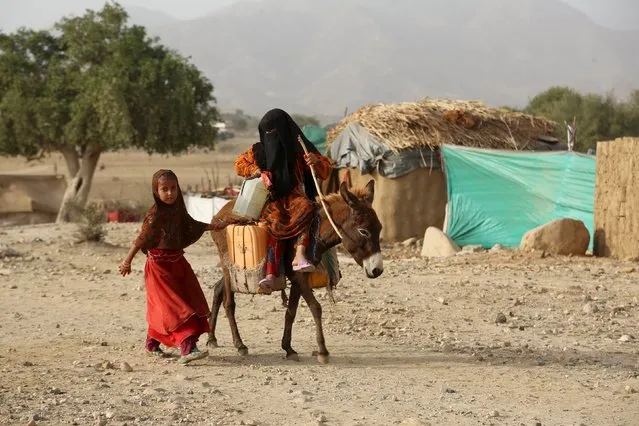
A girl rides a donkey as another walks by at the Shawqaba camp for internally displaced people who were forced to leave their villages by the war in Yemen's northwestern province of Hajjah March 12, 2016. In northwest Yemen, one of the poorest countries in the Middle East, about 400 families uprooted by the war have been stuck in the Shawqaba camp in Hajjah province for the past year. Residents live in poorly built huts that protect them neither from summer heat nor winter cold in a camp that lacks the most basic services. (Photo by Abduljabbar Zeyad/Reuters)

A girl rides a donkey as another walks by at the Shawqaba camp for internally displaced people who were forced to leave their villages by the war in Yemen's northwestern province of Hajjah March 12, 2016. In northwest Yemen, one of the poorest countries in the Middle East, about 400 families uprooted by the war have been stuck in the Shawqaba camp in Hajjah province for the past year. Residents live in poorly built huts that protect them neither from summer heat nor winter cold in a camp that lacks the most basic services. (Photo by Abduljabbar Zeyad/Reuters)
Details
09 Apr 2016 13:16:00
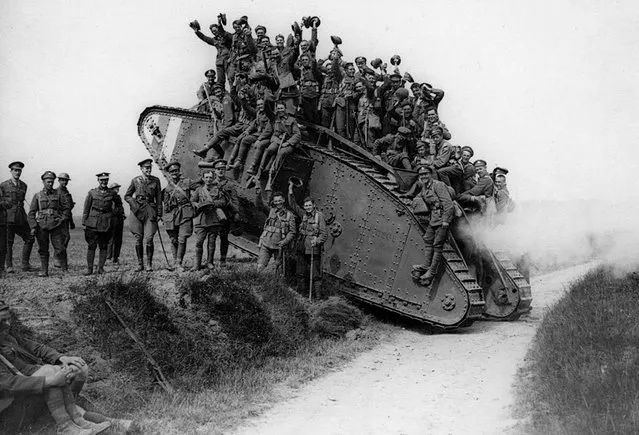
These black-and-white photos are taken from the new book “Armoured Warfare in the First World War 1916 – 1918” by Anthony Tucker-Jones and published by Pen & Sword Military. “Interestingly the British, French and Germans took completely different approaches with varying results”. The British military produced “Little Willie” in Autumn 1915 weighing 18 tonnes, which had a crew of two plus four gunners. “Inspired by a tracked artillery tractor “Little Willie” was referred to as a water tank – hence the name tank – to ensure secrecy”, said Anthony. “This led to the strange looking Mark I with its peculiar rhomboid shape, designed to cross trenches with guns in sponsons on either side. The Germans saw the tank as unchivalrous and were slow to grasp its utility. They favoured the Stormtrooper (specialist soldiers used to infiltrate enemy trenches) and artillery, not the tank”, said Anthony. “However, they didn’t hesitate to make use of captured British tanks. Although the tank helped secure victory and German soldiers dubbed it “Germany’s Downfall” the country was ultimately brought to its knees by the Allies blockade”. Here: British troops hitch a ride on a Mark IV after the massed tank fleet spearheading attack at Cambrai on November 20, 1917. (Photo by Anthony Tucker-Jones/Mediadrumworld.com)

These black-and-white photos are taken from the new book “Armoured Warfare in the First World War 1916 – 1918” by Anthony Tucker-Jones and published by Pen & Sword Military. Here: British troops hitch a ride on a Mark IV after the massed tank fleet spearheading attack at Cambrai on November 20, 1917. (Photo by Anthony Tucker-Jones/Mediadrumworld.com)
Details
23 Feb 2017 00:02:00