Loading...
Done
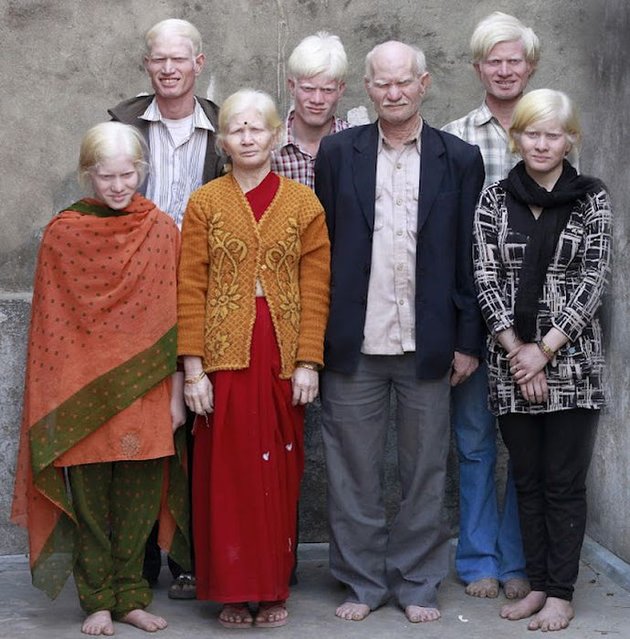
World's Biggest Albino Family

A white-skinned Indian couple are set to enter the record books along with their offspring, after becoming the world's biggest albino family. The ten members of the Pullan family, headed by Rosetauri, 50, and his wife Mani, 45, all have the extremely pale skin and near-white hair of albinos.But despite years of prejudice and suffering the poor vision which is a side effect of the condition, the Pullans and their eight other family members are set to land a Guinness World Record.
Details
27 Sep 2013 10:30:00
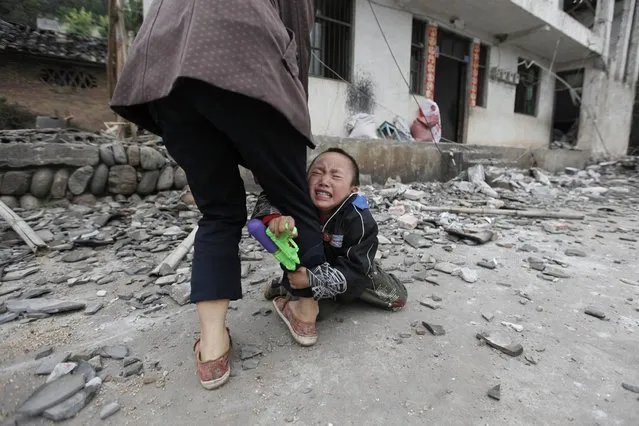
A boy holds his mother's leg as he cries in front of their damaged house after a strong 6.6 magnitude earthquake at Longmen village, Lushan county in Ya'an, Sichuan province. (Photo by Jason Lee/Reuters)

A boy holds his mother's leg as he cries in front of their damaged house after a strong 6.6 magnitude earthquake at Longmen village, Lushan county in Ya'an, Sichuan province. (Photo by Jason Lee/Reuters)
Details
02 Jan 2014 11:56:00
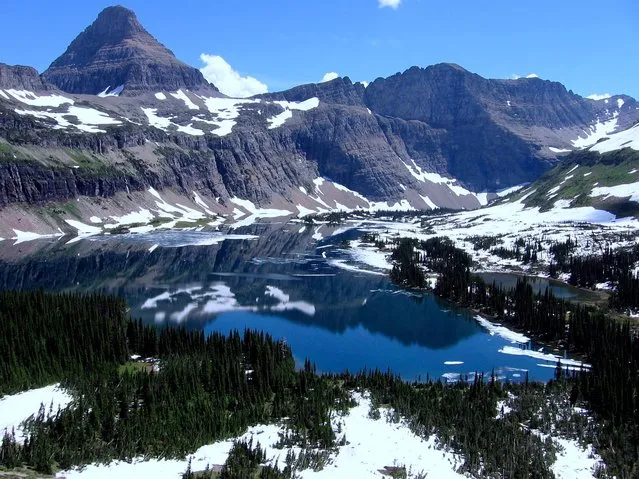
Glacier National Park Montana

Glacier National Park is a national park located in the U.S. state of Montana, on the Canada–United States border with the Canadian provinces of Alberta and British Columbia. The park encompasses over 1,000,000 acres (4,000 km2) and includes parts of two mountain ranges (sub-ranges of the Rocky Mountains), over 130 named lakes, more than 1,000 different species of plants and hundreds of species of animals. This vast pristine ecosystem is the centerpiece of what has been referred to as the "Crown of the Continent Ecosystem", a region of protected land encompassing 16,000 square miles (41,000 km2).
Details
29 Oct 2013 11:13:00
Rabbit Island in Japan

Only after World War II did the secret spill: Ōkunoshima, located in the Inland Sea of Japan between Hiroshima and Shikoku, was the top-secret site for manufacturing chemical warfare. When the factories were closed down, a number of exotic wild rabbits were seen freely roaming the island. They were assumed to have been the test subjects for the chemical weapons, which the military failed to eradicate when the factory was demolished.
Details
17 Feb 2014 12:23:00
Revellers with their bodies and faces painted attend the "Zombie Walk" parade in Sao Paulo, Brazil, November 2, 2015. (Photo by Paulo Whitaker/Reuters)

Revellers with their bodies and faces painted attend the "Zombie Walk" parade in Sao Paulo, Brazil, November 2, 2015. (Photo by Paulo Whitaker/Reuters)
Details
05 Nov 2015 08:06:00
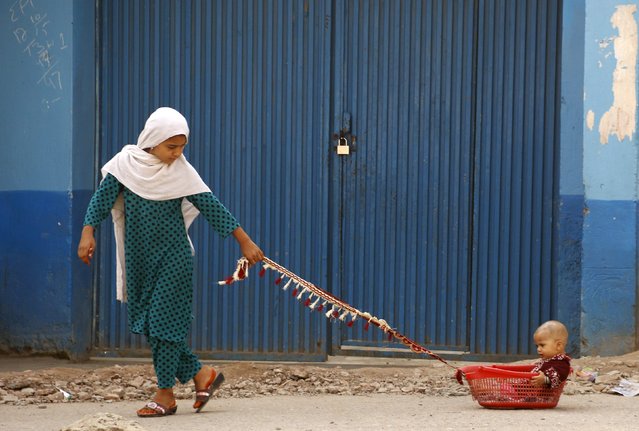
A girl pulls her sister in a discarded basket in the Rashidabad neighborhood of Peshawar, Pakistan October 18, 2015. (Photo by Khuram Parvez/Reuters)

A girl pulls her sister in a discarded basket in the Rashidabad neighborhood of Peshawar, Pakistan October 18, 2015. (Photo by Khuram Parvez/Reuters)
Details
10 Nov 2015 08:02:00
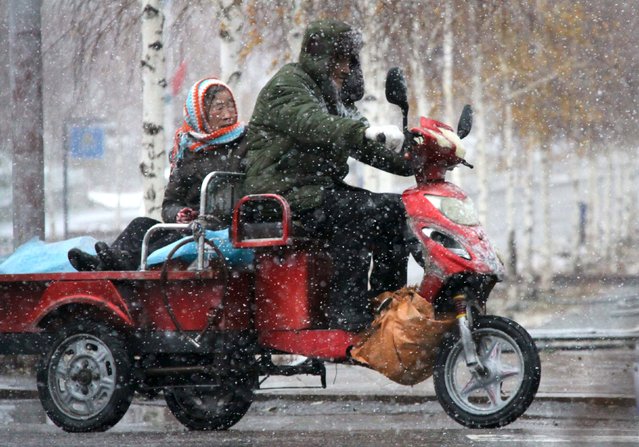
A couple ride a motorcycle along a street during snow in Altay, Xinjiang Uighur Autonomous Region, China, November 8, 2015. Picture taken November 8, 2015. (Photo by Reuters/Stringer)

A couple ride a motorcycle along a street during snow in Altay, Xinjiang Uighur Autonomous Region, China, November 8, 2015. Picture taken November 8, 2015. (Photo by Reuters/Stringer)
Details
23 Nov 2015 08:05:00
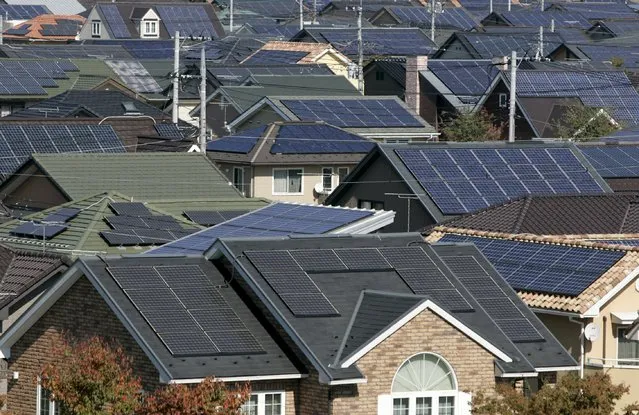
Rooftops of solar powered houses are pictured in Ota, 80 km northwest of Tokyo in this October 28, 2008 file photo. One by one, Japan is turning off the lights at the giant oil-fired power plants that propelled it to the ranks of the world's top industrialised nations. With nuclear power in the doldrums after the Fukushima disaster, it's solar energy that is becoming the alternative. (Photo by Yuriko Nakao/Reuters)

Rooftops of solar powered houses are pictured in Ota, 80 km northwest of Tokyo in this October 28, 2008 file photo. One by one, Japan is turning off the lights at the giant oil-fired power plants that propelled it to the ranks of the world's top industrialised nations. With nuclear power in the doldrums after the Fukushima disaster, it's solar energy that is becoming the alternative. Solar power is set to become profitable in Japan as early as this quarter, according to the Japan Renewable Energy Foundation (JREF), freeing it from the need for government subsidies and making it the last of the G7 economies where the technology has become economically viable. (Photo by Yuriko Nakao/Reuters)
Details
24 Nov 2015 08:04:00