Loading...
Done
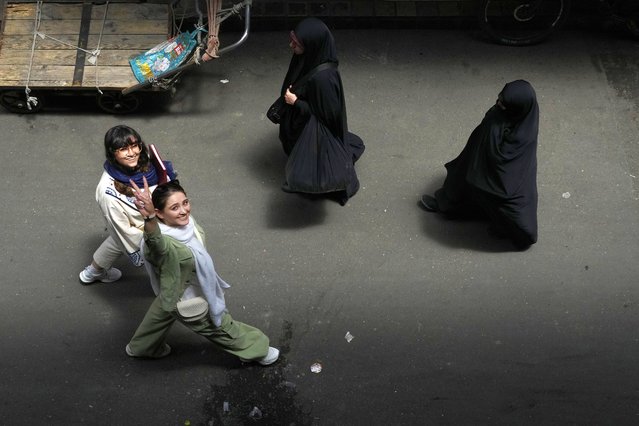
An Iranian woman without wearing her mandatory Islamic headscarf flashes a victory sign as two head-to-toe veiled women walk at the old main bazaar of Tehran, Iran, Thursday, June 13, 2024. (Photo by Vahid Salemi/AP Photo)

An Iranian woman without wearing her mandatory Islamic headscarf flashes a victory sign as two head-to-toe veiled women walk at the old main bazaar of Tehran, Iran, Thursday, June 13, 2024. (Photo by Vahid Salemi/AP Photo)
Details
24 Jul 2024 05:36:00
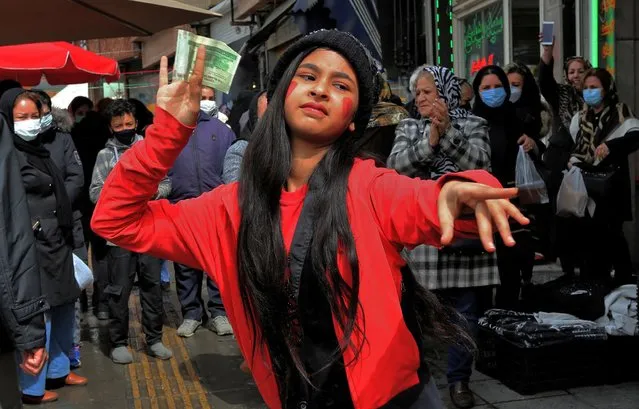
An Iranian girl wearing a costume inspired in the fictional folklore character Hajji Firuz, dances in Tehran on March 17, 2021 as Iranians prepare to celebrate Noruz, the Iranian New Year. Noruz, “new day” in Persian, is the New Year festivity celebrated in Iran as well as in Afghanistan and Kurdish regions in several countries. It begins with the spring equinox and symbolises rebirth. (Photo by Atta Kenare/AFP Photo)

An Iranian girl wearing a costume inspired in the fictional folklore character Hajji Firuz, dances in Tehran on March 17, 2021 as Iranians prepare to celebrate Noruz, the Iranian New Year. Noruz, “new day” in Persian, is the New Year festivity celebrated in Iran as well as in Afghanistan and Kurdish regions in several countries. It begins with the spring equinox and symbolises rebirth. (Photo by Atta Kenare/AFP Photo)
Details
20 Mar 2021 10:35:00
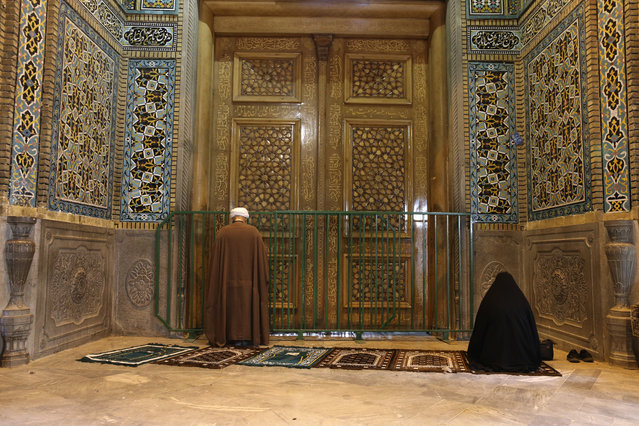
A cleric and a woman pray behind a closed door of Masoume shrine in the city of Qom, some 80 miles (125 kilometers) south of the capital Tehran, Iran, Monday, March 16, 2020. On Monday, Iran closed the Masoume shrine, a major pilgrimage site in the city of Qom, the epicenter of the country's new coronavirus outbreak. Authorities were already restricting access and barring pilgrims from kissing or touching the shrine, but it had remained open. (Photo by AP Photo)

A cleric and a woman pray behind a closed door of Masoume shrine in the city of Qom, some 80 miles (125 kilometers) south of the capital Tehran, Iran, Monday, March 16, 2020. On Monday, Iran closed the Masoume shrine, a major pilgrimage site in the city of Qom, the epicenter of the country's new coronavirus outbreak. Authorities were already restricting access and barring pilgrims from kissing or touching the shrine, but it had remained open. (Photo by AP Photo)
Details
23 Mar 2020 00:01:00
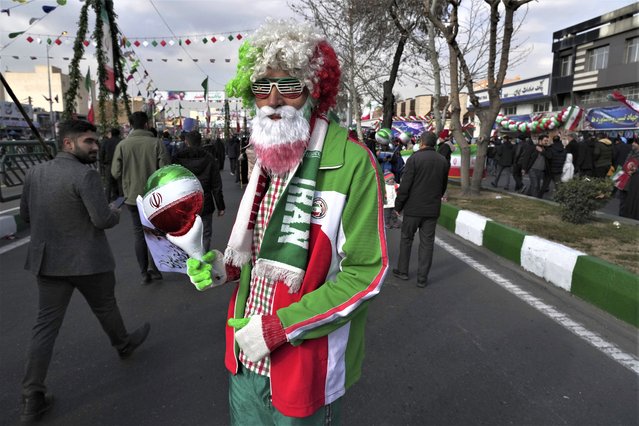
A man wears jacket in the colors of Iranian flag as he attends the annual rally commemorating Iran's 1979 Islamic Revolution, in Tehran, Iran, Saturday, February 11, 2023. (Photo by Vahid Salemi/AP Photo)

A man wears jacket in the colors of Iranian flag as he attends the annual rally commemorating Iran's 1979 Islamic Revolution, in Tehran, Iran, Saturday, February 11, 2023. (Photo by Vahid Salemi/AP Photo)
Details
13 Feb 2023 05:50:00
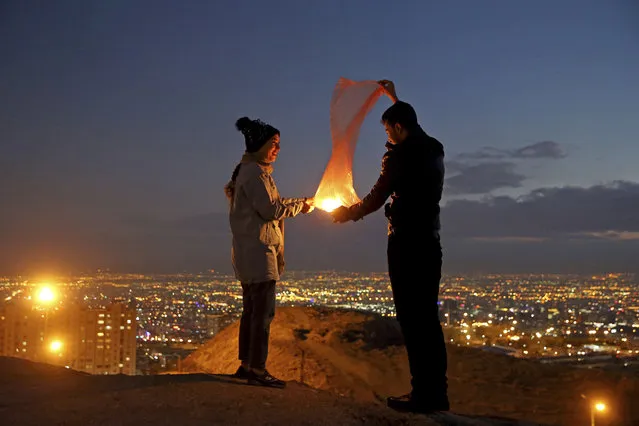
A couple lights a lantern during a celebration, known as “Chaharshanbe Souri”, or Wednesday Feast, marking the eve of the last Wednesday of the solar Persian year, Tuesday, March 19, 2019, in Tehran, Iran. (Photo by Ebrahim Noroozi/AP Photo)

A couple lights a lantern during a celebration, known as “Chaharshanbe Souri”, or Wednesday Feast, marking the eve of the last Wednesday of the solar Persian year, Tuesday, March 19, 2019, in Tehran, Iran. Iran's many woes briefly went up in smoke on Tuesday as Iranians observed a nearly 4,000-year-old Persian tradition known as the Festival of Fire. (Photo by Ebrahim Noroozi/AP Photo)
Details
21 Mar 2019 00:03:00
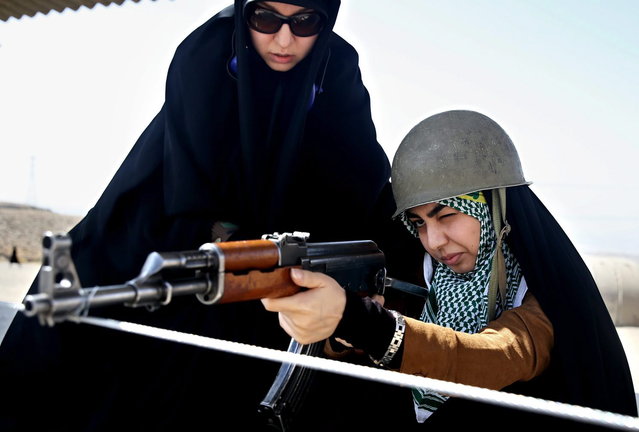
In this Thursday, August 22, 2013 photo, a female member of the Basij paramilitary militia aims a rifle as a trainer looks over her shoulder in Tehran, Iran. (Photo by Ebrahim Noroozi/AP Photo)

With a presence in nearly every city and town across Iran, the paramilitary Basij volunteer corps has an ever-increasing influence on life in the Islamic Republic. Authorities created the Basij, which means mobilization in Persian, just after the country's 1979 Islamic Republic. It is part of Iran's powerful Revolutionary Guard. Photo: In this Thursday, August 22, 2013 photo, a female member of the Basij paramilitary militia aims a rifle as a trainer looks over her shoulder in Tehran, Iran. (Photo by Ebrahim Noroozi/AP Photo)
Details
17 Jan 2014 09:19:00
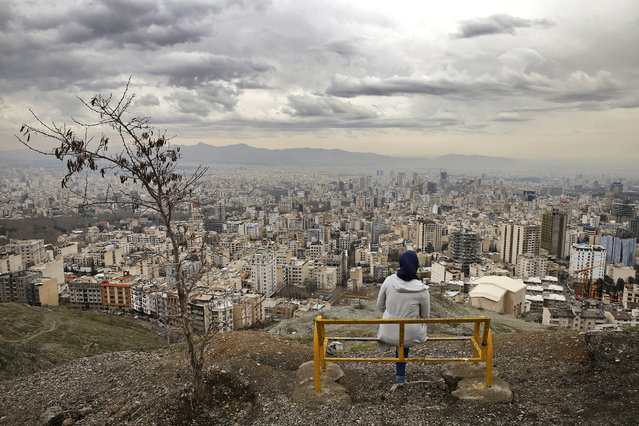
A woman spends her time outdoors to observe the ancient festival of Sizdeh Bedar, an annual public picnic day on the 13th day of the Iranian new year, at the Tochal mountainous area northern Tehran, Iran, Sunday, April, 2, 2017. Sizdeh Bedar, which comes from the Farsi words for “thirteen” and “day out”, is a legacy from Iran's pre-Islamic past that hard-liners in the Islamic Republic never managed to erase from calendars. (Photo by Ebrahim Noroozi/AP Photo)

A woman spends her time outdoors to observe the ancient festival of Sizdeh Bedar, an annual public picnic day on the 13th day of the Iranian new year, at the Tochal mountainous area northern Tehran, Iran, Sunday, April, 2, 2017. Sizdeh Bedar, which comes from the Farsi words for “thirteen” and “day out”, is a legacy from Iran's pre-Islamic past that hard-liners in the Islamic Republic never managed to erase from calendars. (Photo by Ebrahim Noroozi/AP Photo)
Details
21 Apr 2017 07:38:00
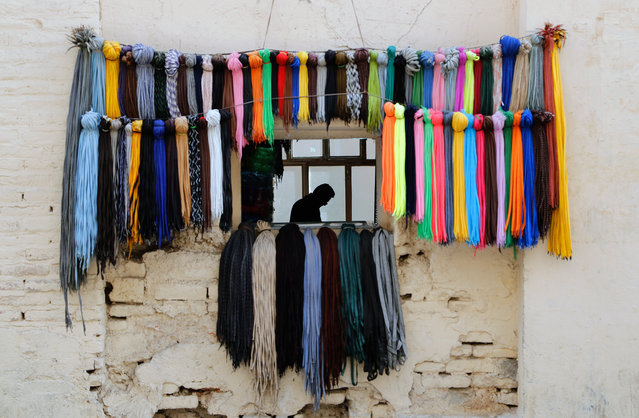
An Iranian man sells colorful ropes at  the Tehrans old Bazaar, the place where the main economy trades take place, in Tehran, Iran, 25 January 2016. Reports state that Iranian officials expected the Iranian economy to grow on an average of eight percent over the coming five years following the lifting of sanctions against Iran. (Photo by Abedin Taherkenareh/EPA)

An Iranian man sells colorful ropes at the Tehrans old Bazaar, the place where the main economy trades take place, in Tehran, Iran, 25 January 2016. Reports state that Iranian officials expected the Iranian economy to grow on an average of eight percent over the coming five years following the lifting of sanctions against Iran. (Photo by Abedin Taherkenareh/EPA)
Details
02 Feb 2016 12:53:00