Loading...
Done
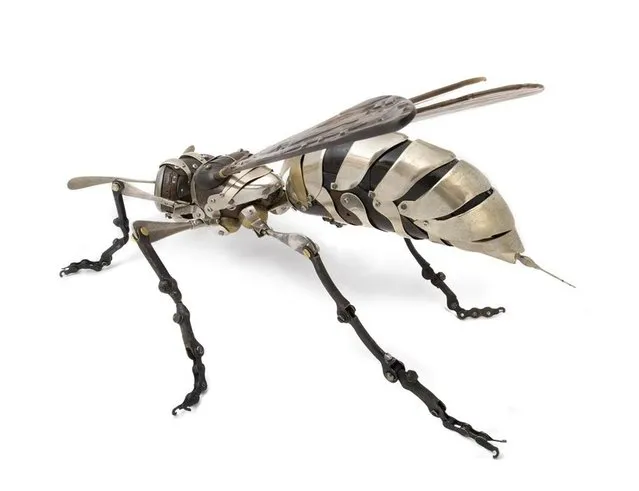
Sculptures By Edouard Martinet

Edouard Martinet was born in Le Mans, France in 1963 he studied art at ESAG, Paris and graduated in 1988. From 1988 to 1992 he lived and worked in Paris as a graphic designer, and in 1990 started sculpting and staging exhibitions. From 1992 to 1995 he lived in Charente before moving to his current location in Rennes where he teaches art at L'Institut des Arts Appliques.
Details
27 Apr 2012 11:35:00
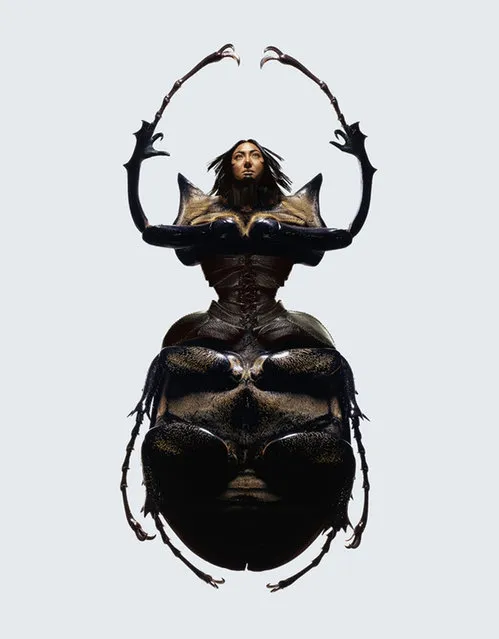
Insectes photography by Laurent Seroussi

Laurent Seroussi is a tremendously talented French photographer who have worked with most of Frensch superstars as well as made a lot of advertising campaigns. Laurent Seroussi’s multifaceted imagery brings together his background in both graphic design and moving imagery. His immediate work stretches the imagination with playful visual tricks and postproduction wizardry.
Details
11 Aug 2012 08:42:00
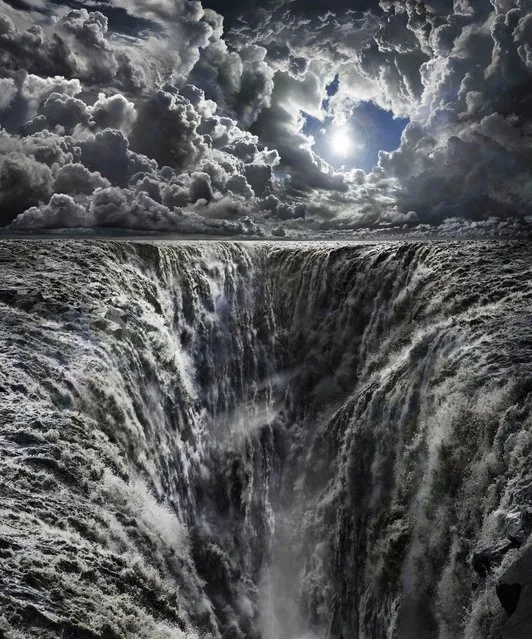
Clouded Skies By Seb Janiak

The French graphic designer and photographer uses a method he calls “digital matte painting”, layering several photos on top of each other to create an incandescent composition that seems eerily familiar yet ultimately impossible. Filled with tumbling clouds and glowing focal points, the images possess a depth that stretches the two-dimensional canvases backward as violent skies seem to undulate before the viewers' eyes.
Details
08 Jul 2014 11:45:00
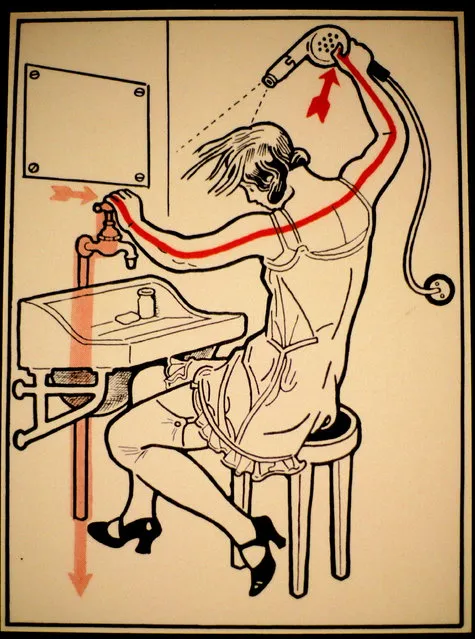
The book “Elektroschutz in 132 Bildern” (Electrical Protection in 132 Pictures) was published in Vienna in the early 1900s by a Viennese physician named Stefan Jellinek (1878-1968, a founder of the Electro-Pathological Museum). The pictures are nice and direct and unambiguous; they teach, graphically, that the surest way to kill yourself with electricity is to form a complete path from source (usually the bright red arrow) to ground (the screened back, pink arrow). Arrowheads provide the path for current flow. (Photo by The Vienna Technical Museum)

The book “Elektroschutz in 132 Bildern” (Electrical Protection in 132 Pictures) was published in Vienna in the early 1900s by a Viennese physician named Stefan Jellinek (1878-1968, a founder of the Electro-Pathological Museum). The pictures are nice and direct and unambiguous; they teach, graphically, that the surest way to kill yourself with electricity is to form a complete path from source (usually the bright red arrow) to ground (the screened back, pink arrow). Arrowheads provide the path for current flow. (Photo by The Vienna Technical Museum)
Details
11 Aug 2014 11:10:00
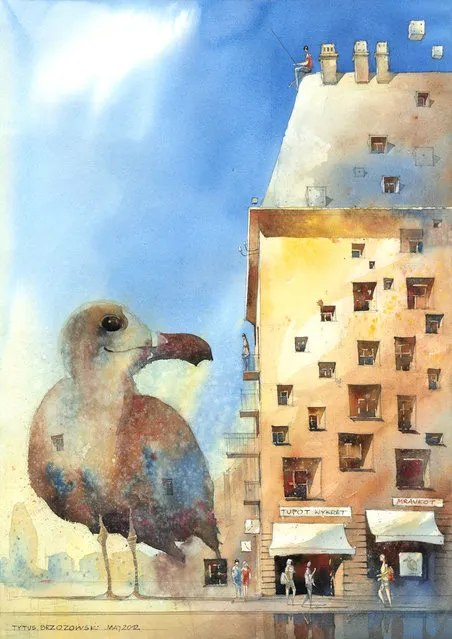
Watercolor Paintings By Tytus Brzozowski

Tytus Brzozowski is a Polish architect and watercolorist who is inspired by the dynamics, color, design, and history of Warsaw. He creates watercolor paintings that often combine detailed architectural images with whimsical and imaginary scenes, such as pianos suspended by hot air balloons and buildings shaped like teapots
Details
06 Oct 2013 09:32:00
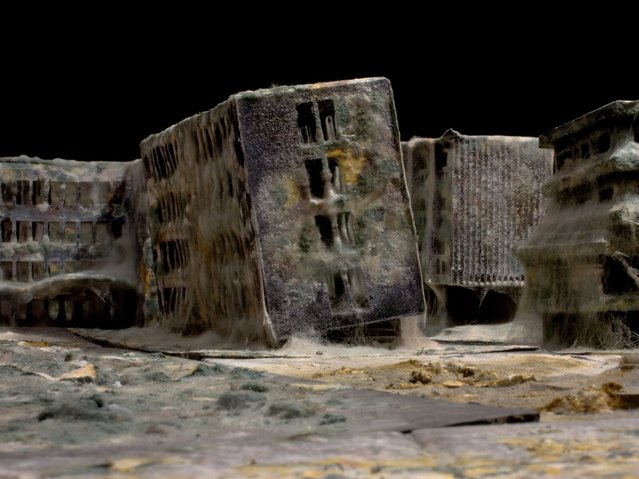
Apocalyptic Metropolises by Daniel Del Nero

Italian artist Daniel Del Nero created this aerily beautiful series of architectural scale models, that he constructed with black paper, and covered with flour and a layer of mold. The effect is that of peering into the distant future, long after the extinction of humanity itself.
Details
15 Nov 2012 09:14:00
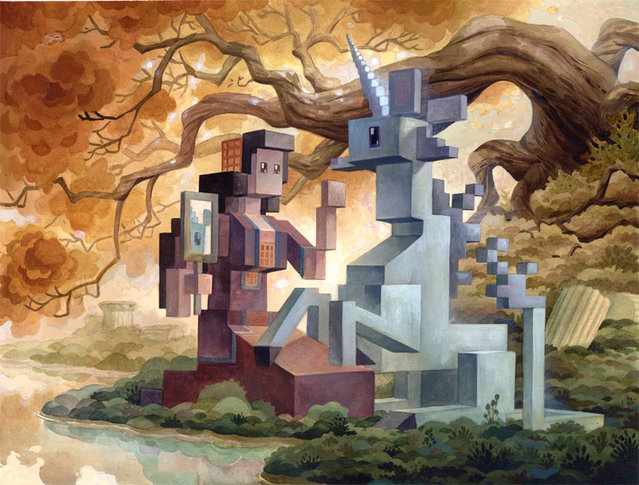
Pixelated Wilderness Illustrations

These Laura Bifano “Menagerie” images will surely mess with your eyes as you begin to lose sight of what’s real and what’s virtual. Inspired by her love of nature and of video game graphics, this artist made a unique collection of painted, pixelated animals, fusing the two distinct aesthetics in a harmonious and breathtaking manner.
Details
29 Nov 2012 10:31:00
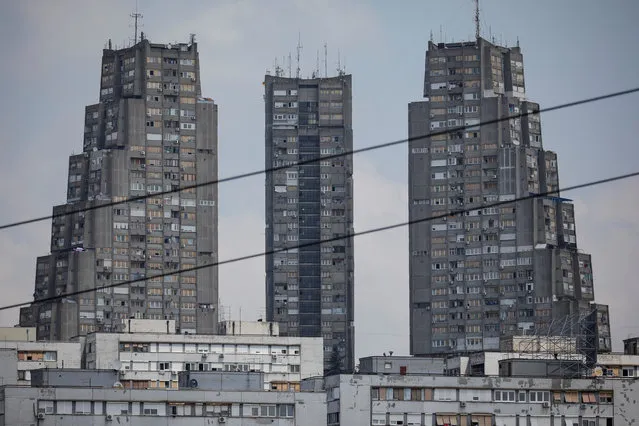
The Eastern City Gate apartment buildings complex stands in the Konjarnik neighbourhood in Belgrade, Serbia, July 30, 2019. Brutalism, an architectural style popular in the 1950s and 1960s, based on crude, block-like forms cast from concrete was popular throughout the eastern bloc. (Photo by Marko Djurica/Reuters)

The Eastern City Gate apartment buildings complex stands in the Konjarnik neighbourhood in Belgrade, Serbia, July 30, 2019. Brutalism, an architectural style popular in the 1950s and 1960s, based on crude, block-like forms cast from concrete was popular throughout the eastern bloc. (Photo by Marko Djurica/Reuters)
Details
01 Nov 2019 00:05:00