Loading...
Done
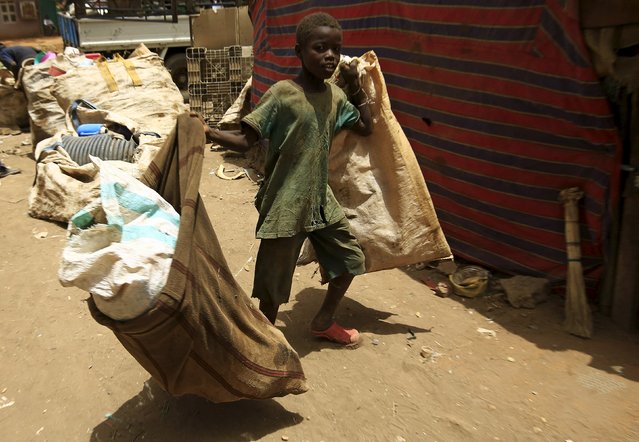
A boy carries empty sacks after bringing different types of plastic materials to a recycling station in Khartoum North April 16, 2015. People bring bottles and other plastic materials to the station for recycling, and get paid in return. (Photo by Mohamed Nureldin Abdallah/Reuters)

A boy carries empty sacks after bringing different types of plastic materials to a recycling station in Khartoum North April 16, 2015. People bring bottles and other plastic materials to the station for recycling, and get paid in return. (Photo by Mohamed Nureldin Abdallah/Reuters)
Details
20 Apr 2015 12:39:00
“Mr Big Dipper”, Nicholas Roemmelt (Denmark). A stargazer observes the constellation of the Big Dipper perfectly aligned with the window of the entrance to a large glacier cave in Engadin, Switzerland. This is a panorama of two pictures, and each is a stack of another two pictures: one for the stars and another one for the foreground, but with no composing or time blending. (Photo by Nicholas Roemmelt/National Maritime Museum/The Guardian)

“Mr Big Dipper”, Nicholas Roemmelt (Denmark). A stargazer observes the constellation of the Big Dipper perfectly aligned with the window of the entrance to a large glacier cave in Engadin, Switzerland. This is a panorama of two pictures, and each is a stack of another two pictures: one for the stars and another one for the foreground, but with no composing or time blending. (Photo by Nicholas Roemmelt/National Maritime Museum/The Guardian)
Details
27 Jul 2017 06:50:00
“Another Day in Paradise”. (Joel Goodman)

“Another Day in Paradise”. (Photo and caption by Joel Goodman)
Details
26 Sep 2013 08:43:00
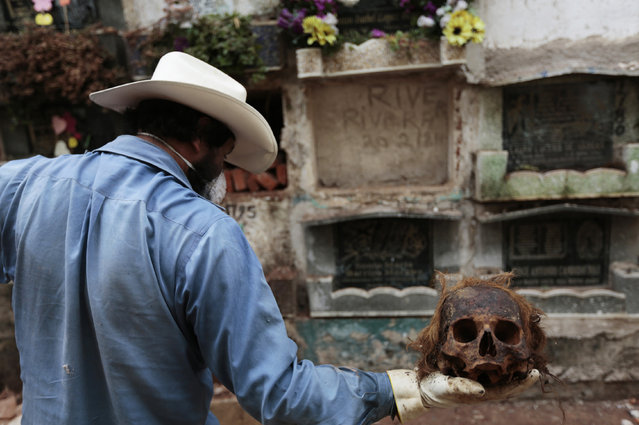
A grave cleaner holds up a skull during exhumation works at the Cemetery General in Guatemala City May 24, 2013. (Photo by Jorge Dan Lopez/Reuters)

A grave cleaner holds up a skull during exhumation works at the Cemetery General in Guatemala City May 24, 2013. If a lease on a grave has expired or not been paid, grave cleaners will break open the crypts to remove and rebury the bodies. (Photo by Jorge Dan Lopez/Reuters)
Details
21 Sep 2014 11:19:00
Surfer Arlen Macpherson sits on his board, which has an electronic shark repellent device installed, at Sydney's Bondi Beach in Australia, August 18, 2015. A spate of shark attacks in Australia has left some of world's top surfing beaches deserted and many people having second thoughts about taking a swim as the summer approaches. Macpherson paid A$390 for a device embedded in his surf board to repel sharks by emitting an electronic force field that overpowers its sensing organs. (Photo by David Gray/Reuters)

Surfer Arlen Macpherson sits on his board, which has an electronic shark repellent device installed, at Sydney's Bondi Beach in Australia, August 18, 2015. A spate of shark attacks in Australia has left some of world's top surfing beaches deserted and many people having second thoughts about taking a swim as the summer approaches. Macpherson paid A$390 for a device embedded in his surf board to repel sharks by emitting an electronic force field that overpowers its sensing organs. (Photo by David Gray/Reuters)
Details
19 Aug 2015 12:47:00
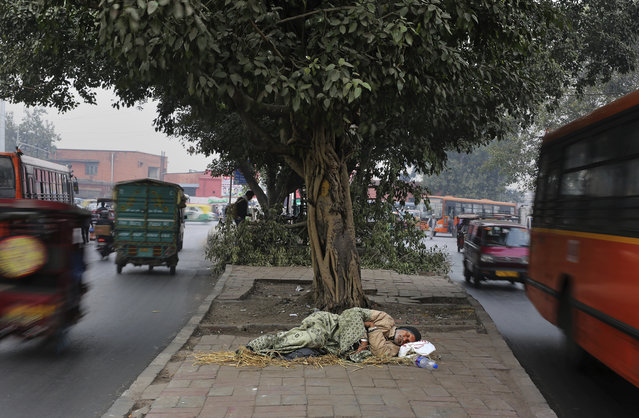
In this January 16, 2019, file photo, a homeless man sleeps on a median strip in New Delhi, India. In India, some 270 million people – nearly 22 percent of the country's population – live in poverty, making giveaways particularly attractive to voters. The Modi government in its interim budget in January announced farmers would be paid 6,000 rupees ($85) annually, benefiting as many as 120 million households and income tax relief to the middle class. (Photo by Altaf Qadri/AP Photo/File)

In this January 16, 2019, file photo, a homeless man sleeps on a median strip in New Delhi, India. In India, some 270 million people – nearly 22 percent of the country's population – live in poverty, making giveaways particularly attractive to voters. The Modi government in its interim budget in January announced farmers would be paid 6,000 rupees ($85) annually, benefiting as many as 120 million households and income tax relief to the middle class. (Photo by Altaf Qadri/AP Photo/File)
Details
09 May 2019 00:03:00
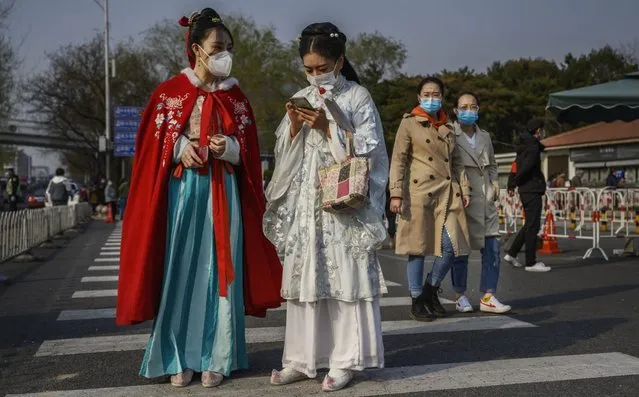
Chinese women wear protective masks as they are dressed in traditional clothing from the Qing Dynasty era outside a park on March 29, 2020 in Beijing, China. A limited section of the iconic tourist site was re-opened to the public this week allowing a smaller number of visitors to reserve tickets online in advance and to enter after passing health screening. With the pandemic hitting hard across the world, China recorded its first day with no new domestic cases of the coronavirus last week, since the government imposed sweeping measures to keep the disease from spreading. For two months, millions of people across China have been restricted in how they move from their homes, while other cities have been locked down in ways that appeared severe at the time but are now being replicated in other countries trying to contain the virus. Officials believe the worst appears to be over in China, though there are concerns of another wave of infections as the government attempts to reboot the worlds second largest economy. In Beijing, it is mandatory to wear masks outdoors, retail stores operate on reduced hours, restaurants employ social distancing among patrons, and tourist attractions at risk of drawing large crowds remain closed. Monitoring and enforcement of virus-related measures and the quarantine of anyone arriving to Beijing is carried out by neighborhood committees and a network of Communist Party volunteers who wear red arm bands. A primary concern for Chinese authorities remains the arrival of flights from Europe and elsewhere, given the exposure of passengers in regions now regarded as hotbeds for transmission. Since January, China has recorded more than 81,000 cases of COVID-19 and at least 3200 deaths, mostly in and around the city of Wuhan, in central Hubei province, where the outbreak first started. (Photo by Kevin Frayer/Getty Images)

Chinese women wear protective masks as they are dressed in traditional clothing from the Qing Dynasty era outside a park on March 29, 2020 in Beijing, China. A limited section of the iconic tourist site was re-opened to the public this week allowing a smaller number of visitors to reserve tickets online in advance and to enter after passing health screening. (Photo by Kevin Frayer/Getty Images)
Details
01 Apr 2020 00:05:00
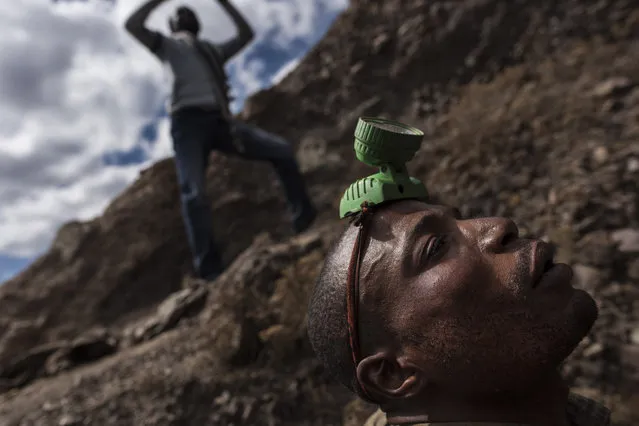
A “creuseur”, or digger, a plastic lantern on his head, readies to enter a copper and cobalt mine in Kawama, Democratic Republic of Congo on June 8, 2016. Cobalt is used in the batteries for electric cars and mobile phones. Working conditions are dangerous, often with no safety equipment or structural support for the tunnels. The diggers say they are paid on average US$2-3/day. (Photo by Michael Robinson Chavez/The Washington Post)

A “creuseur”, or digger, a plastic lantern on his head, readies to enter a copper and cobalt mine in Kawama, Democratic Republic of Congo on June 8, 2016. Cobalt is used in the batteries for electric cars and mobile phones. Working conditions are dangerous, often with no safety equipment or structural support for the tunnels. The diggers say they are paid on average US$2-3/day. (Photo by Michael Robinson Chavez/The Washington Post)
Details
30 Dec 2016 10:29:00