Loading...
Done
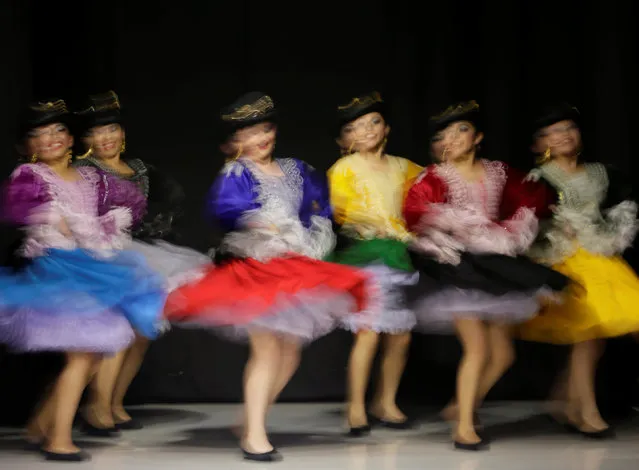
Members of a “Diablada” folk group dance during celebrations of the anniversary of Bolivia foundation, in Santiago, Chile on August 6, 2022. (Photo by Ivan Alvarado/Reuters)

Members of a “Diablada” folk group dance during celebrations of the anniversary of Bolivia foundation, in Santiago, Chile on August 6, 2022. (Photo by Ivan Alvarado/Reuters)
Details
10 Nov 2023 05:42:00
Boats of fishermen are seen on the dried Poopo lakebed in the Oruro Department, south of La Paz, Bolivia, December 17, 2015. (Photo by David Mercado/Reuters)

Boats of fishermen are seen on the dried Poopo lakebed in the Oruro Department, south of La Paz, Bolivia, December 17, 2015. Lake Poopo in Bolivia, the Andean nation's formerly second largest after the famed Titicaca, has dried up entirely. With the water now gone, animals have died off in the millions, according to studies. And the local families, having lost much of their sustenance, have been forced to migrate. (Photo by David Mercado/Reuters)
Details
20 Dec 2015 08:04:00
A visitor walks underneath a replica of a Titanosaur at the Cretaceous park in Cal Orcko, on the outskirts of Sucre, Bolivia, July 22, 2016. (Photo by David Mercado/Reuters)

A visitor walks underneath a replica of a Titanosaur at the Cretaceous park in Cal Orcko, on the outskirts of Sucre, Bolivia, July 22, 2016. A footprint measuring over a meter wide that was made by a meat-eating predator some 80 million years ago has been discovered in Bolivia, one of the largest of its kind ever found. (Photo by David Mercado/Reuters)
Details
28 Jul 2016 13:32:00
Dancers perform during the Morenada dance national day in La Paz, Bolivia, September 7, 2021. (Photo by Manuel Claure/Reuters)

Morenada dancers dance at the Plaza de Armas during the celebrations of the Morenada National Day in La Paz, Bolivia on September 7, 2021. (Photo by Manuel Claure/Reuters)
Details
09 Sep 2021 09:07:00
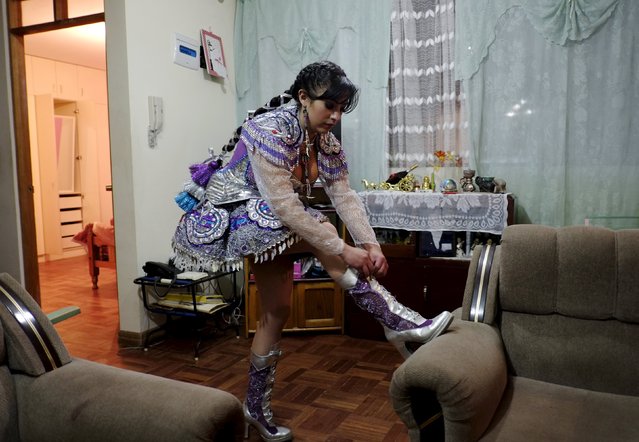
Alicia Vargas, 23, a performer from the Urus Diablada group, tied the laces of her boots before a practice ahead of Carnival in Oruro, Bolivia February 5, 2016. (Photo by David Mercado/Reuters)

Alicia Vargas, 23, a performer from the Urus Diablada group, tied the laces of her boots before a practice ahead of Carnival in Oruro, Bolivia February 5, 2016. (Photo by David Mercado/Reuters)
Details
08 Feb 2016 11:15:00
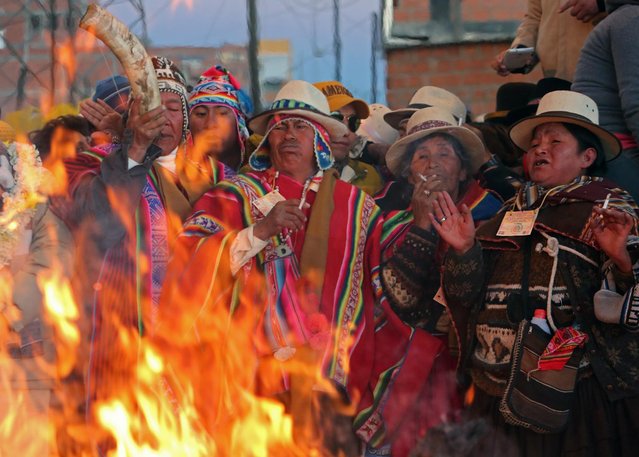
Local priests celebrate the “Aimara New Year”, an Andean Bolivian traditional festival that marks the winter solstice in El Alto, Bolivia, 21 June 2016. Aimara or Aymara means the Return of the Sun. (Photo by Martin Alipaz/EPA)

Local priests celebrate the “Aimara New Year”, an Andean Bolivian traditional festival that marks the winter solstice in El Alto, Bolivia, 21 June 2016. Aimara or Aymara means the Return of the Sun. (Photo by Martin Alipaz/EPA)
Details
22 Jun 2016 12:57:00
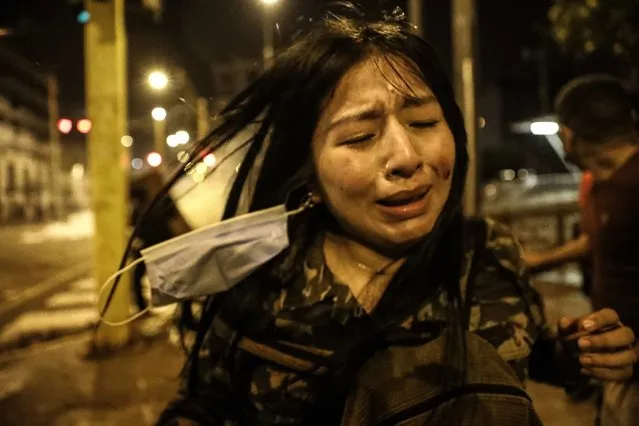
An injured person reacts during a protest against the new government of President Manuel Merino, in San Martin de Lima square, in Lima, Peru, 14 November 2020. Merino took office on 10 November amid a controversial constitutional process after the dismissal of former President Martin Vizcarra for “moral incapacity” by Peruvian Congress. (Photo by Aldair Mejia/EPA/EFE)

An injured person reacts during a protest against the new government of President Manuel Merino, in San Martin de Lima square, in Lima, Peru, 14 November 2020. Merino took office on 10 November amid a controversial constitutional process after the dismissal of former President Martin Vizcarra for “moral incapacity” by Peruvian Congress. (Photo by Aldair Mejia/EPA/EFE)
Details
22 Feb 2021 09:30:00
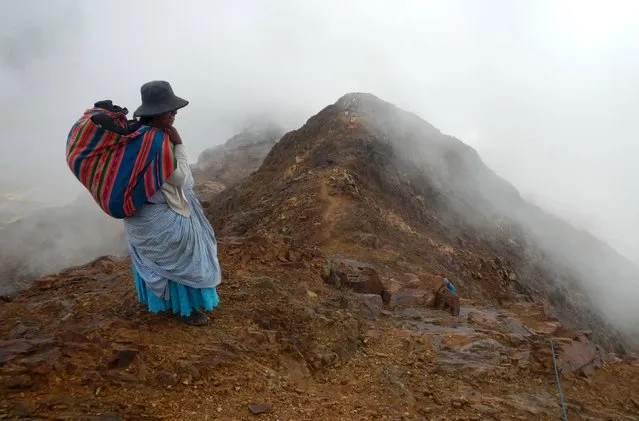
A porter stands at the bottom of the Illimani mountain, on the outskirts of La Paz, Bolivia, April 16, 2016. (Photo by David Mercado/Reuters)

A porter stands at the bottom of the Illimani mountain, on the outskirts of La Paz, Bolivia, April 16, 2016. For years, Lydia Huayllas, 48, has worked as a cook at base camps and mountain-climbing refuges on the steep, glacial slopes of Huayna Potosi, a 19,974-foot (6,088-meter) Andean peak outside of La Paz, Bolivia. But two years ago, she and 10 other Aymara indigenous women, ages 42 to 50, who also worked as porters and cooks for mountaineers, put on crampons – spikes fixed to a boot for climbing – under their wide traditional skirts and started to do their own climbing. (Photo by David Mercado/Reuters)
Details
22 Apr 2016 12:33:00