Loading...
Done
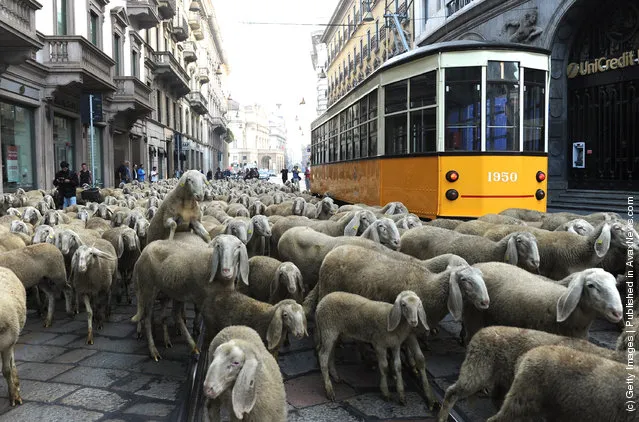
Sheep In The Streets Of Milan During Filming For The Last Shepherd

Sheep are waiting in Via Manzoni before the final filming of the Last Shepherd on October 1, 2011 in Milan, Italy. Directed by Marco Bonfanti, L'Ultimo Pastore (The Last Shepherd) tells the story of the life of Renato Zucchelli, the last nomadic shepherd in Milan. (Photo by Pier Marco Tacca/Getty Images)
Details
02 Oct 2011 12:49:00
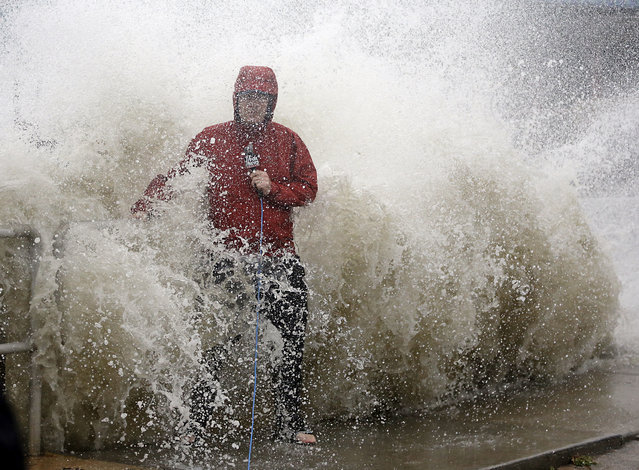
A news reporter doing a stand up near a sea wall in Cedar Key, Fla., is covered by an unexpected wave as Hurricane Hermine nears the Florida coast, Thursday, September 1, 2016. Hurricane Hermine gained new strength Thursday evening and roared ever closer to Florida's Gulf Coast, where rough surf began smashing against docks and boathouses and people braced for the first direct hit on the state from a hurricane in over a decade. (Photo by John Raoux/AP Photo)

A news reporter doing a stand up near a sea wall in Cedar Key, Fla., is covered by an unexpected wave as Hurricane Hermine nears the Florida coast, Thursday, September 1, 2016. Hurricane Hermine gained new strength Thursday evening and roared ever closer to Florida's Gulf Coast, where rough surf began smashing against docks and boathouses and people braced for the first direct hit on the state from a hurricane in over a decade. (Photo by John Raoux/AP Photo)
Details
02 Sep 2016 13:17:00
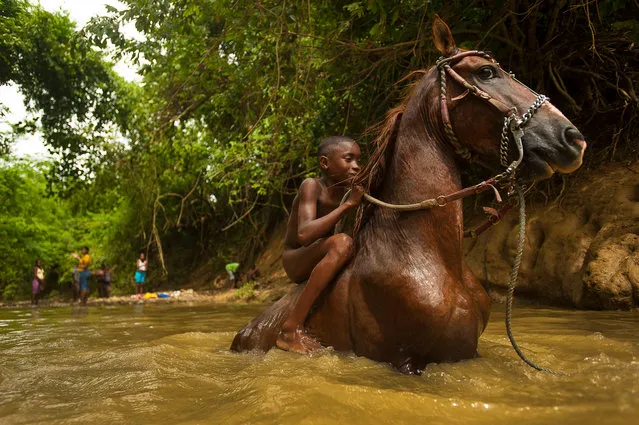
This image of a young bareback rider was taken in the village of Palenque de San Basilio, in Colombia’s Bolívar department. Founded by freed slaves in the 17th century, it became the first free town in the Americas, following a decree by the Spanish crown. Most of today’s inhabitants are direct descendants of those slaves and have preserved many of their customs, including their own language, Palenquero. (Photo by Sebastián Suki Beláustegui/The Guardian)

This image of a young bareback rider was taken in the village of Palenque de San Basilio, in Colombia’s Bolívar department. Founded by freed slaves in the 17th century, it became the first free town in the Americas, following a decree by the Spanish crown. Most of today’s inhabitants are direct descendants of those slaves and have preserved many of their customs, including their own language, Palenquero. (Photo by Sebastián Suki Beláustegui/The Guardian)
Details
07 Sep 2017 09:13:00
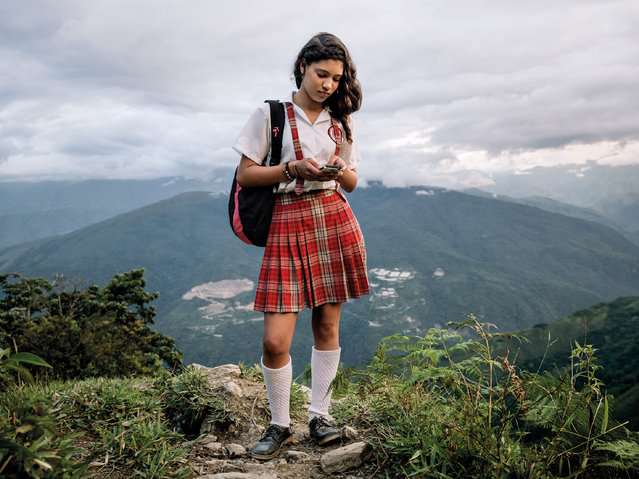
Alexandra Mazo, 12, with her cellphone on her way down the mountain after finishing school. The remote mountain village of Pueblo Nuevo has been highly affected by the armed conflict and direct combat between the national army and Farc guerrillas due to its strategic location and the intensive production on coca crops on the surrounding hillsides. (Photo by Mads Nissen/Politiken/The Guardian/Panos Pictures/The Nobel Peace Center)

Alexandra Mazo, 12, with her cellphone on her way down the mountain after finishing school. The remote mountain village of Pueblo Nuevo has been highly affected by the armed conflict and direct combat between the national army and Farc guerrillas due to its strategic location and the intensive production on coca crops on the surrounding hillsides. (Photo by Mads Nissen/Politiken/The Guardian/Panos Pictures/The Nobel Peace Center)
Details
18 Jun 2018 00:05:00
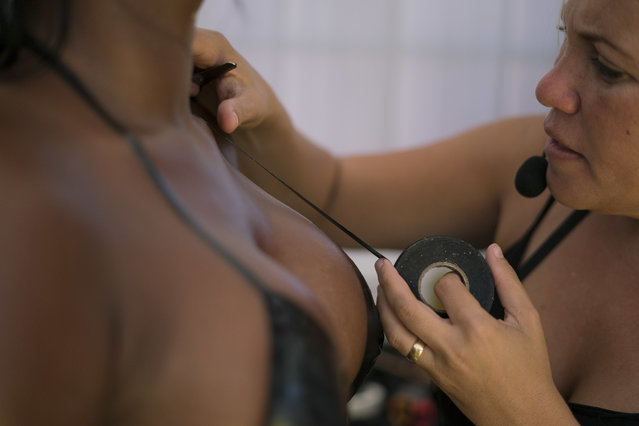
In this January 11, 2017 photo, Erika Martins uses black electrical tape to create a customer's bikini, in order to attain crisp tan lines, on her rooftop Erika Bronze salon in the suburb of Realengo in Rio de Janeiro, Brazil. Martins wears a microphone connected to an open speaker system in order to direct her assistants to clients who need more tanning lotion or a sprinkling of water on their skin. (Photo by Renata Brito/AP Photo)

In this January 11, 2017 photo, Erika Martins uses black electrical tape to create a customer's bikini, in order to attain crisp tan lines, on her rooftop Erika Bronze salon in the suburb of Realengo in Rio de Janeiro, Brazil. Martins wears a microphone connected to an open speaker system in order to direct her assistants to clients who need more tanning lotion or a sprinkling of water on their skin. (Photo by Renata Brito/AP Photo)
Details
25 Jan 2017 11:21:00
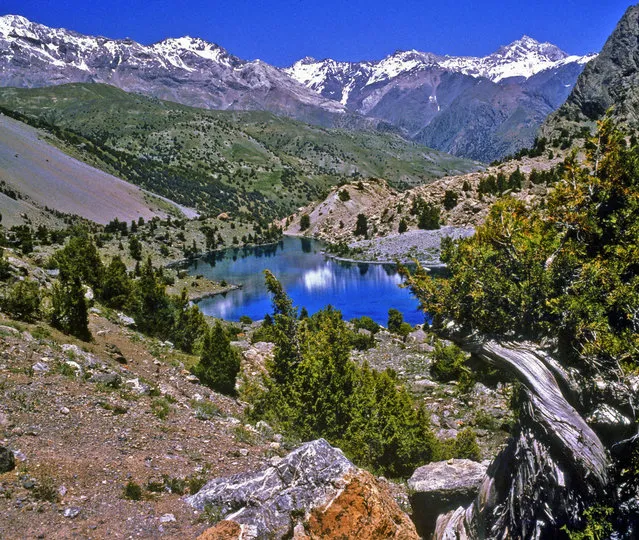
Fann Mountains In Tajikistan

Fann Mountains are part of the western Pamir-Alay mountain system and are located in Tajikistan's Sughd Province between the Zarafshan Range to the north and the Gissar Range to the south (see map of Fann Mountains). In the east-west direction they extend from Fandarya River to Archimaydan River, and the cluster of Marguzor lakes west of Archimaydan is also included in the Fanns.
Details
29 May 2013 11:45:00
A monkey catches knives as it balances on a board during a daily training session at a monkey farm in Baowan village, Xinye county of China's central Henan province, February 2, 2016. Baowan village of China's central Henan province appears to be your average farming community from the surface, but at a closer look, one can hear monkey hoots from every direction. Although no official number exists, villagers say that they have been a breeding ground for both monkeys and monkey trainers for centuries. (Photo by Jason Lee/Reuters)

A monkey catches knives as it balances on a board during a daily training session at a monkey farm in Baowan village, Xinye county of China's central Henan province, February 2, 2016. Baowan village of China's central Henan province appears to be your average farming community from the surface, but at a closer look, one can hear monkey hoots from every direction. Although no official number exists, villagers say that they have been a breeding ground for both monkeys and monkey trainers for centuries. (Photo by Jason Lee/Reuters)
Details
04 Feb 2016 11:35:00
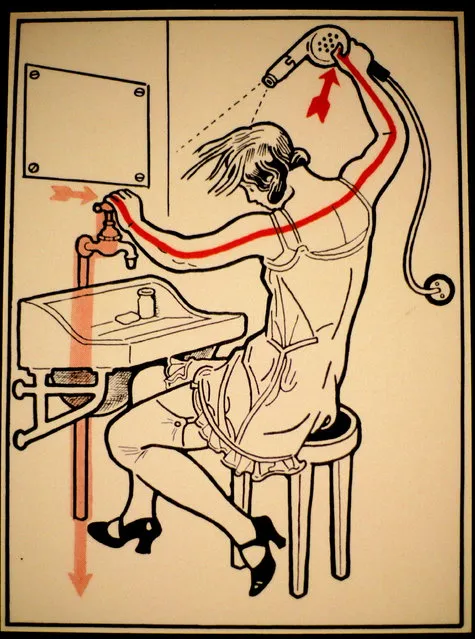
The book “Elektroschutz in 132 Bildern” (Electrical Protection in 132 Pictures) was published in Vienna in the early 1900s by a Viennese physician named Stefan Jellinek (1878-1968, a founder of the Electro-Pathological Museum). The pictures are nice and direct and unambiguous; they teach, graphically, that the surest way to kill yourself with electricity is to form a complete path from source (usually the bright red arrow) to ground (the screened back, pink arrow). Arrowheads provide the path for current flow. (Photo by The Vienna Technical Museum)

The book “Elektroschutz in 132 Bildern” (Electrical Protection in 132 Pictures) was published in Vienna in the early 1900s by a Viennese physician named Stefan Jellinek (1878-1968, a founder of the Electro-Pathological Museum). The pictures are nice and direct and unambiguous; they teach, graphically, that the surest way to kill yourself with electricity is to form a complete path from source (usually the bright red arrow) to ground (the screened back, pink arrow). Arrowheads provide the path for current flow. (Photo by The Vienna Technical Museum)
Details
11 Aug 2014 11:10:00