Loading...
Done
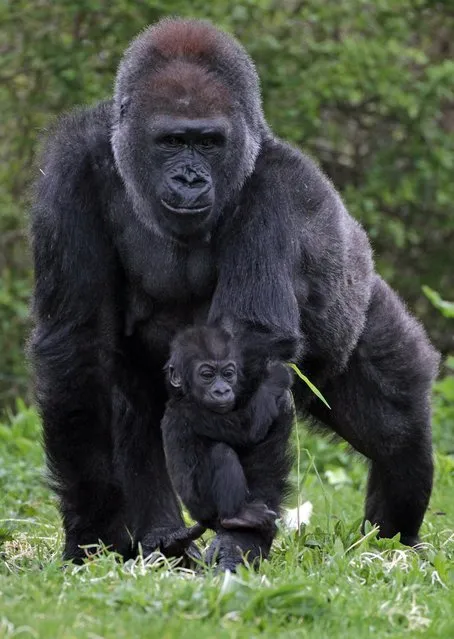
Bristol Zoo's baby gorilla Kukena

Bristol Zoo's baby gorilla Kukena holds onto his mother's arm as he ventures out of his enclosure at Bristol Zoo's Gorilla Island on May 4, 2012 in Bristol, England. The seven-month-old western lowland gorilla is starting to find his feet as he learns to walk having been born at the zoo in September. Kukena joins a family of gorillas at the zoo that are part of an international conservation breeding programme for the western lowland gorilla, which is a critically endangered species. (Photo by Matt Cardy)
Details
09 May 2012 02:26:00
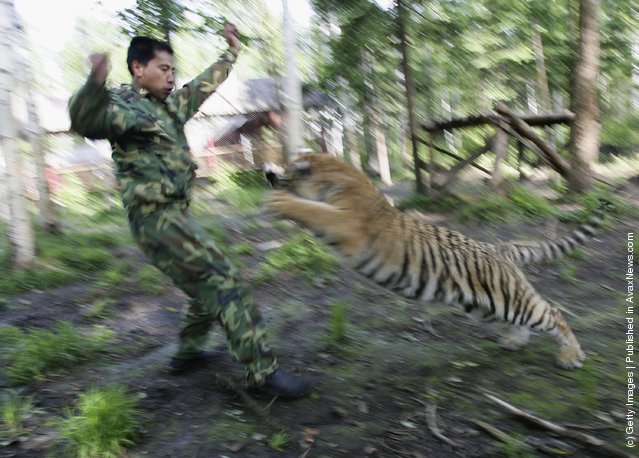
A feeder trains a Siberian tiger cub

A feeder trains a Siberian tiger cub at Erdaohe Tiger Park July 2, 2006 in Antu County of Yanbian Chaoxian Autonomous Prefecture, Jilin Province, China. About 15 artificially-fed Siberian tigers from Harbin Siberian Tiger Park are being trained to develop their ability to live in the wild. The wild Siberian tiger is listed as one of the most endangered species in the world, with its existing number estimated at around 400 worldwide, mainly in the northeastern part of China and the Far East of Russia. Reportedly there are more than 1,300 Siberian tigers which have been raised in China. (Photo by China Photos/Getty Images)
Details
01 Oct 2011 12:23:00
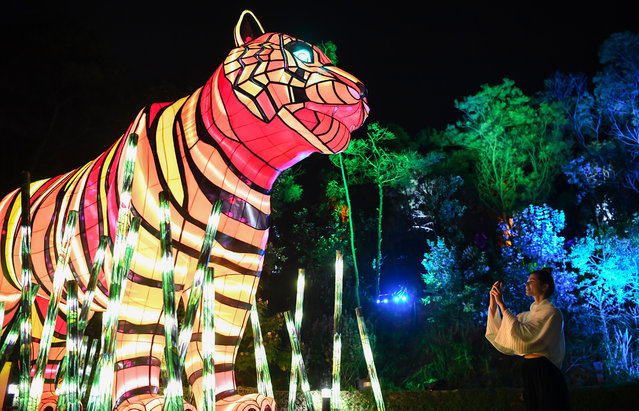
A woman takes a photo on her mobile phone of a tiger during the media preview of Vivid Sydney at Taronga Zoo on May 19, 2019 in Sydney, Australia. (Photo by James D. Morgan/Getty Images)

A woman takes a photo on her mobile phone of a tiger during the media preview of Vivid Sydney at Taronga Zoo on May 19, 2019 in Sydney, Australia. An illuminated trail of almost 300 lit lanterns of endangered species will glow every night at the zoo during Vivid Sydney which runs from May 24 throughout Sydney with hundreds of lit buildings and exhibits which attract hundreds of thousands of visitors each year. (Photo by James D. Morgan/Getty Images)
Details
22 May 2019 00:03:00
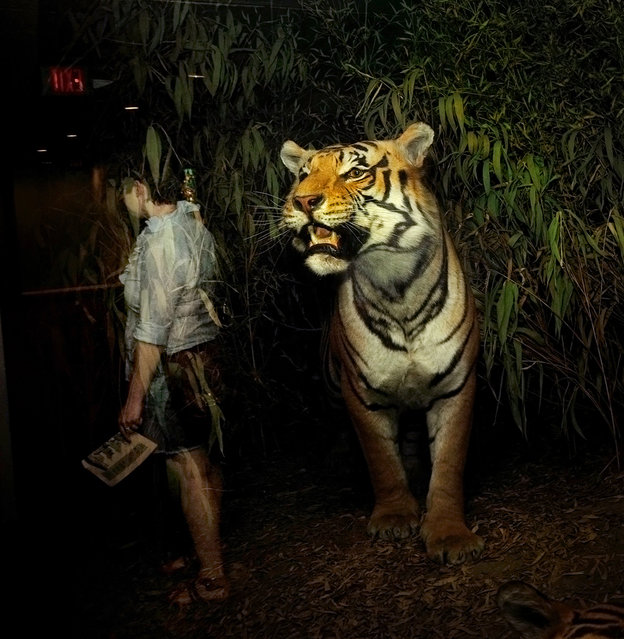
“Natural History”: Tiger. (Photo by Traer Scott)

“Natural History” is a series of completely candid single exposure images that merge the living and the dead to create allegorical narratives of our troubled co-existence with nature. Ghost-like reflections of modern visitors viewing wildlife dioramas are juxtaposed against the antique taxidermied subjects housed behind thick glass, their faces molded into permanent expressions of fear, aggression or fleeting passivity. After decades of over-hunting, climate change, poaching and destruction of habitat, many of these long dead diorama specimens now represent endangered or completely extinct species”. – Traer Scott. (Photo by Traer Scott)
Details
27 Oct 2014 11:39:00
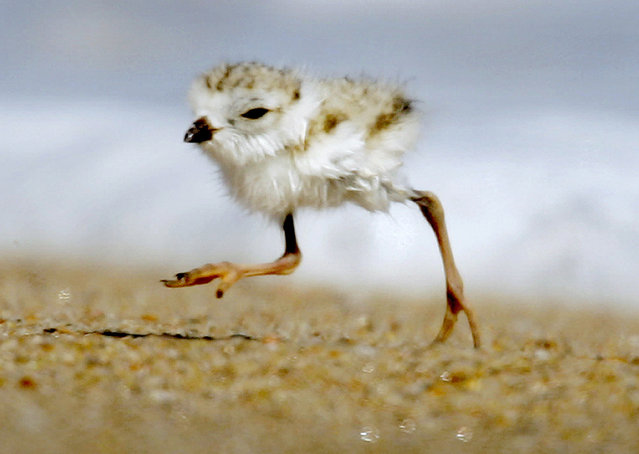
In this July 12, 2007 file photo, a two-day-old piping plover runs along a beach in the Quonochontaug Conservation Area in Westerly, R.I. A court fight to protect the piping plover, a bird listed as “threatened” under the federal Endangered Species Act, is holding up a $207 million plan to replenish sand along a 19-mile stretch of shoreline on New York's Fire Island. The sand was eroded during Superstorm Sandy. (Photo by Steven Senne/AP Photo)

In this July 12, 2007 file photo, a two-day-old piping plover runs along a beach in the Quonochontaug Conservation Area in Westerly, R.I. (Photo by Steven Senne/AP Photo)
Details
25 Nov 2014 11:28:00
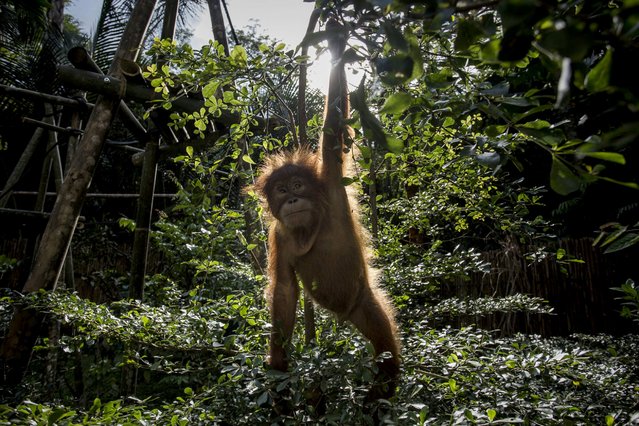
A Baby sumatran orangutan (Pongo abelii) plays around in a tree as they train at Sumatran Orangutan Conservation Programme's rehabilitation center on November 12, 2016 in Kuta Mbelin, North Sumatra, Indonesia. The Orangutans in Indonesia have been known to be on the verge of extinction as a result of deforestation and poaching. Found mostly in South-East Asia, where they live on the islands of Sumatra and Borneo, the endangered species continue to lose their habitat as a result of corporate expansion in a developing economy. Indonesia approved palm oil concessions on nearly 15 million acres of peatlands over the past years and thousands of square miles have been cleared for plantations, including the lowland areas that are the prime habitat for orangutans. (Photo by Ulet Ifansasti/Getty Images)

A Baby sumatran orangutan (Pongo abelii) plays around in a tree as they train at Sumatran Orangutan Conservation Programme's rehabilitation center on November 12, 2016 in Kuta Mbelin, North Sumatra, Indonesia. The Orangutans in Indonesia have been known to be on the verge of extinction as a result of deforestation and poaching. Found mostly in South-East Asia, where they live on the islands of Sumatra and Borneo, the endangered species continue to lose their habitat as a result of corporate expansion in a developing economy. Indonesia approved palm oil concessions on nearly 15 million acres of peatlands over the past years and thousands of square miles have been cleared for plantations, including the lowland areas that are the prime habitat for orangutans. (Photo by Ulet Ifansasti/Getty Images)
Details
16 Nov 2016 11:14:00
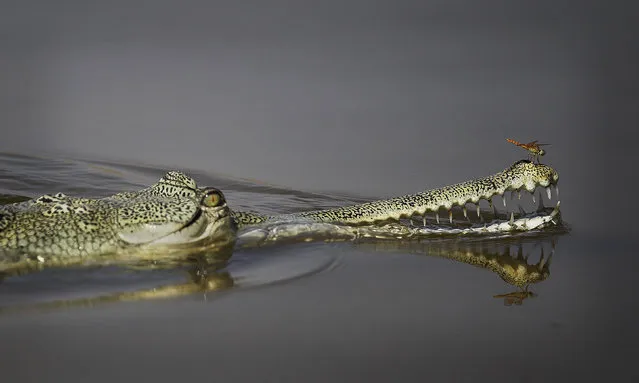
In this photo taken Wednesday, April 30, 2014, a dragonfly sits on the nose of a Gharial, rare crocodile-like creatures, in the River Chambal near Bhopepura village in the northern Indian state of Uttar Pradesh. The narrow 250-mile stretch of the Chambal is a place of crocodiles and jackals, of river dolphins and the occasional wolf. Hundreds of species of birds, storks, geese, babblers, larks, falcons and so many more, nest along the river. (Photo by Altaf Qadri/AP Photo)

In this photo taken Wednesday, April 30, 2014, a dragonfly sits on the nose of a Gharial, rare crocodile-like creatures, in the River Chambal near Bhopepura village in the northern Indian state of Uttar Pradesh. The narrow 250-mile stretch of the Chambal is a place of crocodiles and jackals, of river dolphins and the occasional wolf. Hundreds of species of birds, storks, geese, babblers, larks, falcons and so many more, nest along the river. Endangered birds lay small speckled eggs in tiny pits they dig in the sandbars. Gharials, rare crocodile-like creatures that look like they swaggered out of the Mesozoic Era, are commonplace here and nowhere else. (Photo by Altaf Qadri/AP Photo)
Details
23 Feb 2015 12:55:00
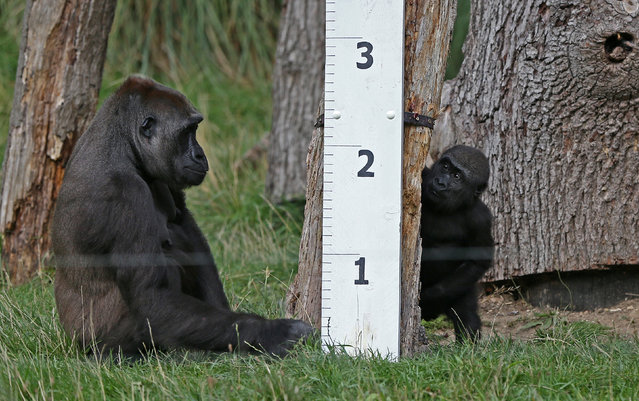
Gorillas sit next to a ruler during a photocall for the annual weigh-in at London Zoo in London, Britain August 24, 2017. (Photo by Neil Hall/Reuters)

Gorillas sit next to a ruler during a photocall for the annual weigh-in at London Zoo in London, Britain August 24, 2017. During the weigh-in, animals across the zoo have their vital statistics recorded including their height and weight and the information is then shared with zoos across the world to help zookeepers compare important information on thousands of endangered species. (Photo by Neil Hall/Reuters)
Details
26 Aug 2017 08:16:00